

On a windswept stretch of Interstate 45 between Dallas and Houston, something unusual is happening at 2 a.m. on a Tuesday. An 80,000-pound semi barrels down the highway at 65 mph. There's no one behind the wheel. Not a test driver with hands hovering near the controls. Not even a safety engineer monitoring from the passenger seat. The cab is empty.
Aurora Innovation calls this the first commercial driverless freight service on U.S. public highways. They're not the only ones pushing past the pilot stage.
Out in the Permian Basin—where dust storms can reduce visibility to near zero and the only traffic patterns are the kind made by drilling rigs—Kodiak Robotics has quietly completed more than 100 commercial loads for Atlas Energy. Again, no driver. Meanwhile, Waymo's robotaxis are now logging 200,000 paid rides every week across multiple U.S. cities, double the volume from six months ago. And on farms from Iowa to Kansas, John Deere's newest tractors are threading themselves between rocks and fence lines at 12 mph, guided by 16 cameras and an onboard AI that most farmers will never actually see.
These aren't demonstrations anymore. They're businesses.
The autonomous vehicle industry has been promising transformation for so long that it's easy to miss when transformation actually arrives. But here's what's different now: real-time machine perception—the unglamorous technical challenge of getting machines to sense, classify, and react to the physical world in milliseconds—has moved from research problem to industrial fact. McKinsey thinks the autonomous driving market will hit somewhere between $300 billion and $400 billion by 2035. Morgan Stanley is more conservative, pegging it at $200 billion by 2030.
The numbers are staggering even if they're squishy. What's less debatable is this: there are now 4.66 million industrial robots operating in factories worldwide, and they're absorbing perception technology at an accelerating clip. Another 542,000 units were installed in 2024 alone. Professional service robots—mostly in logistics and transportation—grew 30 percent year-over-year in 2023, reaching 205,000 units.
Perception used to be the bottleneck. Now it's becoming a commodity. And that shift is about to remake entire industries, with billion-dollar consequences for anyone building autonomous systems.
Where the Money's Actually Moving
The autonomous systems market isn't one market. It's fragmenting into distinct domains, each with its own physics problems and regulatory mazes.
Waymo leads the robotaxi segment at commercial scale, having expanded beyond its initial San Francisco and Phoenix footprint into additional metros through 2025 and 2026. Tesla, despite what you might gather from Elon Musk's pronouncements, operates advanced driver assistance—meaning a human is still legally responsible and must stay alert. Cruise's program remains in limbo following a 2023 suspension after a pedestrian dragging incident that the company initially failed to fully disclose. Zoox is running limited pilots, but hasn't approached Waymo's weekly ride volumes.
Trucking presents a different equation entirely. Aurora's Dallas-Houston corridor represents something new: interstate speeds, mixed traffic, and the kind of unpredictability that makes highway autonomy so difficult. The perception stack has to handle aggressive lane changes, sudden braking, and the occasional flying tire tread—all while maintaining the reliability profile that freight customers and insurers demand.
Kodiak took a different path. Rather than tackle highways first, they focused on off-road industrial environments where failure modes are different but no less punishing. The Permian Basin is a harsh testing ground: minimal lane markings, dust that can blind lidar, and heavy machinery that doesn't always follow predictable patterns. But the company delivered customer-owned RoboTrucks to Atlas Energy and made the numbers work. Over 100 driverless loads later, they've validated that perception can adapt to environments where traditional computer vision simply breaks down.
Agriculture represents a third frontier, perhaps the most underappreciated. John Deere's February 2025 announcement of a next-generation perception kit—16 cameras with triple-overlap coverage—signals that the company sees autonomy as existential, not optional. The system enables autonomous tillage on the company's 8R and 9R tractor platforms, handling the kind of challenges that Google's self-driving cars never had to worry about: distinguishing crop stubble from rocks, navigating fields with no GPS signal, adapting to lighting that changes from dawn to dusk.
Then there's the warehouse. Amazon's Robin system, now deployed across fulfillment centers, uses machine learning to estimate pick quality and processes 5 million packages daily. It's drawn on more than 200 million package evaluations. The reminder here is useful: perception isn't just about navigating. It's about grasping, inspecting, handling objects with something approaching human dexterity.
The Hardware Race to the Bottom
Real-time perception lives or dies on the marriage between sensors and edge compute. The sensor side is commoditizing fast. Lidar, once an exotic $75,000 component spinning on the roof of early self-driving prototypes, is now a sub-$1,000 part in many configurations.
Yole Intelligence projects the lidar market will reach roughly $3.6 billion by 2029, up from an estimated $860 million in 2024. But average selling prices are cratering. Chinese manufacturers are scaling production aggressively—Hesai alone shipped more than 500,000 units in 2024, with over a million units produced in 2025 according to the company. Ouster reported a record 7,200 sensors shipped in Q3 2025, diversifying across verticals beyond automotive.
Cameras and radar, already mature technologies, are being bundled into multi-sensor suites by Tier-1 suppliers. Continental's partnership with Ambarella, built around the CV3-AD family of AI domain controllers, shows the industry shifting toward centralized perception compute with functional-safety compliance baked in. These controllers fuse data from lidar, radar, and cameras at the hardware level, running neural networks with inference latencies measured in single-digit milliseconds.
NVIDIA's Jetson Thor platform, meanwhile, brings Blackwell GPU architecture to robotics and humanoids, delivering multi-teraflop performance in a package designed for mobile platforms. The Isaac foundation models—Manipulator and GR00T—and the Cosmos world models aim to accelerate development by generating synthetic training data and enabling sim-to-real transfer. CEO Jensen Huang has been evangelizing an "age of generalist robotics" where foundation models replace hand-engineered pipelines.
Whether that vision pans out is another question. For now, optimization techniques have become table stakes. INT8 and FP8 quantization, paired with TensorRT acceleration, routinely deliver 5x to 8x latency reductions on Jetson-class hardware. Recent work on UAV pipelines shows YOLOv8n models running at 50 to 65 frames per second on Jetson Orin NX—proof that real-time object detection is feasible even on battery-powered platforms with strict size, weight, and power constraints.
But here's the uncomfortable truth: as hardware commoditizes, the question becomes where value actually accrues. Is it in the sensors themselves? Or in the software that fuses those sensor streams and makes split-second decisions? Or in the data moats built from millions of miles of real-world operations?
Proof Points, Not Benchmarks
The real test of perception stacks isn't benchmark accuracy. It's operational throughput.
Waymo's doubling of weekly rides—from 100,000 in August 2024 to 200,000 in February 2025—represents millions of miles navigated in dense urban traffic. Pedestrians stepping off curbs without looking. Cyclists weaving through lanes. Construction zones that change daily. Human drivers doing inexplicable things. The company's multi-modal perception system has demonstrated robustness across varied lighting, weather, and road conditions, though incidents still occur and regulatory scrutiny remains intense.
Aurora's highway service operates at interstate speeds, a step-function increase in complexity over closed campuses or geofenced neighborhoods. The perception stack must handle cut-ins, sudden lane changes, emergency braking events—all while logging telemetry that will be scrutinized by regulators and underwriters.
Kodiak's Permian Basin operations address a failure mode that urban robotaxis never encounter: extreme dust, minimal infrastructure, dynamic obstacles like drilling equipment. The fact that they've delivered over 100 driverless loads to a customer-owned fleet suggests perception can adapt to industrial environments where textbook computer vision simply doesn't work.
John Deere's agricultural autonomy tackles yet another edge case. Wide-open fields with few fixed landmarks. Variable lighting from dawn to dusk. The need to detect subtle terrain changes that could damage equipment or crops. The 16-camera system provides triple-overlap coverage to eliminate blind spots while the tractor operates at speeds up to 12 mph.
What these deployments share: perception reliability is non-negotiable. A single false positive—misclassifying a parked car as moving, failing to detect a pedestrian in shadow—can cascade into a safety incident that stalls regulatory approval or craters public trust. One bad video goes viral and suddenly your expansion plans are on hold.
The Foundation Model Gambit
Something fundamental is shifting in how perception systems are built. The old approach was modular: sensor preprocessing, object detection, tracking, behavior prediction, all stitched together in a pipeline. The new approach couples perception and control in end-to-end learned systems.
Wayve's LINGO-2 model integrates vision, language, and action, tested on public roads to provide explainability hooks that traditional pipelines lack. The company's GAIA-3—a 15-billion-parameter generative world model released in December 2025—enables simulation-based evaluation of perception and planning decisions. It's a critical step toward safety validation at scale, though whether simulated edge cases truly capture real-world chaos remains hotly debated.
NVIDIA's Isaac Manipulator and GR00T foundation models aim to generalize across robotic tasks, theoretically reducing the need for task-specific perception models. The Cosmos world models generate synthetic data for training, addressing the challenge of collecting labeled edge-case data in the physical world. If successful, this approach could compress development cycles from years to months.
It's a bold bet. The theory is that foundation models, pretrained on vast datasets and fine-tuned for specific domains, will outperform hand-tuned systems in handling rare events. The pedestrian stepping off a curb at twilight. Debris in the road. A construction sign partially obscured by foliage.
Whether these models can meet the statistical confidence levels required by regulators and insurers? Still an open question. But the industry trajectory is unmistakable.
Regulatory Reality Check
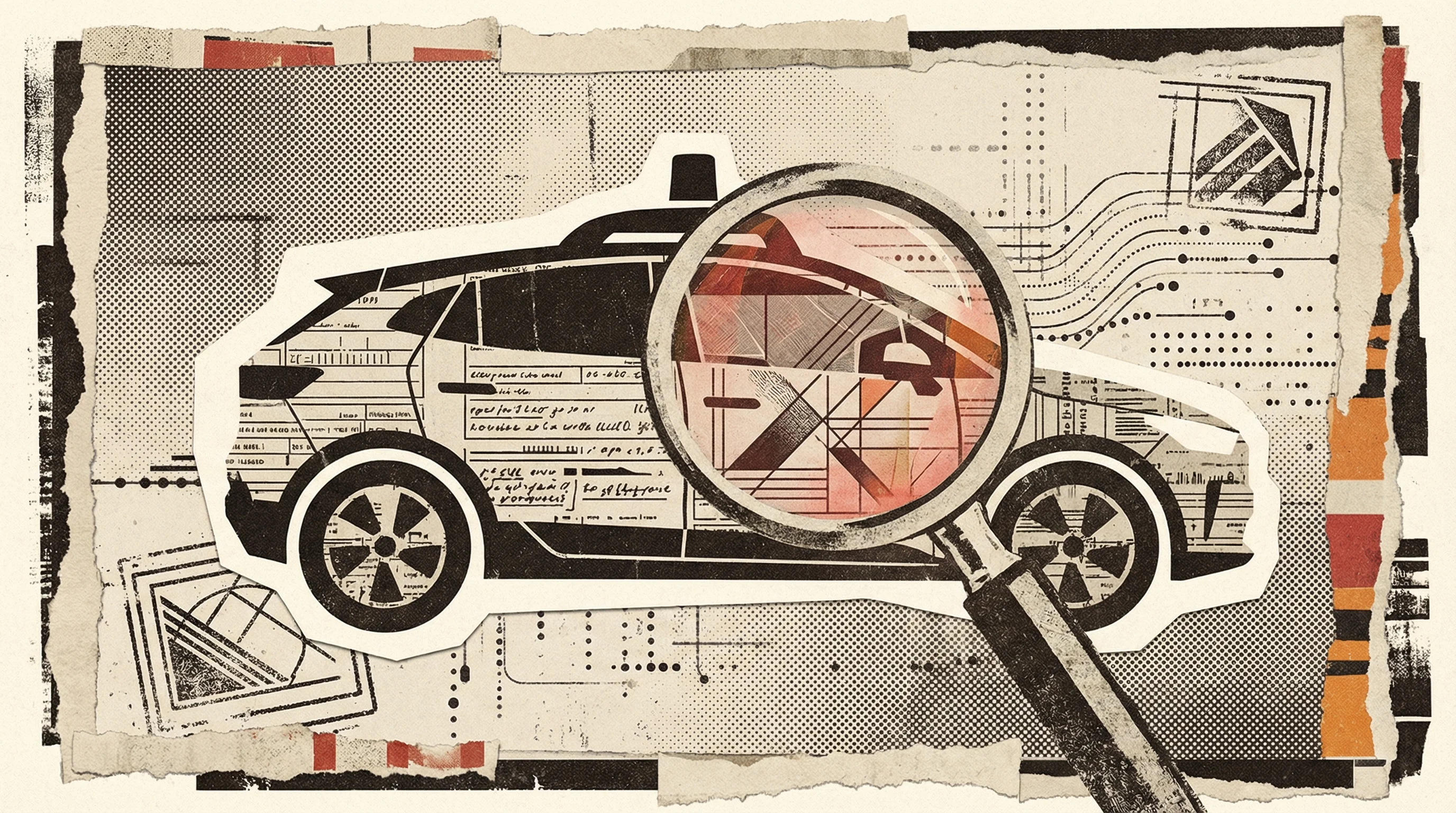
As deployments scale, regulatory expectations are tightening.
The National Highway Traffic Safety Administration amended its Standing General Order on crash reporting in 2025, tightening definitions and data fields for Level 2 and autonomous driving systems. An ongoing NHTSA investigation into Tesla's Autopilot—which the agency has tied to at least 13 fatal crashes as of April 2024—underscores the scrutiny applied to driver-assistance systems that blur the line between human and machine control.
California's Public Utilities Commission continues to adjust robotaxi authorizations dynamically, pausing or expanding permits based on incident data and operational readiness. These regulatory shifts create uncertainty for companies trying to scale, but they also establish baseline safety expectations that perception vendors must engineer toward.
The European Union's AI Act, adopted in May 2024, classifies autonomous driving systems as high-risk AI, imposing rigorous data governance, transparency, and post-market monitoring requirements. ISO 26262 functional safety standards, ISO 21448 SOTIF for safety-of-the-intended-function, and UL 4600 safety cases are becoming contractual requirements for OEM partnerships. Edition 3 of UL 4600, released in recent months, explicitly incorporates autonomous trucking—a sign that freight applications are maturing commercially.
Defense adds another wrinkle. The Department of Defense's Replicator initiative, announced in 2023 and funded at roughly $500 million in fiscal 2024, aims to field thousands of attritable autonomous systems by August 2025. These systems must operate in contested environments with degraded communication and electronic warfare threats. That demands perception stacks that can function without GPS or cloud connectivity—a significantly harder problem than navigating well-mapped urban streets.
What Happens Next
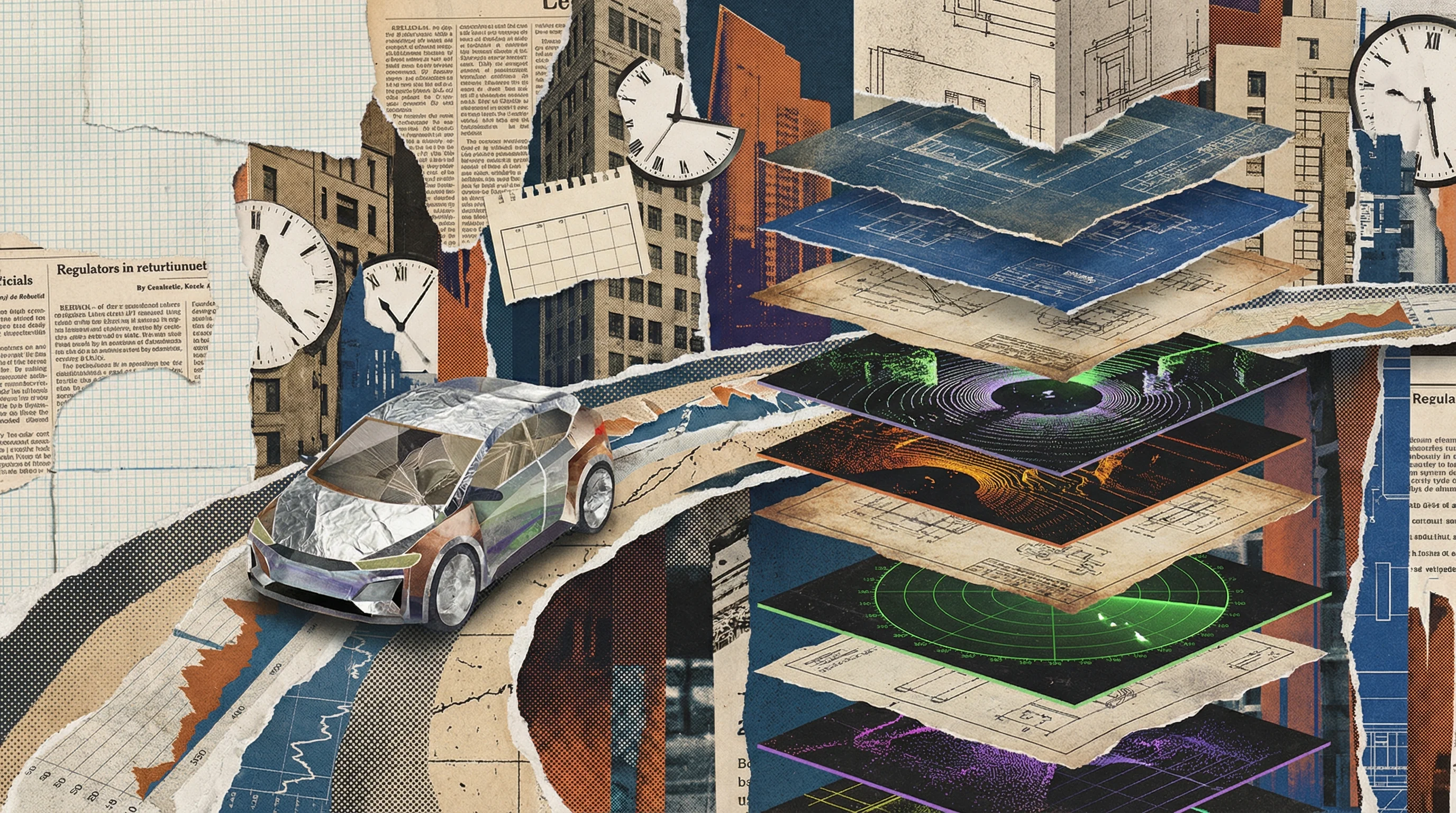
The next 18 months will reveal whether perception stacks can truly scale beyond controlled environments into the long tail of edge cases.
Waymo's multi-city expansion offers a bellwether for urban robotaxi economics. Can the unit economics work at scale, or will operational costs and regulatory friction keep margins in the red? Autonomous trucking—with Aurora's highway service and Kodiak's off-road operations—will generate telemetry data to inform insurance models and regulatory frameworks. Agricultural autonomy represents a nearer-term revenue opportunity with more predictable operational domains and simpler regulatory hurdles.
Sensor commoditization will continue, probably faster than most expect. Lidar prices are falling as Chinese manufacturers scale production. But the race to the bottom on hardware raises an uncomfortable question: where does value actually accumulate? Perhaps in the fusion software that makes millisecond decisions. Or in the data moats built from millions of real-world miles. Or in the regulatory relationships and safety cases that take years to build.
Edge compute platforms—NVIDIA's Jetson Thor, Qualcomm's Snapdragon Ride, Ambarella's CV3-AD—are converging on multi-hundred-TOPS performance with functional-safety certification. But battery-constrained robots, drones, and humanoids need perception stacks optimized for inference efficiency, not just raw performance. Power budgets matter.
Foundation models and world models may redefine how systems are trained and validated, shifting the bottleneck from labeled data collection to synthetic data generation and sim-to-real transfer. If this works, it could democratize access to state-of-the-art perception for smaller companies that lack the resources to collect petabytes of real-world data. But that's a big if.
Unit economics remain murky. Analyst skepticism about robotaxi profitability timelines persists, and the path to positive margins for autonomous trucking is unproven. Off-road applications—agriculture, mining, construction—may offer faster payback periods, making them attractive beachheads for perception vendors.
That $400 billion market opportunity is real. But it's not evenly distributed. The companies that crack real-time perception across diverse operational domains, meet rising regulatory expectations, and actually deliver at scale will capture the lion's share.
The race is no longer about whether machines can perceive the world in real time. It's about who can do it reliably, safely, and profitably. Everywhere, all at once. No pressure.


