

Most people don't think much about lime. Or cement, for that matter—unless they're pouring a driveway. But these unglamorous materials account for roughly 8 percent of global carbon emissions, a footprint larger than most countries. For decades, that figure prompted little more than resigned shrugs from industry executives. The chemistry, they'd say, was locked in. The heat requirements too extreme. The margins too thin.
Then the cost of carbon began to bite.
When Swedish climate tech firm SaltX announced a $1.5 million research grant from Frontier on January 22, the news barely registered beyond a handful of cleantech newsletters. Yet the funding—backed by Stripe, Alphabet, and Shopify through their carbon removal commitment—signals something larger. SaltX plans to scale its multi-plasma electric calcination modules toward production lines capable of churning out a million tons per year. The 15-month project, running through spring 2027, is one of dozens suggesting that electric kilns are migrating from lab bench to factory floor faster than the notoriously conservative cement industry ever anticipated.
Maybe faster than it's ready for.
The Weight of 4 Billion Tons
Cement production hit 4.3 billion tons globally in 2024, though demand forecasts from the IEA and World Cement Association now project a plateau through 2035 and a gradual slide to perhaps 3 billion tons by mid-century. Don't be fooled by the decline; absolute emissions remain enormous. About 60 percent of cement's carbon footprint comes from calcination—the chemical transformation of limestone into clinker, the binding agent in concrete. The remaining 40 percent? Fossil fuels burned to reach temperatures north of 1,400°C.
Less than 1 percent of clinker produced in 2022 qualified as low-emission, according to the World Economic Forum's Net-Zero Industry Tracker. Announced capacity for near-zero cement has climbed to roughly 35 million tons by 2030, but early plants equipped with carbon capture face cost premiums between 75 and 150 percent. Those aren't typos.
Lime production, a smaller culprit at around 1 percent of global industrial CO2, confronts parallel demons. Quicklime emits 0.75 to 0.79 tons of CO2 per ton produced—most of it unavoidable, baked directly into the calcination chemistry. In Germany, lime accounts for about 4 percent of industrial emissions. The sector has relied on fossil-fuel kilns since the Industrial Revolution, and until recently, electrification at the required temperatures seemed economically absurd.
That calculus is unraveling. Industrial process heat swallows more than 20 percent of global final energy demand; roughly 80 percent still comes from coal, gas, or oil, McKinsey data shows. Yet the IEA projects electricity's share will triple from around 4 percent in 2024 to 12 percent by 2030, propelled by policy shifts across China, the European Union, the United States, India, and Japan. Electrification offers a tantalizing side benefit: electric kilns exhaust near-pure CO2 streams, not the diluted flue gas from fossil combustion. That simplifies carbon capture dramatically, cutting costs and energy penalties. For cement and lime makers staring down tightening carbon pricing, the synergy between electrification and carbon management is starting to look less like a luxury and more like survival.
Three Converging Pressures
Policy, technology, and capital are colliding—and the collision is accelerating adoption curves.
Start with regulation. The European Union's Carbon Border Adjustment Mechanism entered its definitive phase January 1, 2026. Although proposals to defer actual certificate purchases to 2027 are circulating in Brussels, CBAM's reporting obligations are already reshaping supply chains. Cement and lime sit squarely within its scope. As free allowances under the EU Emissions Trading System phase out, producers face mounting costs for every ton of embedded carbon. One executive at a mid-sized German lime producer told me off the record that CBAM "turned a theoretical problem into a line item on the P&L."
Across the Atlantic, U.S. federal procurement is pivoting. The General Services Administration is allocating roughly $2 billion in Inflation Reduction Act funds to low-embodied-carbon construction materials—an estimated $767 million earmarked for concrete alone. New York State's Buy Clean Concrete mandate took effect January 1, 2025, requiring environmental product declarations for state projects. California has set global warming potential limits for certain materials. The message is unambiguous: low-carbon cement and lime are no longer boutique products for LEED Platinum vanity projects. They're becoming prerequisites for winning public contracts.
Technology is maturing in parallel, though unevenly. SaltX's Electric Arc Calciner uses electric plasma to drive calcination, producing that prized high-purity CO2 stream. The company has locked in partnerships with thyssenkrupp Polysius, which will integrate the EAC into turnkey plant solutions, and with Holcim, the Swiss cement giant. Last June, Holcim invested SEK 48.9 million (about $4.5 million) for an equity stake and signed a letter of intent to co-develop what both firms envision as the world's first fully electrified cement plant. "We're combining Holcim's cement expertise with SaltX's plasma technology to decarbonize the whole cement process," said Ram Muthu, a Holcim representative, in a company statement that was notably short on timelines.
Meanwhile, Coolbrook—a Finnish startup—is deploying its RotoDynamic Heater, an electric device that blasts high-temperature gases up to 1,000°C, with plans to hit 1,700°C over time. In November 2025, Coolbrook and India's Adani Cement announced the first commercial RDH deployment in cement, expected to cut roughly 60,000 tons of CO2 annually in its initial phase. Coolbrook CEO Joonas Rauramo framed the RDH as a potential "industry standard for high-temperature electrification." Bold words, though Adani's track record suggests a willingness to test them.
In Sweden, Heidelberg Materials ran continuous clinker production trials using plasma heating under the EU-funded ELECTRA consortium. The team operated a 300 kW electric plasma kiln for up to 54 hours—impressive for pilot scale. A 1 MW unit is slated for 2026 or early 2027. "The plasma kiln looks very promising," said Bodil Wilhelmsson, project manager at Heidelberg Materials Northern Europe. "We've produced clinker, and the near-pure CO2 simplifies capture." The unspoken caveat: pilot success and commercial viability are separated by the infamous "valley of death" that has swallowed countless cleantech startups.
Capital is flowing, but the spigot isn't fully open. Cleantech Group reported that low-carbon cement startups raised a record $371.9 million in 2024—triple the prior year. Sounds impressive until you consider industry estimates peg the capital needed by 2030 at around $20 billion. Strategics like Holcim and Saint-Gobain are participating, as are climate-focused funds and advance market commitments like Frontier. The U.S. Department of Energy's Industrial Demonstrations Program, funded with $6 billion from the Bipartisan Infrastructure Law and the IRA, selected 33 projects in March 2024 to de-risk first-of-a-kind technologies in cement, steel, and chemicals. Brimstone, an alternative-chemistry cement startup based in California, was tapped to negotiate a $189 million award.
Then came 2025's federal budget shifts, and DOE canceled several grants—including an $87 million commitment to Sublime Systems for a Massachusetts plant. Policy, it turns out, giveth and taketh away.
Where Rubber Meets Road
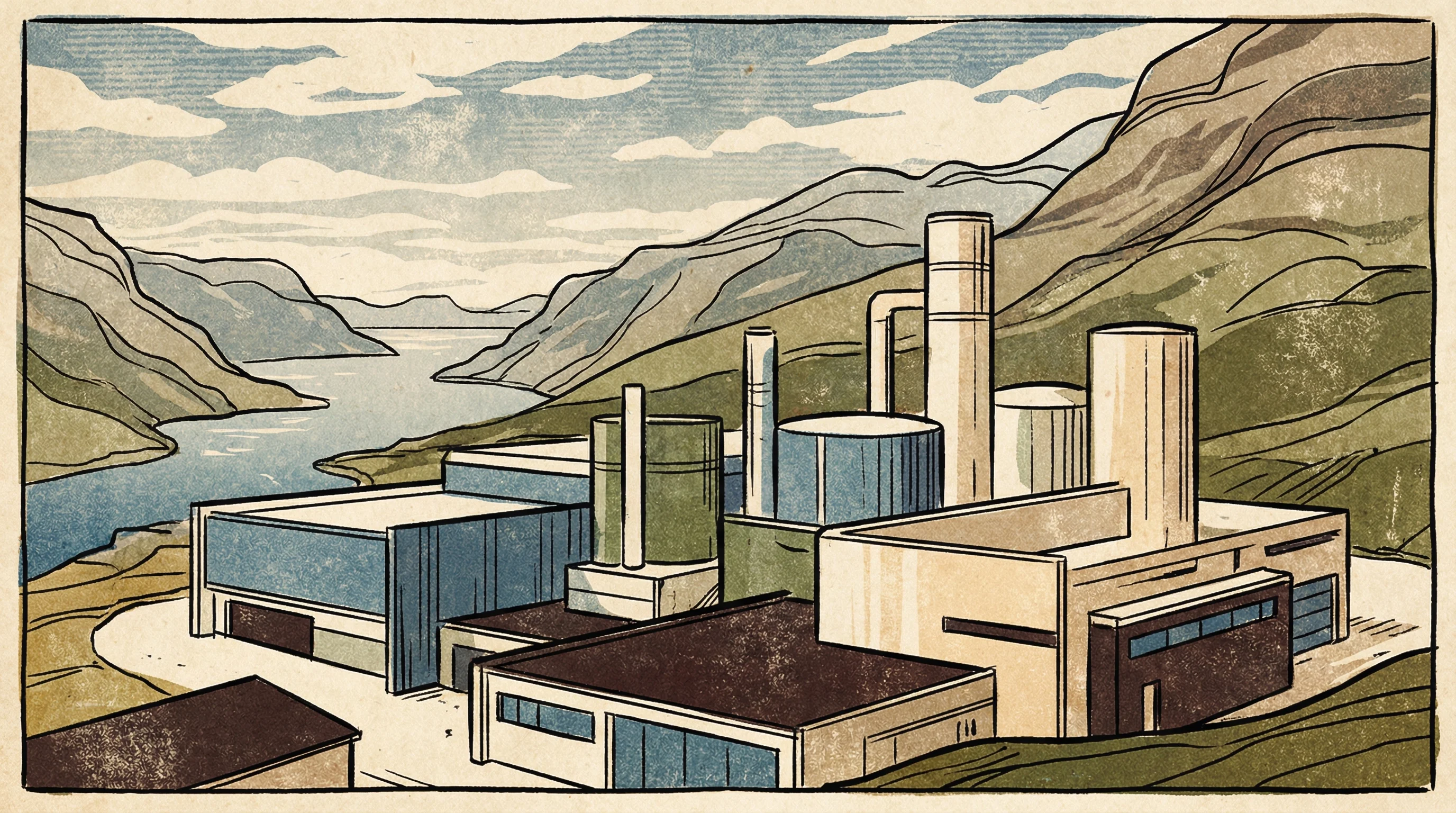
SaltX's most advanced commercial project sits in Mo i Rana, Norway, where SMA Mineral is constructing what the company bills as the world's first zero-emission quicklime pilot plant. The facility will produce 40,000 tons per year using SaltX's EAC technology. Construction starts in the first half of 2026; operations are expected in 2027. Norway's Enova granted NOK 287 million in support. thyssenkrupp Polysius is supplying the EAC-based kiln system. SMA Mineral has branded the concept ZEQL—Zero Emission Quicklime, naturally—and has signaled plans for multiple "mega-factories" if the pilot proves out.
If.
For cement, SaltX operates an industrial demonstration center in Hofors, Sweden, testing both the EAC and an Electric Clinker Reactor pathway. Partners include ABB, thyssenkrupp Polysius, and Holcim. The Swedish Energy Agency awarded SaltX SEK 12.5 million (roughly $1.1 to $1.2 million) in October 2024 to adapt and test the technology for cement, with work beginning in March 2025. CEO Lina Jorheden, who took the helm in January 2025 after stints at Atlas Copco and Epiroc, has described 2025 as a "breakthrough year" for the company, citing strong pull from strategic partners. SaltX has also received partial orders totaling approximately SEK 70 million since 2023, with additional orders announced in November 2025.
Coolbrook's commercial debut with Adani Cement represents a different playbook: retrofitting existing cement plants to displace fossil fuel combustion rather than building greenfield facilities. The first-generation unit delivers hot gases around 1,000°C using renewable electricity. Coolbrook's long-term roadmap targets 1,700°C, which would cover the full temperature range needed for clinker production. ABB spotlighted Coolbrook's work in a November 2024 white paper on cement decarbonization, underscoring electrification and carbon capture as the two primary pathways forward. Whether both can coexist or one will dominate remains an open question.
Rondo Energy, a California-based startup, has taken a thermal energy storage angle. Last year, Thailand's SCG commissioned a 33 MWh brick-based energy storage system at a cement plant, delivering approximately 2.3 MW of thermal output around the clock. The system charges on cheap or renewable electricity and discharges heat when needed, smoothing out solar or wind intermittency. Rondo's co-founder has said the goal is to make industrial heat both clean and cheap by decoupling generation from consumption. It's an elegant concept—assuming the capital costs pencil out at scale.
Alternative chemistries are also advancing, though they occupy a different risk-reward profile. Fortera opened North America's first industrial-scale low-carbon cement plant in April 2024 at CalPortland's Redding, California, facility. The ReCarb process mineralizes CO2 into supplementary cementitious material, producing 15,000 tons per year of cement and sequestering roughly 6,600 tons of CO2 annually. CEO Ryan Gilliam told Time that Fortera aims for a 400,000-ton-per-year plant next, though he emphasized the need for scaled public-private financing and procurement commitments. Translation: someone needs to write very large checks.
Sublime Systems, backed by a significant advance purchase agreement with Microsoft, pilots electrochemical cement that bypasses limestone entirely. But as noted, Sublime's planned Holyoke plant saw its DOE grant canceled in 2025—a reminder that policy uncertainty remains a persistent headwind. Brimstone, which produces ordinary Portland cement from calcium silicate rock rather than limestone, was selected for DOE's Industrial Demonstrations Program and could potentially unlock carbon-negative pathways if paired with carbon capture. Potentially.
Ecocem is building a €50 million, 300,000-ton-per-year ACT line in Dunkirk, France, slated to start in 2026. The technology uses lower clinker ratios and activated supplementary materials to cut emissions by up to 60 percent versus traditional Portland limestone cement, according to a U.S. life-cycle assessment the company released last October. A trial at Wembley in the UK reported roughly 70 percent reductions in concrete's global warming potential for certain applications.
The Next Five Years
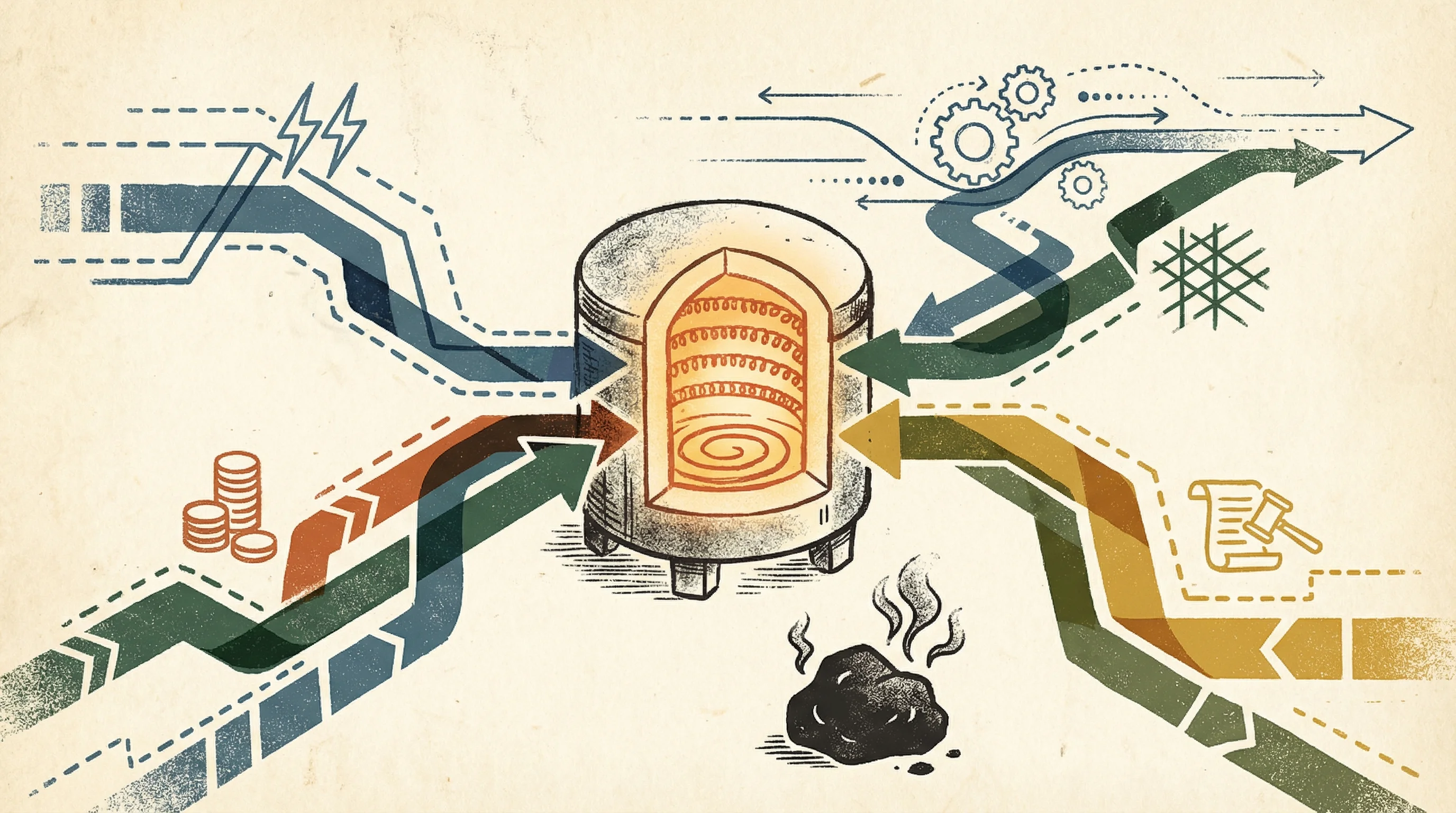
Whether electric kilns become standard equipment or remain a niche curiosity hinges on four variables: electricity price and availability, grid interconnection timelines, equipment capital costs, and policy stability.
Techno-economic studies suggest electrification becomes cost-competitive with fossil fuel kilns when electricity is both cheap and abundant. A 2023 analysis in the Journal of Cleaner Production found that partial electrification—using electric heat for some but not all process steps—can be more cost-effective than full electrification in the near term, particularly when paired with carbon capture for unavoidable process emissions. The IEA's Breakthrough Agenda report for 2025 emphasizes that near-zero cement capacity is climbing, but early CCS-based plants carry steep premiums. Electrification plus capture could reduce those costs by simplifying the capture process and avoiding the energy penalty of separating CO2 from diluted flue gas. Could. Modeling is one thing; operating plants at commercial scale quite another.
Grid capacity is a binding constraint in many regions, a detail often glossed over in cleantech pitch decks. Electric kilns and calciners can demand tens of megawatts at a single site—equivalent to a small town's electricity consumption. Co-deploying energy storage—either Rondo-style brick batteries or Antora's graphite systems—can help smooth load profiles and tap into off-peak or curtailed renewable power. Hybridization with alternative fuels like green hydrogen or biofuels may serve as a transitional step, though hydrogen's cost and availability remain uncertain. Some utilities are balking at interconnection timelines stretching years, not months.
Policy will be decisive, and here the picture gets murky. CBAM's financial obligations are now live in Europe, even if implementation details continue to evolve through bureaucratic channels in Brussels. U.S. Buy Clean policies are spreading at the state level, and the federal government's $2 billion procurement push is creating demand signals. But policy can also reverse, as the 2025 DOE grant cancellations demonstrated. Investors and corporates are watching carefully to see whether industrial decarbonization retains bipartisan support through election cycles—a significant "if" in the current political climate.
Standards and market acceptance present subtler challenges. New binders and alternative chemistries must secure ASTM or CEN approvals and demonstrate equivalent performance in real-world applications, a process that can take years. Supplementary cementitious materials like calcined clay could enable up to 50 percent clinker substitution, but supply chains for these materials are still maturing. As coal-fired power and traditional steelmaking decline, the availability of fly ash and slag—today's dominant supplementary cementitious materials—may tighten, accelerating the need for new alternatives. Electric clay calcination, explored in a 2025 modeling study, could fill that gap. Or it might not.
For investors, the opportunity set is diversifying. Electrified kiln vendors like SaltX and Coolbrook are scaling toward gigaton-per-year markets—assuming they can cross the commercialization chasm. Thermal storage companies like Rondo and Antora position themselves as enablers of round-the-clock clean heat. Alternative chemistry startups—Brimstone, Sublime, Fortera, Ecocem—attack the problem from the materials side, each with distinct timelines, capital expenditure profiles, and technical risks. Procurement-led demand from First Movers Coalition members, federal agencies, and state governments is de-risking offtake, though premiums remain significant. Whether customers will continue paying those premiums once mandates ease or novelty wears off is anyone's guess.
The Endgame
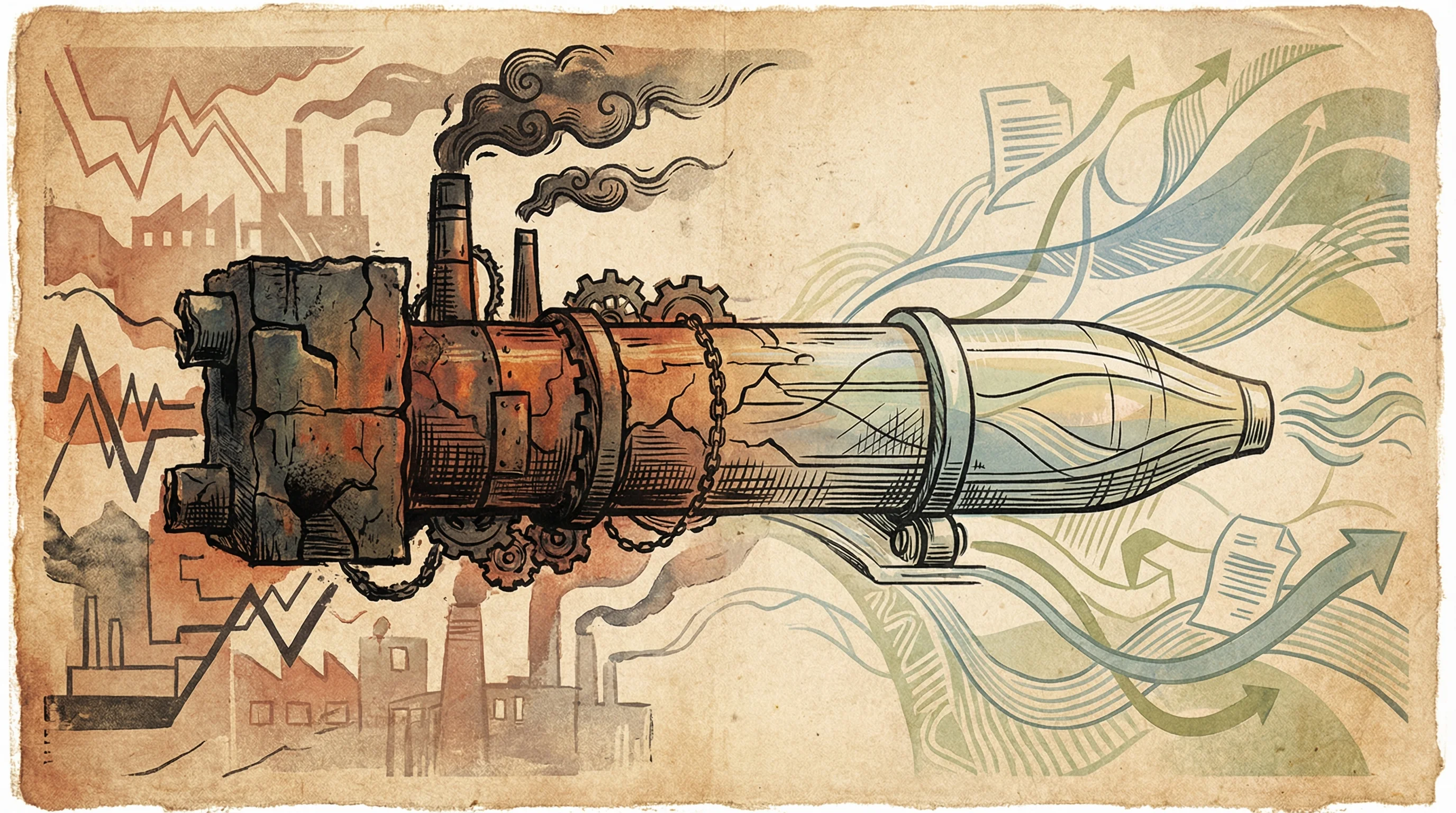
The cement and lime industries are not known for rapid transformation. Cement production technology has evolved incrementally over more than a century; some kilns operating today are older than the people running them. But between CBAM's cost signals, Buy Clean's market pull, and falling renewable electricity costs, the economics of inaction are shifting faster than the industry's traditional conservatism can accommodate.
SaltX's Frontier grant is framed around scaling to 1-million-ton-per-year modules, with potential applications in ocean alkalinity enhancement and CO2 removal markets—a signal that zero-carbon lime could find buyers beyond construction. Holcim has set a target of 8 million tons per year of net-zero cement by 2030. Heidelberg is building a flagship carbon capture project in Norway. The pieces are moving into place, though whether they'll assemble into a coherent picture remains uncertain.
Whether electric kilns become the dominant solution or share the stage with carbon capture, alternative chemistries, and hybrid systems is far from settled. What seems clear is that the era of fossil-fuel-fired cement and lime kilns is entering its final chapter. The question for investors and executives isn't whether to decarbonize—that ship has sailed—but how quickly, and which technologies will capture the value as the transition accelerates.
Betting on the winners at this stage requires equal parts technical savvy, market insight, and tolerance for policy whiplash. SaltX's announcement is one data point among many. But it's a data point worth watching. The race to electrify industrial heat may have just reached a critical inflection point. Or perhaps we're still in the early innings, mistaking pilot projects for proof of concept. Time, as ever, will tell.


