

Kong Qi knows what it takes to build an autonomous vehicle at scale. The Baidu Apollo veteran spent years watching robotaxi projects burn through cash with little to show for it. So when he founded Zelostech in 2021, he made a different wager: forget passengers, focus on packages.
Four years later, that bet has pulled in $400 million across a staggered Series B fundraising campaign—the kind of war chest that signals serious ambition in China's increasingly brutal autonomous logistics market. The final tranche, a $100 million B4 round led by Ant Group in October 2025, closed just as Zelostech was finalizing a merger with Alibaba's Cainiao that valued the combined operation near $2 billion. The company now claims more than 16,000 Level 4 RoboVans on the road globally, a manufacturing footprint that dwarfs most Western competitors, and a roster of backers—Ant, Meituan, Baidu Ventures—that reads like a who's who of Chinese tech.
Whether all that capital and scale translates into a sustainable business remains the open question.
Money In Stages
The Series B didn't arrive in one clean check. Blue Lake Capital and CDH BAIFU co-led a $100 million B1 in November 2024. Another $100 million B3 followed in April 2025, bringing the tally to roughly $300 million before the October close with Ant Group pushed total Series B funding to $400 million. Baidu Ventures and Blue Lake—which led Zelostech's angel round back in January 2022—participated in the final leg. Meituan holds an undisclosed stake, though precisely when or how much it invested remains murky.
Zelostech says it will channel the proceeds into autonomous driving R&D, product iteration, global expansion, and something it calls "supply chain autonomy"—essentially building the urban logistics backbone and customer service infrastructure needed to operate fleets at scale. The phrasing suggests the company sees itself as more than a hardware vendor; it wants to own the full stack, from vehicle to dispatch algorithm to the partnerships that get packages from warehouse to doorstep.
From Prototype to Production Line
Zelostech moved fast. Founded in 2021 with Kong at the helm—he'd previously run autonomous driving for JD Logistics—the startup crossed 10,000 deployed vehicles and logged 50 million kilometers by October 2025. Two months later, at a proof-of-concept event in Malaysia, the company announced it had pushed past 16,000 units in service.
Behind those numbers sits real manufacturing capacity: six factories capable of producing 45,000 vehicles annually. The Z-series lineup—Z2, Z5, Z8, Z10—covers a range of payloads and configurations, with entry-level models priced around RMB 39,800 (roughly $5,500). That's bargain-bin territory for autonomous hardware, a reflection of China's cutthroat pricing dynamics. The 2024 Z5 carries Hesai's AT128 solid-state LiDAR as part of a sensor suite the company claims delivers Level 4 autonomy without high-definition maps, a technical achievement Chinese media sometimes labels "L4.5." Whether that designation means anything beyond marketing is up for debate, but it underscores Zelostech's pitch: deployable autonomy today, not tomorrow.
The Cainiao Consolidation
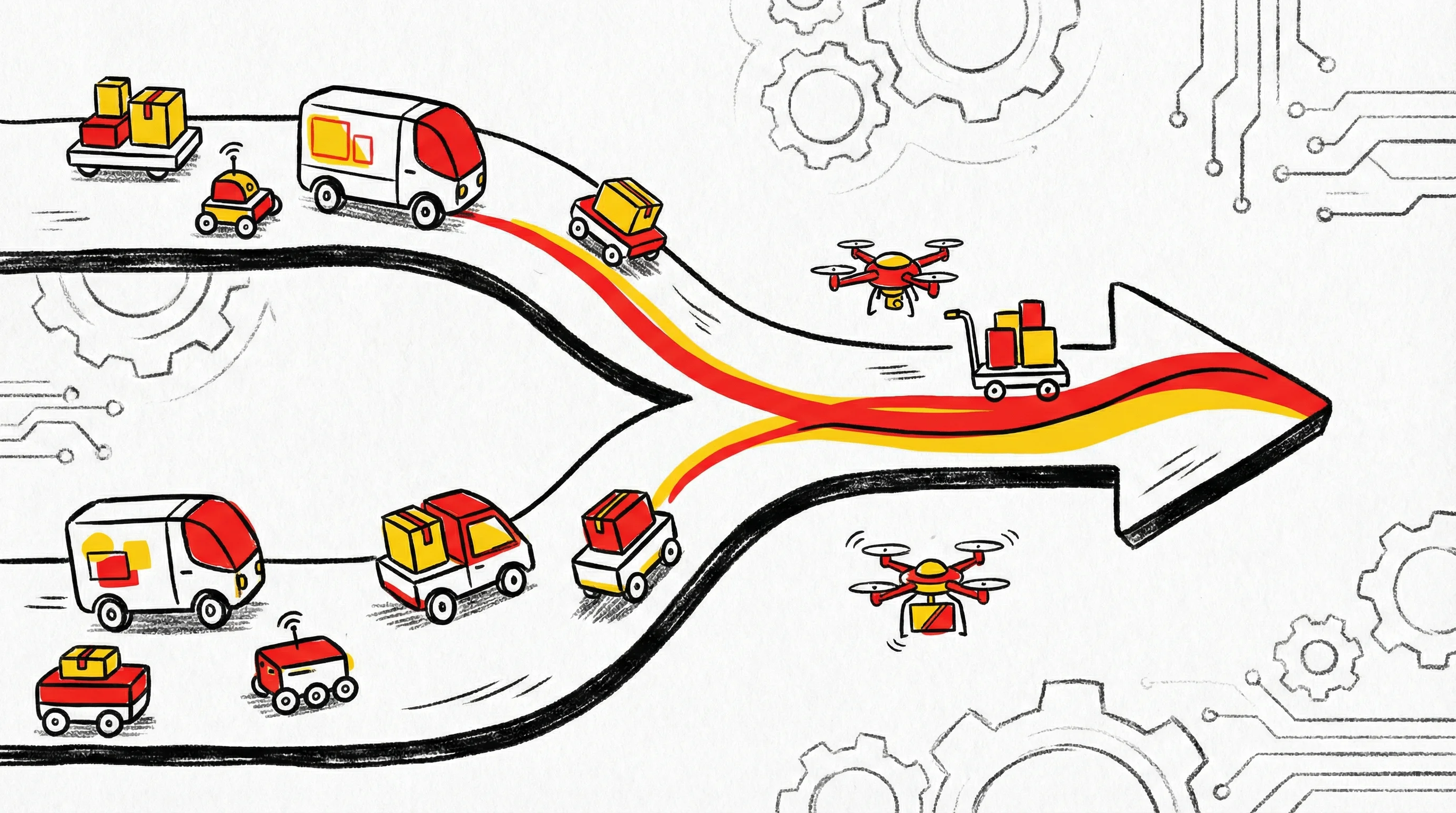
Then came the Cainiao deal. In late January 2026, Alibaba's logistics arm folded its autonomous vehicle unit into Zelostech, a move The Wall Street Journal pegged at a $2 billion valuation for the combined entity. Under the arrangement, Cainiao exits the hardware business—no more building and selling its own autonomous vans—transfers staff to Zelostech, and plants an executive on the board.
The merger makes strategic sense for both sides. Alibaba gets to offload a capital-intensive hardware operation while maintaining exposure through the partnership. Zelostech consolidates two significant players in China's L4 delivery market at a moment when price wars threaten margins across the sector. Cainiao had launched its GT-Lite model at RMB 16,800, undercutting competitors and accelerating a race to the bottom. By joining forces, the companies can perhaps stabilize pricing while pooling R&D resources and customer relationships.
Perhaps. Consolidation doesn't end competition, and rivals like Neolix—which reported over 20,000 orders as of early 2025—aren't standing still.
Customers, Cold Weather, and Global Ambitions
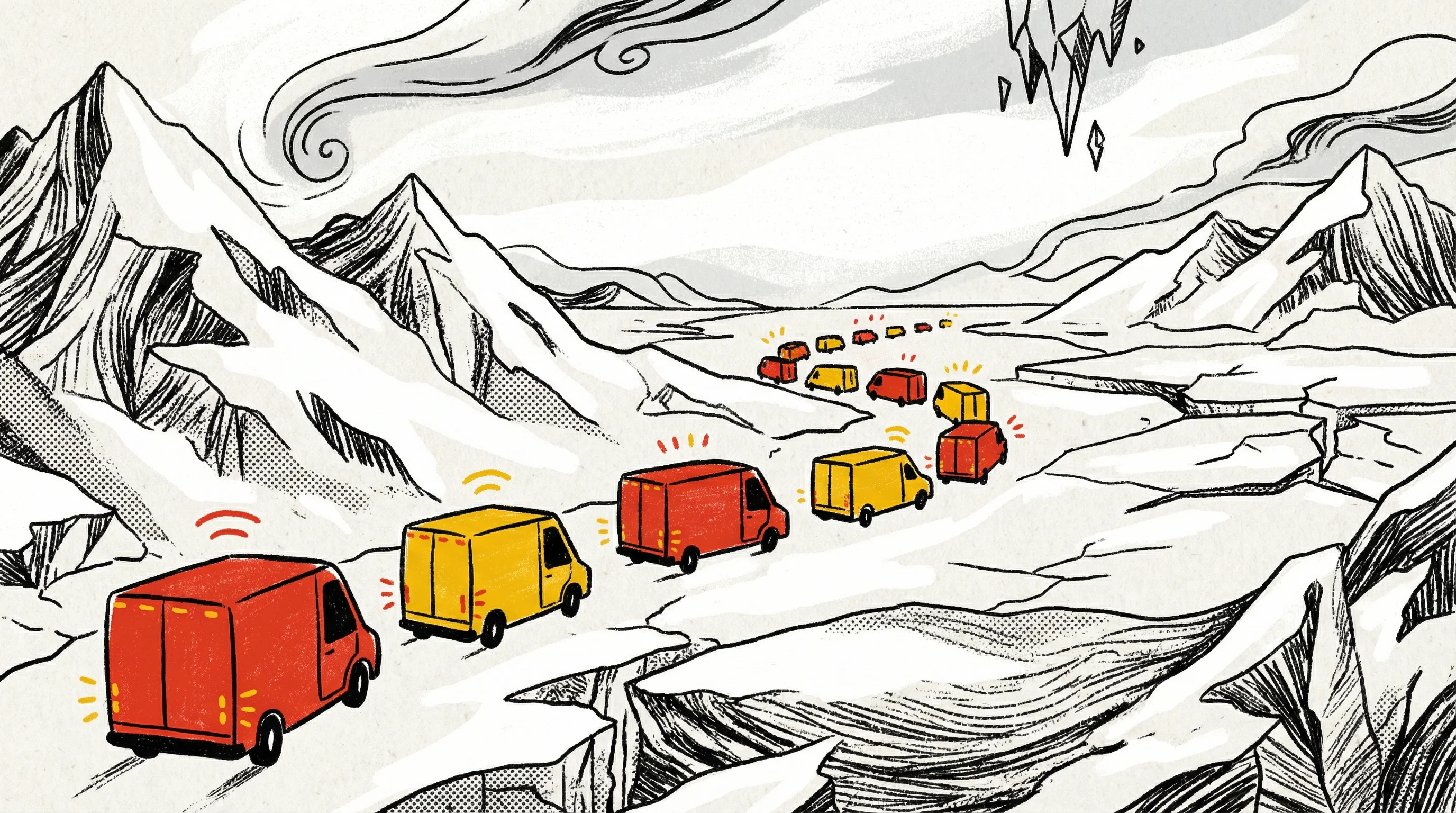
Zelostech's marquee customer win came through China Post, which put out a tender for 7,000 autonomous delivery vans over four years. Zelostech emerged as the largest supplier, a contract that carries unusual technical requirements: the vehicles must operate in temperatures below minus-20 degrees Celsius. That's hardly standard fare for autonomous fleets optimized for balmy urban centers, and it signals the company's willingness to chase deployment scenarios beyond the usual suspects.
Outside China, the company has moved deliberately. In the United Arab Emirates, Zelostech formed a joint venture with 7X (Emirates Post Group) to deploy L4 urban logistics under the brand AutoLogiX. In Singapore—where regulatory attitudes toward autonomous vehicles trend more permissive than much of Asia—Zelostech secured the city-state's first autonomous logistics vehicle license. It partnered with DHL Supply Chain and Infineon on a December 2025 deployment at DHL's Asia Regional Center, where the company says its RoboVan cut annual CO2 emissions by more than 80 percent compared to the diesel truck it replaced. DHL's imprimatur matters; multinational logistics operators rarely publicize partnerships unless the technology actually works.
Zelostech has also signed memoranda of understanding with Singapore Post for middle- and last-mile trials and announced a proof-of-concept with Pos Malaysia and ALS in January 2026. None of these deals guarantee revenue at scale, but they establish regulatory precedent and offer proving grounds outside the pressure-cooker of the Chinese market.
The Road Ahead—Literally and Figuratively
With $400 million banked and the Cainiao integration underway, Zelostech has the resources to press its scaled-L4-logistics thesis. The company claims more than one billion deliveries completed, a staggering figure if accurate. What it hasn't disclosed: revenue, unit economics, or the all-important question of whether these vehicles operate profitably on a per-delivery basis once you account for maintenance, remote supervision, and the inevitable edge cases that still require human intervention.
That silence is telling. Autonomous delivery startups love trumpeting operational metrics when the math looks good. The absence of concrete financial data suggests Zelostech, like most of its peers, is still in land-grab mode—prioritizing deployment scale and market share over near-term profitability.
The competitive landscape won't wait. Neolix's 20,000-plus order book, the ongoing price war, and the physics of a market where hardware margins compress while R&D costs stay stubbornly high—all of it adds up to a difficult environment. Capital buys time, but it doesn't guarantee endurance. Zelostech's manufacturing scale is real, its strategic backers formidable, its regulatory traction in Singapore meaningful. Whether that combination proves durable enough to outlast the inevitable shakeout is another matter entirely.
For now, Kong Qi and his team are placing a very large, very public bet that the future of last-mile logistics runs on four wheels, no driver required. The next 12 months will reveal whether the infrastructure, the partnerships, and the billions of kilometers logged translate into the kind of operational advantage that survives contact with market reality—or whether Zelostech becomes another cautionary tale in the long, expensive history of autonomous ambition.


