

Xsensio closes oversubscribed round to bring continuous biochemical monitoring from EPFL to hospital bedsides
The skin, it turns out, is a lousy liar.
While fitness trackers have been counting steps and monitoring heart rates for years, a small Swiss startup spinning out of EPFL believes the real action happens in the biochemical signals flickering just beneath the surface—metabolites, hormones, proteins that telegraph what's happening inside the body long before symptoms appear. On March 2, 2026, Xsensio SA closed a $7 million Series A round to prove that thesis in clinical settings, a bet that what they're calling "Lab-on-Skin" technology can fundamentally reshape how doctors monitor critically ill patients.
San Francisco-based WI Harper led the oversubscribed round, joined by Privilège Ventures, the European Innovation Council Fund, and a scatter of private investors spanning three continents. The same day, perhaps not coincidentally, Xsensio announced a long-term manufacturing partnership with Texas Instruments—the kind of tie-up that suggests this thing might actually be ready to scale.
Following the Money Trail
The fresh capital brings Xsensio's total disclosed funding to roughly $11 million, though piecing together the company's financial history requires a bit of detective work. There was a CHF 4.2 million first close of a financing back in December 2021, led by Privilège Ventures. Before that, a €1.7 million grant from the EIC Accelerator in September 2020. Valuation? The company kept that detail to itself in last week's announcement.
"Xsensio is defining what wearable biosensing can be," Wilson Wu, Managing Partner at WI Harper, said in the release—the kind of sweeping claim VCs make when they want founders to sound like category creators rather than competitors. WI Harper, which manages north of $1 billion and hunts for cross-border opportunities in healthcare and semiconductors, has been circling the biosensing space for a while. This may be their opening move.
The TI Wild Card
Here's where things get interesting. The Texas Instruments collaboration, announced the same day as the funding close, isn't just a technical footnote. Adrian M. Ionescu, Xsensio's CTO and co-founder—also a professor at EPFL running the Nanoelectronic Devices Lab—said the partnership "strengthens our path to scalable semiconductor technology for biosensing systems." Translation: they need TI's CMOS expertise and manufacturing muscle to turn lab prototypes into something hospitals can actually order.
The timing suggests TI's involvement may have been a condition for the round closing, or at minimum a sweetener that got WI Harper comfortable writing the check. When a semiconductor giant climbs aboard, it tends to quiet doubts about whether your hardware can survive the transition from university cleanroom to commercial production line.
What Lab-on-Skin Actually Does
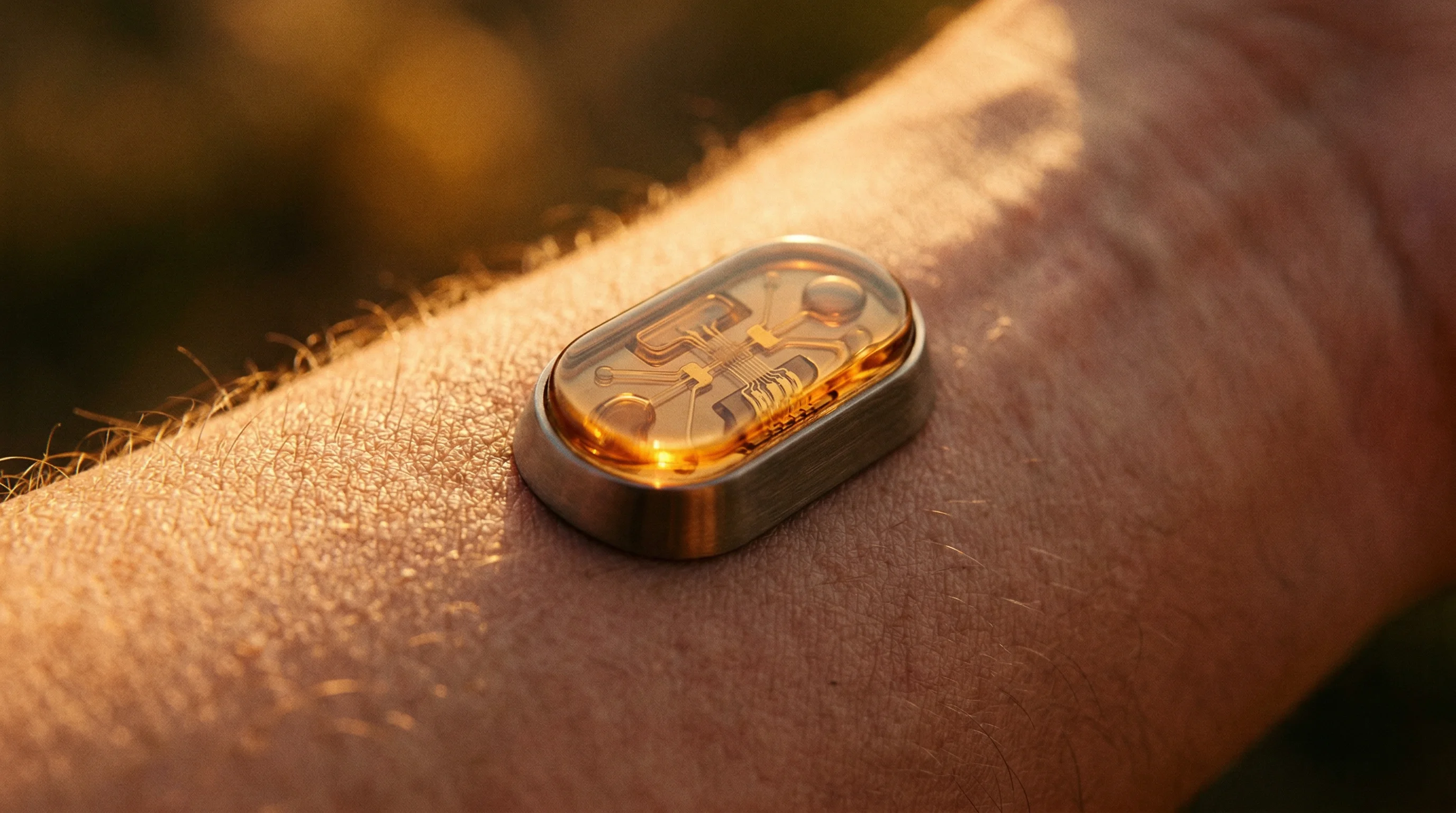
Founded in 2014 at EPFL Innovation Park in Lausanne, Xsensio has spent the last decade trying to crack a problem that sounds deceptively simple: how do you continuously measure what's in someone's blood without actually drawing blood? Their answer involves a wearable chip that reads biomarkers in interstitial fluid—the liquid surrounding your cells—using a tangle of nanotechnology, biochemistry, and microfluidics. Think of it as eavesdropping on your metabolism in near real-time, with data streaming wirelessly to clinicians.
The pitch is aimed squarely at B2B applications: remote patient monitoring, whether someone's recovering at home or tethered to equipment in an ICU. CEO Esmeralda Megally, an MIT Sloan MBA who previously worked at Commons Capital screening healthcare opportunities tied to the Gates Foundation, framed the funding as validation of a shift everyone knows is coming but few have figured out how to monetize. "This is a step toward real clinical environments and real-time biochemical data at point of care," she said.
Real-time. Point of care. The language of a company trying to bridge research and revenue.
Mayo Clinic as Credibility Signal

Clinical validation is the graveyard where most medtech startups go to die, which makes Xsensio's Mayo Clinic relationship worth noting. In January 2023, the two signed a know-how and stock purchase agreement—Mayo took a minority financial stake and is now collaborating on critical-care applications. Before that, Xsensio was selected for the Mayo Clinic & ASU MedTech Accelerator in 2022.
Jacqueline Ruedin Rüsch, Chair of Xsensio's board and a General Partner at Privilège Ventures, leaned into the shift-versus-incremental-improvement framing. "Continuous biochemical monitoring represents a fundamental change in how we approach patient care," she said. Maybe. Or maybe it's just faster, cheaper lab work that lets doctors catch deterioration before it becomes a code blue. Either way, having Mayo's name attached helps when you're trying to convince hospital procurement offices this isn't vaporware.
Crowded Field, Different Bets
Xsensio isn't alone in chasing the continuous monitoring dream, and the competitive landscape reveals how fragmented the technological approaches remain. Epicore Biosystems, for instance, has raised $32 million through 2025 building sweat-sensing wearables—a different biological signal, different use cases. Australia's Nutromics pulled in A$7.5 million last September for a "Lab-on-a-Patch" microneedle platform. Same promise, different puncture method.
The company lists its employee count somewhere between 11 and 50 on LinkedIn, though those numbers have a way of going stale. What matters more is whether the team can navigate what comes next: regulatory clearance, clinical trials that don't just work but convince, and the messy business of getting doctors to trust data from a sticker.
The Make-or-Break Phase
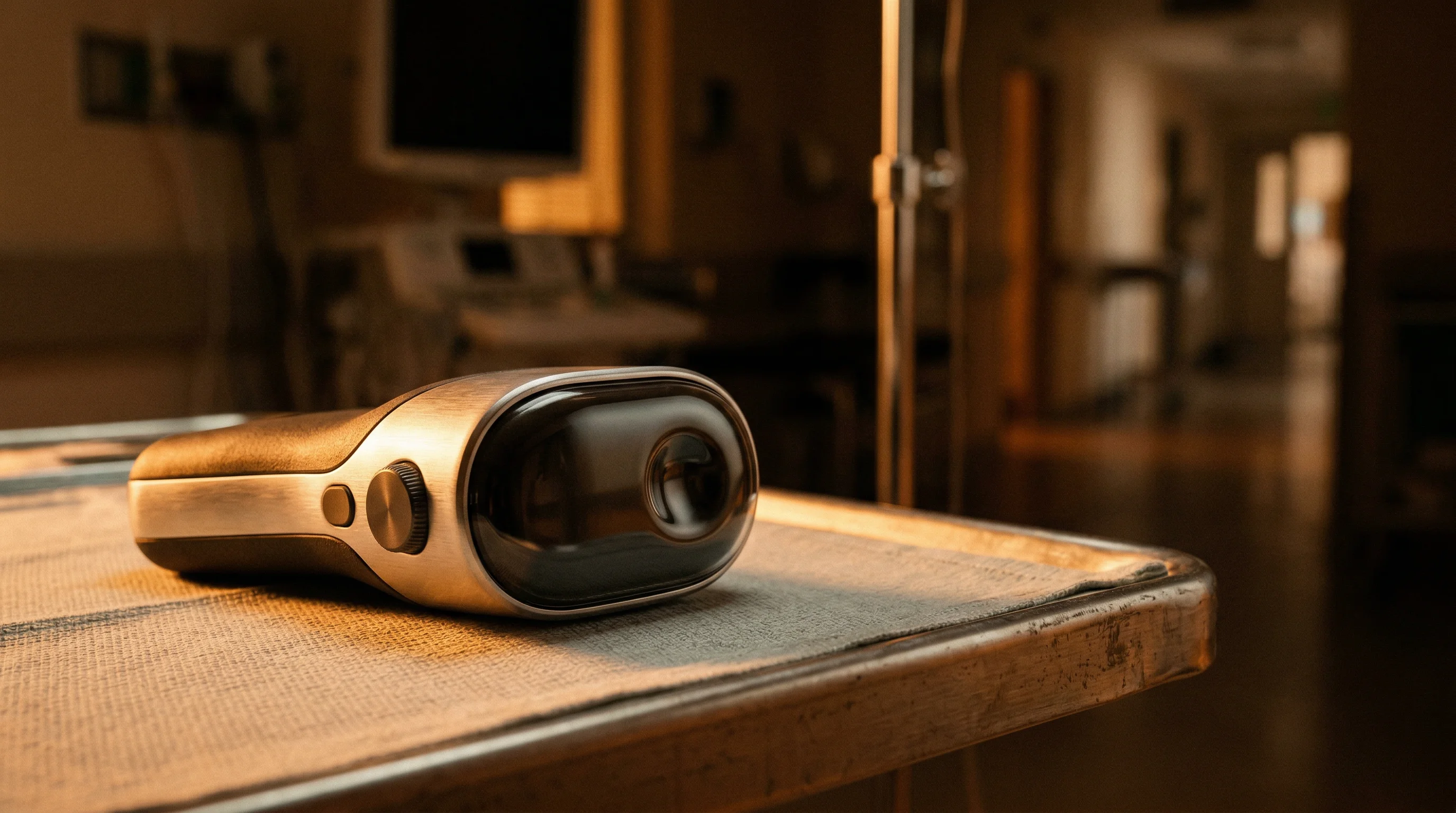
Series A proceeds will fund clinical validation studies and continued platform development—standard language that obscures the harder question of whether Xsensio's EPFL-born technology can survive contact with real hospitals, real patients, real reimbursement battles. The TI partnership suggests they're serious about manufacturing scale. The Mayo relationship suggests someone credible believes the science works.
What they haven't proven yet is whether continuous biochemical monitoring is something healthcare systems will pay for, or just something they'll admire from a distance while sticking with the slower, cheaper methods they already know. That's the test every biosensing startup eventually faces: the gap between "this is amazing" and "our CFO approved the purchase order."
Xsensio is betting seven million dollars—and a decade of EPFL research—that they can close it.


