

The scientists at Genentech's South San Francisco campus have a problem most of their peers would envy. Their drug discovery pipeline is overflowing. Artificial intelligence has made structure prediction, binding affinity modeling, and virtual screening so efficient that therapeutic candidates now pile up faster than anyone anticipated a few years ago. But here's the catch: once those molecules reach the characterization stage—the unglamorous work of validating glycosylation patterns, confirming post-translational modifications, mapping peptides—the whole operation grinds into something closer to artisanal craft than industrial process.
Mass spectrometry instruments generate terabytes of raw data. Analytical teams still inspect much of it manually. Reports that once required days now stretch into weeks, sometimes months. The front end has gone hyperspace; the back end remains stubbornly earthbound.
A three-person startup out of Y Combinator's latest cohort thinks this mismatch represents a $65 billion wedge. Maybe they're onto something. Either way, the tension they're targeting is real enough that even the incumbents are scrambling.
The Numbers Tell a Story of Strain
Last month, MarketsandMarkets pegged the proteomics market at $36.32 billion for 2025, projecting it will hit $65.78 billion by 2030—a compound annual growth rate hovering near 12.6 percent. Mass spectrometry claims 30.28 percent of that revenue, according to Mordor Intelligence, with pharmaceutical and biotech companies accounting for 73.06 percent of demand.
Those figures hint at an industry in transition, perhaps more than the market researchers fully capture. The FDA's new drug approvals have remained robust in recent years, with biologics making up close to half of recent approvals, per William Blair's equity analysts. By early 2025, the agency had cleared numerous biosimilars. The regulatory pipeline looks robust on paper, yet the analytical development teams tasked with shepherding these molecules through quality control are feeling the squeeze.
Major instrument makers—Thermo Fisher, Bruker, Waters, SCIEX—have responded with faster hardware and smarter software. Waters unveiled its waters_connect 4.1.0 platform late last year, touting processing speed improvements upward of 91 percent for certain configurations and bundling a multi-attribute method application aimed squarely at quality control workflows. Bruker's presentations at the 2025 U.S. HUPO conference highlighted deeper plasma proteome coverage at lower cost. Genedata Expressionist, an enterprise analytics platform, has published webcasts claiming to shrink site-specific glycosylation monitoring from "weeks to minutes."
Still, throughput gaps persist. Enterprise users—speaking off the record, as they tend to do when describing vendor shortcomings—report analysis and reporting cycles that can stretch months. Expert bottlenecks remain stubborn. The platforms are improving, no question. But they weren't built for the candidate volumes AI is now generating.
Three Forces Collide
What's driving the crunch? Three forces, mostly.
First, AI's infiltration of early discovery has been nothing short of explosive. AlphaFold 3 extended structure prediction beyond individual proteins to encompass biomolecular interactions—proteins binding with DNA, RNA, ligands, antibodies, even post-translational modifications. BCG reported in 2025 that AI-discovered molecules are showing early signals of higher Phase 1 success rates versus historical baselines, though those figures are preliminary and likely suffer from selection bias—early adopters cherry-pick their best shots—and the directional trend warrants careful interpretation. Deloitte's 2026 Life Sciences Outlook found that 41 percent of executives now cite generative AI as influential in their R&D strategies, even as average drug development costs have climbed past $2 billion. More candidates are entering pipelines, and they're entering faster. That much is certain.
Second, regulatory frameworks are quietly shifting to accommodate advanced analytics. ICH Q2(R2) and Q14, finalized in March 2024 and adopted globally through the following year, emphasize lifecycle approaches, risk-based analytical quality by design, and—critically—the inclusion of mass spectrometry and spectroscopic methods in validated workflows. The United States Pharmacopeia published General Chapter <1060> on mass spectrometry-based multi-attribute methods in September 2023, offering best practices for MAM in protein therapeutics. By January of this year, USP research indicated that MAM can match or exceed conventional quality control testing while delivering added specificity.
The European Federation of Pharmaceutical Industries and Associations made engaging regulators on MAM a 2025 priority for its Manufacturing and Quality Group. FDA scientists, for their part, presented a MAM forced-degradation study on rituximab at a 2024 science forum. The message threading through these developments: regulators are open to advanced, validated methods, assuming sponsors can demonstrate robustness and data integrity. That creates tailwinds for automation and AI-assisted analytics—provided the validation frameworks keep pace, which is never a given.
Third, geopolitical and supply-chain dynamics are quietly reshaping where and how characterization happens. The BIOSECURE Act, signed into law last December, restricts U.S. government procurement and funding for what it terms "biotechnology companies of concern." Initial lists didn't include major contract research and development organizations like the WuXi entities, but congressional pressure to expand those designations continues to mount. Companies relying on offshore analytical partners may soon face compliance headaches or capacity constraints, accelerating demand for domestic or allied characterization capacity—and, perhaps more importantly, for software platforms that can scale without proportional headcount growth.
The Startup Taking Aim
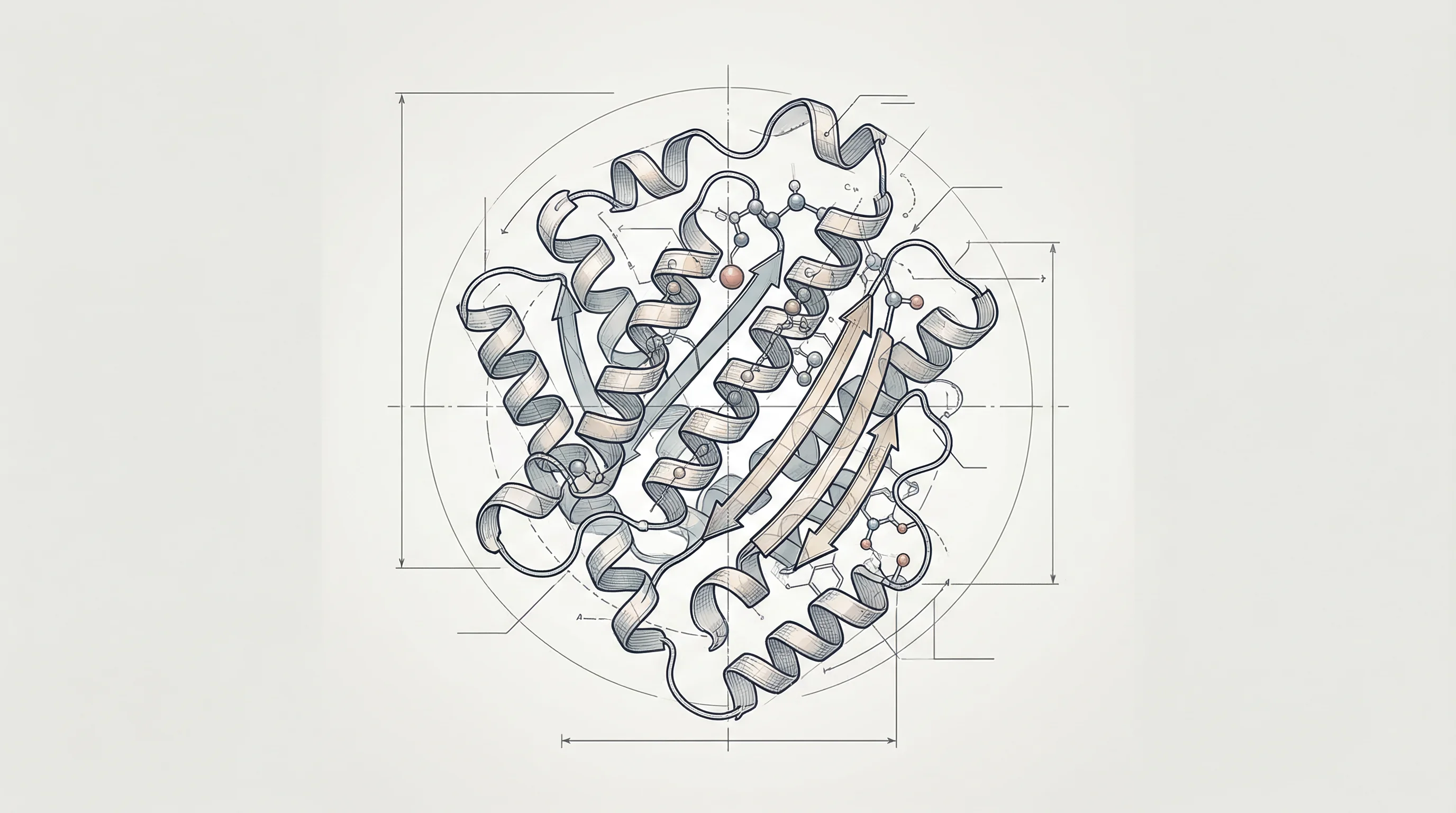
Enter 10x Science. The San Francisco outfit launched publicly in mid-February with a pitch that directly addresses the characterization lag. The three founders—CEO David Roberts, COO Andrew Reiter, CTO Vishnu Tejus—describe their product as an "AI-native platform for next-generation protein characterization." Roberts is a Stanford postdoc in Carolyn Bertozzi's lab (she won the 2022 Nobel Prize in Chemistry) and a Damon Runyon Fellow. Reiter worked at the Broad Institute Proteomics Platform and is pursuing a Stanford Biology PhD under Bertozzi and another Stanford faculty member. Tejus is a two-time Y Combinator founder and was a founding engineer at Nooks.
The team claims it can transform raw analytical data into output-ready characterization reports "in minutes," potentially saving development teams upward of $150,000 a month by improving reproducibility and scalability. Bertozzi herself publicly congratulated the team in a LinkedIn post last month, explicitly mentioning "next-gen protein characterization (including glycoproteomics)." CB Insights lists a $500,000 convertible note tied to Y Combinator, which likely reflects the accelerator's standard early-stage instrument. The page is unclaimed and details sparse—par for the course at this stage.
10x Science is targeting pharma and biotech biologics teams, academic core facilities, and contract research organizations scaling analytical capabilities. Technical specifics—supported instruments, validated file types, customer traction—remain under wraps. The pitch, though, is strategically timed: AI has turbocharged discovery. Now the development workflows need to catch up.
They're not alone in sniffing opportunity here. Orbion claims "AI-powered comprehensive protein characterization and protocol generation." Nuantic focuses on AI-optimized protein and peptide variants for biophysical properties. Nomic Bio published a Nature Methods paper last November on nELISA, a high-plex functional proteomics technology that completed a roughly 10,000-well PBMC perturbation study in a week. Seer's Proteograph platform leans on nanoparticle-enabled proteomics. Cradle applies machine learning to protein engineering.
Incumbents aren't sitting idle. Waters released waters_connect 4.1.0 with MAM workflows and HPLC CONNECT bridges to Wyatt MALS instrumentation for SEC-MALS analysis. Bruker rolled out GlycoScape and AssayMAP Bravo automation for glycoproteomics workflows alongside timsTOF hardware updates. SCIEX markets Biologics Explorer for intact, subunit, peptide mapping, and glycan analysis. Genedata Expressionist positions itself as an enterprise solution, citing case studies from Sanofi and Merck, though exact details remain closely held.
On the contract services side, Charles River and WuXi Biologics offer mass spectrometry services for product characterization and host cell protein analysis. WuXi, which presented a 2024 webinar on cIEF-MS and high-throughput intact mass workflows, now faces ongoing scrutiny under the BIOSECURE Act—though it hasn't yet been formally designated a company of concern. That uncertainty alone may be enough to shift some demand.
What Comes Next
The proteomics services market alone is projected to grow from $8.77 billion in 2025 to $16.46 billion by 2030, according to MarketsandMarkets data released last month. That's a 13.4 percent compound annual growth rate. Demand is being pulled from multiple directions: more biologics in clinical development, biosimilar characterization requirements, single-cell and spatial proteomics expanding into clinical applications, and—looping back—the downstream effects of AI-accelerated discovery.
Multi-attribute method adoption is likely to accelerate over the next two to three years. USP <1060> has provided a regulatory scaffold. EFPIA's 2025 focus on global acceptance signals industry commitment. FDA researchers are publishing internal studies. The pieces are aligning for MAM to migrate from development labs into quality control for specific product attributes—peptide-level critical quality attributes, targeted intact workflows—assuming validation and data integrity frameworks mature in parallel. That's a non-trivial assumption.
AI-assisted analytics are already mainstream in discovery and development labs. Neural-network scoring (DIA-NN), deep-learning rescoring (MSBooster), and transformer models (DIA-BERT) are in active use. Vendors have embedded AI features—Thermo's CHIMERYS integration in Proteome Discoverer 3.x, for instance. The open question is when and how these tools cross into quality control environments. That will require validated, audit-trailed, 21 CFR Part 11-compliant systems with model lifecycle management under ICH Q14. Expect pilot submissions citing analytical target profiles and performance monitoring within the next 18 to 24 months, though timelines in this industry have a habit of slipping.
If the BIOSECURE Act's list of designated companies expands this year—and political pressure suggests it might—U.S. federally funded sponsors could find themselves rebalancing contract research, contract development, and analytical partners in a hurry. That scenario would increase demand for domestic or allied characterization capacity overnight. Software platforms that enable internal teams to scale without proportional headcount growth become strategically valuable in that context.
The Hard Part

For biotech founders and pharma R&D executives, the strategic calculus is shifting in real time. AI has delivered on its promise to generate more candidates, faster. The industry now needs to match that velocity downstream. Analytical development, long a supporting function tucked away in the org chart, is becoming a pacing step. Companies that solve characterization throughput and reproducibility—whether through internal automation, next-generation software, or partnerships with nimble startups—will have a tangible competitive edge in getting molecules to clinic and to market.
10x Science and its peers are placing a bet that the bottleneck is real and that the timing is right. The market data, regulatory signals, and vendor activity suggest they may well be correct. The question, as always, is execution.
Proteomics is a deep technical domain with regulatory stakes. Turning weeks into minutes requires more than clever algorithms. It requires validation, trust, and integration into workflows that are risk-averse by design and necessity. That's the hard part, the unglamorous grind that doesn't fit neatly into a pitch deck or a LinkedIn announcement. It's also the opportunity—assuming the science holds, the customers bite, and the FDA's reviewers nod along when the first submissions land on their desks.


