

The sawmill fire that keeps Thomas Längle up at night happened seven years ago, and it wasn't even his facility. But when Schilliger Holz, a wood products company outside Zurich, called him after a blaze tore through one of its plants in 2017, Längle and his co-founder Drew Hanover saw something most people don't: a market opportunity sitting in the wreckage.
Fast forward to this spring, and AVIAN — the startup the two launched to prevent exactly that kind of disaster — closed a $2.6 million pre-seed round led by Founderful, a Zurich-based investor that specializes in early-stage bets. What's unusual here isn't just the funding. It's that AVIAN, founded in 2023 and based in Dübendorf near Zurich, operated profitably on its own cash before taking any outside money. That's increasingly rare in a venture ecosystem conditioned to raise first, validate later.
The company says it has already prevented more than $50 million in potential damages across about 50 installations spread over nine countries. Those aren't round numbers meant to impress pitch decks. They're the kinds of figures that matter to insurers who are quietly reassessing whether they want to cover certain industrial operations at all.
The Insurance Problem No One Talks About
Here's the uncomfortable reality facing sawmills, recycling plants, and chemical processors: some of them are becoming uninsurable. Publicly reported fires at recycling facilities alone climbed 15 percent from 2023 to 2024, rising from 373 to 430 incidents. Losses in the U.S. and Canadian recycling and scrap sectors hit roughly $2.5 billion in 2025. A chunk of that stems from lithium-ion batteries that end up in waste streams and then, inevitably, combust.
AVIAN's own analysis claims a sawmill fire breaks out every 4.5 days somewhere in North America. Whether that number holds up under scrutiny or not, the broader trend is clear. Insurers are either hiking premiums to uncomfortable levels or walking away entirely from facilities they deem too risky. That creates an opening for a company selling what amounts to an early-warning radar for heat.
What AVIAN Actually Does
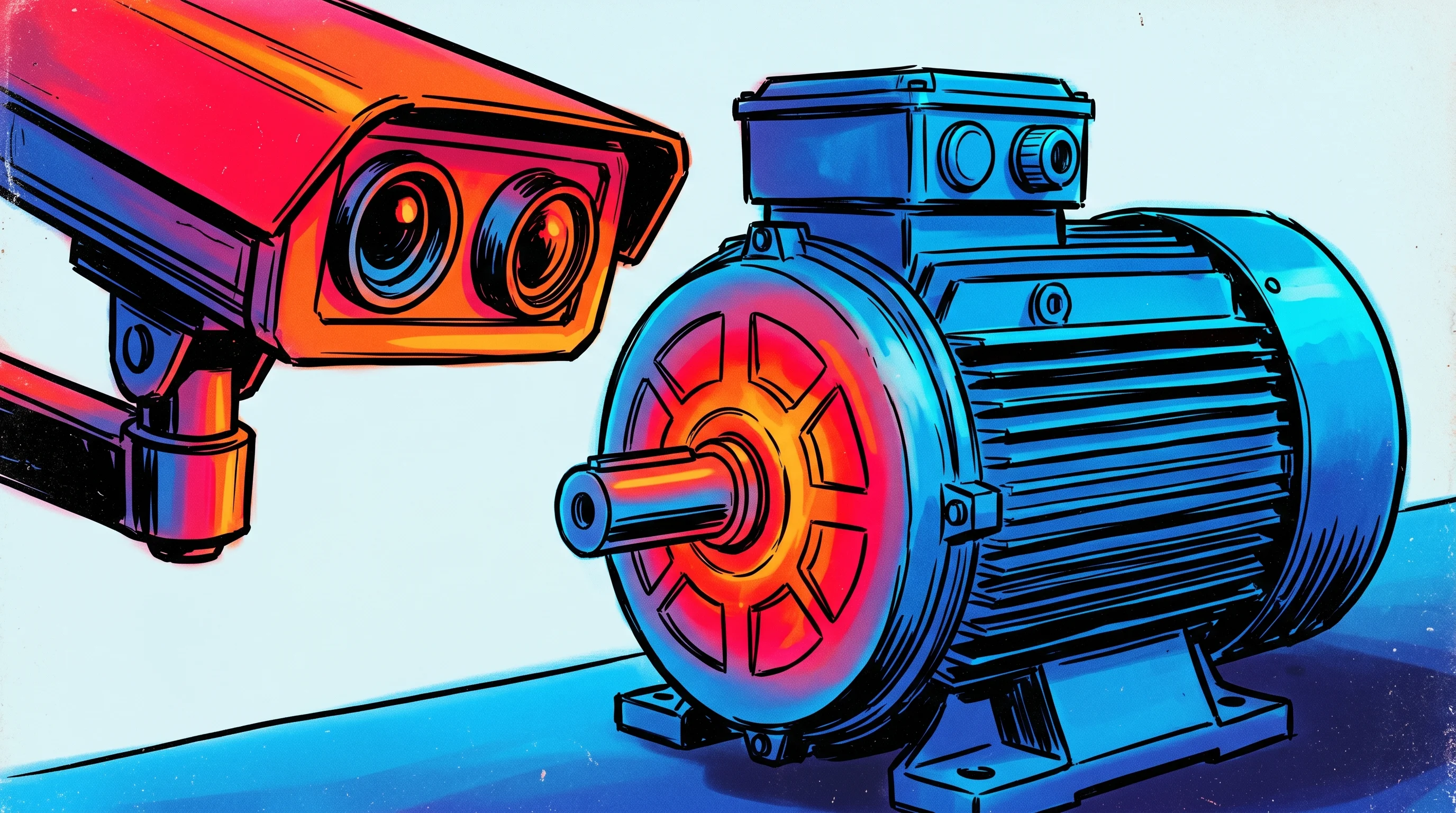
The core product is something called the T100, a thermal monitoring system that watches motors, bearings, conveyors, and electrical cabinets for heat signatures that shouldn't be there. It pairs thermal imaging with standard RGB cameras and runs AI models on the device itself to screen out normal temperature fluctuations — a press that runs hot by design, a motor warming up after startup — and flag the patterns that precede fires or equipment failures.
More recently, the company rolled out AVIAN Vision, an on-premises server that can plug into existing CCTV infrastructure and scan for smoke or flame in about five seconds. AVIAN says Vision was trained on thousands of actual industrial fire events, which, if true, gives it a dataset most startups building computer vision models would envy. Each server can monitor up to 160 cameras and carries SOC 2 Type II certification, the kind of compliance credential that enterprise buyers tend to require.
The logic is straightforward: thermal catches problems before they become visible. CCTV catches what thermal might miss because of coverage gaps. Together, they form what Founderful partner Alex Stöckl calls an "industrial intelligence layer," a phrase that sounds like venture capital jargon but gestures at something real — the idea that underwriters might one day price risk based on real-time telemetry instead of historical loss tables.
The ROI Pitch Is Working
At Kamps Pallet's sawmill in Dillwyn, Virginia, AVIAN's installation reportedly cut annual insurance premiums by around 10 percent. Sierra Pacific Industries, which operates a facility in Quincy, California, avoided more than 24 hours of unplanned downtime over the past year, according to the company. Then there's Schilliger Holz again, the very customer whose 2017 fire set all this in motion. The company caught a pellet press fire early enough to contain it before major damage, and later detected a small electrical fire at a German site that could have shut production down for six to 18 months.
Those results aren't outliers. They're the kind of outcomes that get forwarded up the chain to CFOs who care more about balance sheets than technology. The ROI case writes itself, which is perhaps why AVIAN is on track to exceed $1 million in annual recurring revenue this year with a team of just 10 people.
Who's Behind It
Längle runs the business as CEO. Hanover, the CTO, previously co-authored robotics research with the University of Zurich's Robotics and Perception Group, which gives AVIAN some academic credibility but not the usual pedigree of a spinout drowning in patents. The founding story is pragmatic, almost utilitarian. They built the system for mill operators working in dusty, high-heat environments who can't afford a monitoring tool that drowns them in false positives every time a machine warms up.
The company started in wood products because that's where it had a customer willing to be the guinea pig. Now it's expanding into recycling, chemical processing, oil and gas, maritime operations, and EV charging depots — basically, anywhere heat and flammable materials intersect in inconvenient ways.
What Happens Next
The fresh capital will go toward engineering hires and rolling out systems across these new verticals, which is the part where things get interesting. AVIAN recently posted a job listing for its first marketing lead, aiming for a path toward $10 million in annual recurring revenue. That's an ambitious target for a team still in the single digits, but maybe not unrealistic if the insurance crisis keeps tightening.
The real question isn't whether the technology works. The customer data suggests it does, or at least works well enough to justify the cost. The question is whether AVIAN can scale quickly enough to meet demand from industries watching their coverage options evaporate. There's a narrow window here — perhaps narrower than the founders expected — where being early to a problem that's growing fast matters more than having the most polished go-to-market motion.
Industrial fires aren't going away. Insurers aren't getting more generous. That makes this a rare case where the market might actually come to the product, rather than the other way around.


