

Ria Rustagi and Bhavya Madan want to put electrodes on your temples. Not for monitoring—they tried that already. This time, they're going for something more ambitious: stimulating your brain directly, through a pair of noise-canceling headphones, to reduce stress in real time.
Their company, Sychedelic, announced in May 2026 that it had closed $3.5 million in seed funding for a device that marries consumer audio hardware with transcranial direct current stimulation, or tDCS—a technology more familiar in clinical labs than Best Buy aisles. TurboStart, Ideabaaz, and Praveek Ventures led the round, joined by Cultadvisors LLP and a scattering of angel investors from India, the UAE, and the Indian diaspora.
The capital will fund marketing, manufacturing scale-up, and research expansion. It will also bankroll a Kickstarter campaign, slated for mid-May to June, that the Delhi NCR-based startup hopes will validate consumer appetite for what remains, in many quarters, a contentious category.
A Pivot From Passive to Active
Sychedelic is the second act for Rustagi and Madan, whose first venture, Neuphony, built an EEG headband designed to track brain activity passively. That device, which raised around $560,000 and generated roughly $190,000 in revenue during fiscal 2024, found a niche—but apparently not a big enough one. The founders wanted intervention, not just observation.
So they built something new. The Sychedelic headset uses photoplethysmography sensors at the temporal artery to read heart rate and heart rate variability. Once the system detects stable signal quality, it primes the user with audio entrainment, then delivers 2.0 milliamps of electrical stimulation for 20 minutes. The target? The dorsolateral prefrontal cortex, mapped to electrode positions F3 and F4—regions associated with mood regulation and executive function.
The company claims the device is CDSCO-approved as a medical device in India and carries ISO 60601-1-2 certification, though independent confirmation of those credentials in public registries wasn't readily available. Patent applications are pending. Strip away the neurostimulation, and what remains is a capable pair of headphones: 40mm drivers, five-microphone hybrid active noise cancellation, 20-hour battery. Pre-orders are open at $499, with shipments planned for midsummer.
It's a device that straddles two worlds—wellness gadget and medical intervention—and the founders appear to be betting that consumers will embrace both.
The Competition Is Already Stimulating
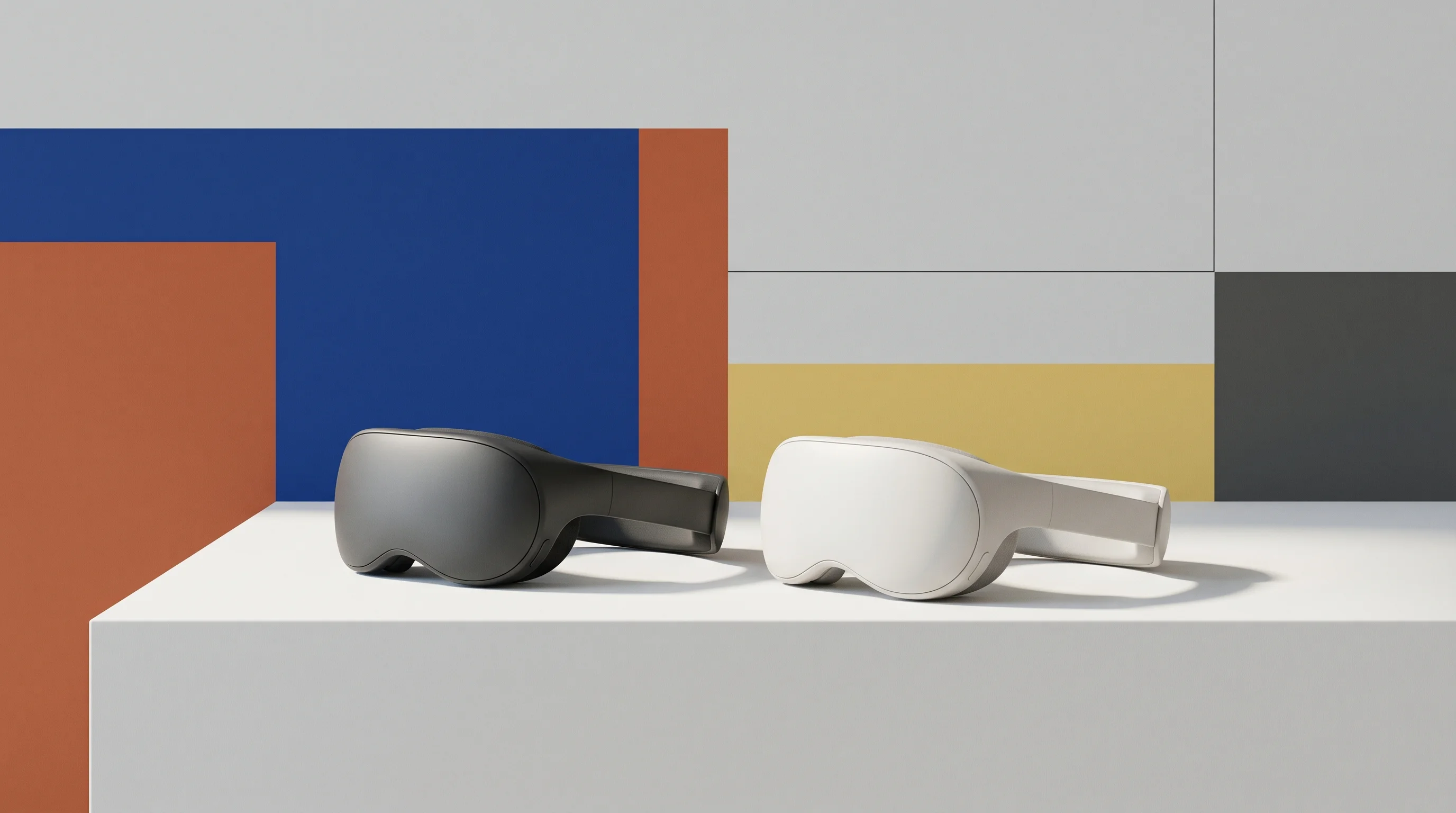
Sychedelic isn't alone in this space. Two months before its raise, Mave Health—another tDCS headset maker targeting focus and stress relief—secured $2.1 million in seed funding led by Blume Ventures. Mave's device carries a similar price tag, around $495, and is gearing up for shipments to the U.S. and India.
The broader wearable-neurostimulation market has attracted steady investor interest, though many devices rely on vibrational feedback or binaural audio rather than direct electrical stimulation. What makes tDCS distinct—and controversial—is its mechanism: applying low-level current to influence neuronal firing patterns. The research literature is mixed. Some studies suggest modest benefits for attention and mood; others find little effect beyond placebo.
Sychedelic says it has tested the device with more than 100 early users over the past six months. The company's website has tracked pre-order activity from an initial batch of 200 units. Whether that reflects genuine demand or cautious inventory management is unclear.
Shark Tank Pedigree, Kickstarter Ambitions

Rustagi and Madan aren't new to the spotlight. They appeared on the second season of Shark Tank India in February 2023, and later on Zee TV's startup show Ideabaaz. Neuphony, their earlier venture, secured INR 10 crore (approximately $1.1 million) in a 2024 angel round before the pivot to Sychedelic.
Now they're preparing for Kickstarter, with a campaign goal of $500,000 and an early-bird tier priced at $500. The exact launch date remains somewhat fluid—conflicting reports place it anywhere from late May to early June—but the intent is clear: crowdfunding as both validation exercise and distribution engine.
The team, which LinkedIn pegs at somewhere between 11 and 50 employees, operates under the legal entity Pankhtech India Private Limited, incorporated in October 2020. The company maintains a presence in both Delhi NCR and New York, though the bulk of operations appear India-based.
Open Questions
There's cautious optimism in the neurostimulation space, but also skepticism. Regulatory pathways remain complex, particularly if Sychedelic eventually pursues clearance from the FDA or other international bodies beyond India. Consumer adoption of wearable medical devices has historically been uneven—fitness trackers thrived, but many more ambitious health gadgets languished.
And then there's the science itself. tDCS has been studied for over a decade, with results that range from promising to inconclusive depending on the protocol, duration, and target population. A consumer device delivering stimulation at home, without clinical supervision, raises questions about dosing, individual variability, and long-term effects.
For now, Rustagi and Madan are betting that a growing cohort of early adopters—those willing to pay $499 to wear electrodes while they listen to music—will help answer those questions. Whether the broader market follows remains to be seen.


