

Late one February evening in 2026, a cluster of living human brain cells did something extraordinary. They played Doom.
Not a simulation mimicking neurons. Not a neural network trained to approximate them. These were actual neurons—some 200,000 of them, coaxed from stem cells and suspended on a microelectrode array in a lab halfway around the world. They learned, haltingly, to navigate the pixelated corridors of id Software's 1993 first-person shooter. They dodged enemies. They fired weapons. They got better with practice.
The demonstration, orchestrated by independent researcher Sean Cole in collaboration with Australia's Cortical Labs, ricocheted across tech media within hours. But beyond the viral spectacle lay a more urgent proposition: that living neural tissue might become the next substrate for artificial intelligence itself—a biological remedy for an industry careening toward a power crisis.
Because right now, AI is eating the grid alive.
The Math Is Blunt
Data centers consumed roughly 2.6% of the world's electricity in 2025, according to the International Energy Agency. Projections indicate that the electricity demand by data centers could double from around 485 TWh to 950 TWh by 2030. The IEA's February 2026 "Electricity 2026" report names data centers, AI workloads, and electrification as the three horsemen of surging demand.
In the United States, data centers alone account for about half of projected power-demand growth through 2030, per an Axios breakdown of the IEA figures. Average U.S. electricity demand is climbing at 2% a year for the next four years—double the prior decade's pace. The Atlantic put it vividly in a March 2026 piece: the equivalent of 40 to 60 Seattles' worth of new electrical load could land on the American grid before 2030.
Utilities are scrambling. A July 2026 Capgemini survey of electricity executives found that 77% believe data-center energy demand will outstrip available capacity. Separately, 87% of operators expect consumption to jump 30% over the next three to five years.
Projections show increasing demand, which could strain power systems as AI and data center growth continues.
The Brain's Whisper
Enter biology—and its tantalizing promise.
A human brain hums along on about 20 watts, the same draw as a household LED bulb. Yet it orchestrates a staggering array of parallel computations: vision, memory, reasoning, movement. Researchers have long noted that for certain cognitive tasks, the brain operates roughly five orders of magnitude more efficiently than digital processors. That gap has haunted computer scientists for decades. Now, a handful of startups think they can close it.
The path to "organoid intelligence" has been winding. In October 2022, Cortical Labs made waves with a study in the journal Neuron: human and mouse neurons cultured in a dish learned to play Pong. The system, dubbed DishBrain, used multi-electrode arrays to encode game state as electrical pulses. Neurons responded; software decoded their firing patterns into paddle movements. Hit the ball, get a reward signal. Miss it, receive a penalty. The neurons adapted, improving over time.
It was proof, however rudimentary, that disembodied brain cells could exhibit goal-directed learning in real time—no body, no sensory organs, just tissue and electrodes negotiating a feedback loop.
By 2023, the concept had its own academic roadmap. A paper in Frontiers in Science sketched out the architecture: algorithms for organoid–silicon interaction, scaling pathways, ethical guardrails. By 2025, Cortical Labs began shipping the CL1, a self-contained biocomputer priced at around $35,000 per unit (or $20,000 in bulk orders). Each device houses between 200,000 and 800,000 neurons, depending on configuration, along with life-support systems, microelectrode arrays, and control software. Power draw: 850 to 1,000 watts per rack unit.
Still orders of magnitude below a conventional GPU cluster. Though, notably, not yet close to the brain's 20-watt benchmark.
The Doom Moment
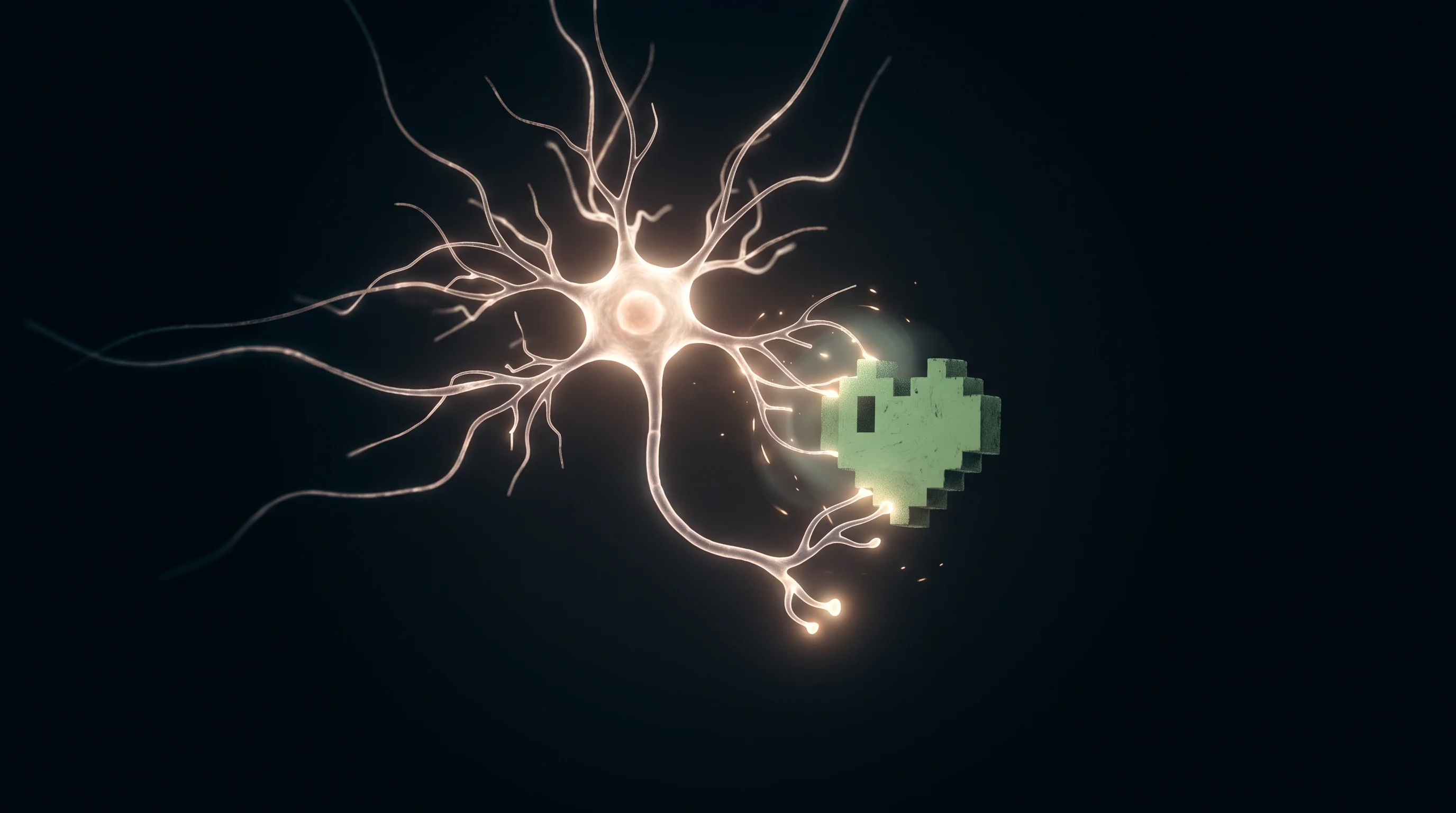
Which brings us back to that February demo.
Sean Cole, the researcher behind the Doom stunt, went on to found his own biocomputing startup, Parasma, emerging from Y Combinator's Summer 2026 batch. The viral video was more than a parlor trick; it was a proof point. The neurons weren't "playing" Doom in any human sense—screen pixels were encoded as stimulation patterns, spikes were decoded into movement commands, outcomes triggered reward or penalty signals. Performance was clumsy. But learning was observable, influenced by both biological neuron activity and the role of software in decoding and providing feedback.
Skeptics were quick to circle. An RDWorld analysis in March 2026 questioned where the intelligence truly resided: in the biological neurons, or in the software decoder and reinforcement-learning scaffolding around them? It's a fair critique, echoing long-standing debates in AI about where cognition really happens. Cortical Labs, for its part, has framed the CL1 as an experimental platform, not a finished product. The company offers a Python SDK, cloud access (branded Cortical Cloud), and remote rental at reportedly $300 per week. Press reports in March 2026 claimed two "biological data centers" using CL1 units were in the works—though both remain pilot-stage and unverified.
Cole himself has staked out a cautious ethical position. In a June 2026 research note published on Parasma's site, he argued that neural cultures at the 200,000-neuron scale—lacking sensory organs, body integration, or complex architecture—are unlikely to possess consciousness. The training loop, he explained, relies on low-amplitude biphasic pulses in the microampere range, delivered at frequencies up to about 100 Hz. "No nociceptors, no body, no plausible basis for pain," he wrote, drawing a line between intelligence and sentience.
His company, according to its YC profile, consists of one person: Cole himself. A July 2026 job listing for "Founding Scientist" advertised compensation of "$1M" and equity between 1% and 3%—though such figures on job boards sometimes serve more as aspiration than offer letter.
Enter the Competition
Parasma is hardly alone. The Biological Computing Company (TBC), based in San Francisco, closed a $25 million seed round in February 2026, led by Primary Venture Partners. Founded by neurosurgeon-scientists, TBC bills itself as "the first to deploy applied biological computing" for computer vision, generative video, and AI infrastructure. A Fortune profile published alongside the funding announcement detailed plans for a flagship lab in San Francisco's Mission Bay—targeting enterprise deployments rather than off-the-shelf hardware sales.
Then there's FinalSpark, a Swiss outfit that launched a remote research platform in May 2024, offering academics access to 16 brain organoids via multi-electrode arrays for $500 a month. The company has claimed energy efficiency improvements of "a million times" over digital processors—a marketing flourish that lacks standardized benchmarking and warrants skepticism. FinalSpark reported organoid lifespans of around 100 days in 2024; Cortical Labs claimed up to six months for CL1 cultures in 2025. Both figures are now more than a year old.
The field, in short, is young enough that performance metrics remain opaque and standardized tests nonexistent.
The Hard Questions
Biological computing faces challenges that semiconductor fabs never encounter. Variability across neural cultures. Non-stationarity—neurons change over time, unlike transistors. Reproducibility is a bottleneck; each culture is, to some extent, unique. The RDWorld analysis highlighted the need for rigorous ablation studies: experiments that isolate biological learning from decoder contributions. Until those are published, the extent of true "neural intelligence" remains an open question. Maybe the cells are doing the heavy lifting. Maybe the software is.
Ethics loom even larger. A 2023 paper in Science and Engineering Ethics assessed DishBrain's moral status and concluded that current in vitro cultures likely fall below thresholds for consciousness—but scaling to more complex organoids could shift the calculus. The International Society for Stem Cell Research updated its guidelines in August 2025, emphasizing that in vitro models must not be implanted and that oversight should intensify as organoid complexity increases.
Regulatory frameworks remain fragmented at best. In the UK, the Human Tissue Authority's Code E (updated February 2026) governs storage of human tissue for research. In the EU, the Substances of Human Origin Regulation took effect in August 2024, though it primarily addresses transplants and clinical uses. The U.S. has no biocomputing-specific regulation—oversight defaults to older NIH stem cell guidelines and institutional review boards.
Cole's ethical stance—that consciousness is implausible at 200,000 neurons—may hold for now. But what happens at 2 million neurons? Twenty million? The field will need answers before industrial scaling begins in earnest.
Follow the Money
Investors, evidently, are willing to bet on those answers arriving. TBC's $25 million seed signals confidence that biological computing can leap from lab curiosity to commercial product. The broader human organoids market—used mainly for drug testing and disease modeling—was valued at around $804 million in 2024, with forecasts reaching $2.7 billion by 2033, according to Grand View Research. That supply chain could, in theory, support biocomputing as it scales.
For founders and AI engineers, the near-term opportunity may not be replacing GPUs wholesale. More likely: niche applications where biological systems excel—real-time adaptive learning, low-power edge inference, hybrid architectures that pair silicon logic with neural pattern recognition. Cortical Labs' developer tools and cloud platform lower the barrier to experimentation. Parasma's focus on algorithms suggests the compute substrate is only half the story; orchestrating biological learning is its own frontier.
The grid crisis, meanwhile, is no longer hypothetical. If the IEA's projections hold, AI's energy demands will have reshaped power planning across continents by 2030. Whether living neurons can scale to meet even a fraction of that load remains deeply speculative.
But for the first time, brain cells are commercially available as compute. The question isn't whether biological intelligence can be harnessed for AI anymore.
It's whether it can be harnessed reliably—and whether we'll know if those neurons, somewhere in the basement of a data center, are feeling anything at all.
The industry will watch Parasma, Cortical Labs, and TBC closely over the next year. If they succeed, the next data center might not hum with the whir of cooling fans and GPU racks. It might pulse with something quieter, stranger, and infinitely more unsettling: living thought, pressed into service.


