

Comet closed a ₹100 crore (roughly $10.6 million) Series B round in early September, led by Belgian consumer investor Verlinvest with backing from existing investors Elevation Capital and Nexus Venture Partners, Business Standard reported. The Bengaluru-based sneaker brand also secured commitments from a handful of notable angels: Abhiraj Singh Bhal of Urban Company, Snap's Ajit Mohan, and Bhaane founder Anand Ahuja.
A regulatory filing analyzed by Dealroom put the actual round size at ₹98.75 crore, with Verlinvest contributing ₹61.73 crore. The capital values Comet at approximately ₹535 crore post-money—a 3.2× jump from its July Series A, when the company brought in ₹42.3 crore led by Elevation.
That kind of markup is notable in a consumer market where brands often struggle to prove they can scale beyond digital channels. Comet's pitch centers on exactly that challenge: taking a direct-to-consumer sneaker label built online and translating it to physical retail.
The Store Expansion Bet
The company plans to use the fresh funds to double its store footprint from 10 locations to 20 by the end of FY27 (March 2027). Co-founder Utkarsh Gupta told reporters this week that retail has become "a significant growth driver," with stores outperforming broader athleisure benchmarks in the markets where Comet operates.
The startup opened its first flagship in Bengaluru's Indiranagar neighborhood earlier this year and has since pushed into several other Indian cities, though it declined to specify where the next 10 stores will land. That reticence may reflect competitive sensitivity in a crowded footwear market where location selection can make or break a nascent retail strategy.
Comet's retail ambitions arrive as venture-backed consumer brands across India grapple with unit economics in physical spaces. The company's confidence suggests its early stores are clearing that hurdle, at least for now.
Product Pipeline and Sole Technology
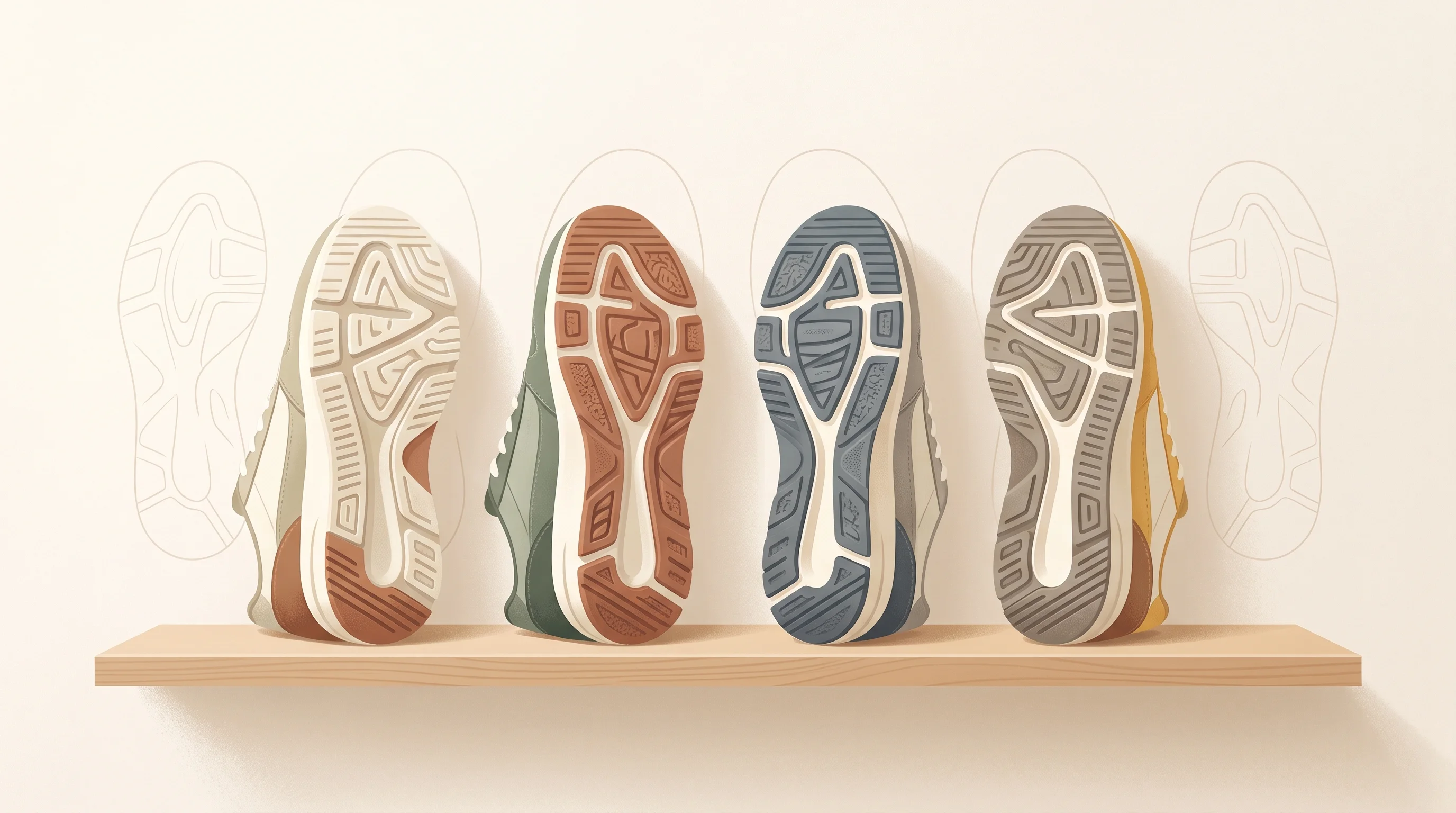
Beyond bricks-and-mortar expansion, Comet is channeling capital into sole technology and product development. The brand currently offers four footwear models, each built on proprietary sole tooling. It aims to double that lineup to eight models by the end of next year, according to the Economic Times.
"We want to continue pushing the boundaries of what an Indian footwear brand can build," Gupta said, "which means investing deeply in sole technology, R&D and engineering." He noted the company is preparing to launch a women-specific model that required about a year of development and its own dedicated sole tooling after what he described as "significant capex investment."
That focus on engineering and materials sets Comet apart in a market where many local brands rely on generic manufacturing. Whether consumers will pay a premium for Indian-designed sole tech remains an open question, but the company is betting that differentiation matters in a category dominated by global giants.
Revenue and Profitability

Comet's operating revenue climbed to roughly ₹29.1 crore in its most recent fiscal year, up approximately fourfold from ₹7.3 crore the prior year, Indian Retailer reported in January. Dealroom's filing analysis showed the company posted a loss of ₹4.39 crore during the same period.
The startup sells unisex sneakers and slides priced around ₹4,299, positioning itself in the middle ground between sub-₹2,000 local offerings and ₹10,000-plus international labels. Comet distributes through its own website, Myntra (which it joined in February), and its expanding store network. The brand has built an Instagram following of roughly 500,000, according to third-party trackers captured in early September.
Those numbers suggest Comet has found some traction, though profitability still looks distant. The company's revenue multiple against its post-money valuation implies investors are pricing in aggressive growth over the next few years.
Founders and Competitive Landscape
Gupta, who spent time at Disney+ Hotstar before earning an MBA from Kellogg, co-founded Comet in 2023 with Dishant Daryani, a Harvard Business School graduate who previously worked at Urban Company. The pair structured the venture through the legal entity Grails Marketing Private Limited, filings show.
Comet operates in a crowded field. It competes against entrenched global players like Nike, Adidas, and Puma, as well as Indian brands such as Campus Activewear and fellow D2C upstarts like Neeman's. Industry data from Crisil pegged the Indian footwear market at around ₹1,308 billion and projected it could reach ₹1,900–2,100 billion within a few years.
That growth forecast has attracted capital across the category, which means Comet will need to execute quickly to capture share before the window narrows.
Investor Perspective

Amit Aggarwal, a partner focused on early growth in Asia at Verlinvest, said Comet "has proven that a homegrown Indian brand can disrupt a space historically dominated by global giants" through what he called "an authentic, community-driven brand identity that cannot be easily replicated."
Verlinvest's India portfolio includes Blue Tokai, Purplle, Epigamia, and Wakefit. India represents roughly 20 percent of the firm's approximately €2–2.5 billion in assets under management, according to an Economic Times interview. The firm has backed more than 25 Indian consumer brands over 15 years, giving it a long view on what works and what doesn't in the country's consumer markets.
Moneycontrol reported in May that Comet was in discussions for a ₹140–150 crore round, which suggests the company ultimately closed at a size modestly below its initial target. Comet's LinkedIn page indicated it employed between 11 and 50 people as of early September, though that figure may have shifted as the company scales its retail operations.
Whether Comet can parlay this capital into a defensible position remains to be seen. The brand has momentum, a clear product thesis, and backing from investors who know the Indian consumer landscape. The test will be whether proprietary sole technology and a growing store network can hold ground against brands with decades of distribution infrastructure and marketing muscle.


