

The pitch sounds ambitious, maybe even implausible: routine brain function measurement, not in a hospital basement surrounded by whirring MRI machinery, but embedded in the wearables and apps people already use to track their sleep and steps.
Yet that's precisely what Connectome Health is building. The Zurich-based neurotech startup recently closed a $2 million pre-seed round—led by Redstone, with Concept Ventures, Octopus Ventures, and a collection of transatlantic angels joining in—to scale what it describes as infrastructure for longitudinal brain monitoring. Roughly $120,000 of the total came through non-dilutive channels, a detail that speaks to the company's early-stage hustle.
Founded in August 2024 by Lucas Scherdel, Dr. Rufus Mitchell-Heggs, and Ivan Reif, Connectome isn't trying to sell brain-scanning headsets to consumers. Instead, it operates a B2B model, licensing its platform to partners—consumer wearable manufacturers, digital health companies, pharmaceutical firms—who want to layer repeated neural assessments into products their customers already trust.
The underlying technology isn't entirely new. Connectome uses time-domain functional near-infrared spectroscopy, or TD-fNIRS, delivered through a device called the Kernel Flow 2. The system measures cortical blood flow changes—essentially, which parts of the brain are lighting up—and ties those signals to real-world context: how well you slept last night, how hard you exercised, how mentally drained you felt by midafternoon.
Whether any of that will translate into something clinicians or consumers actually use remains an open question.
What the Money Is For
The capital will bankroll product rollout with a handful of early partners whose names the company isn't disclosing yet. There's also continued R&D. Connectome's initial focus has been lifestyle and wearables—think elite athletes or biohackers willing to strap on specialized hardware—but the longer-term vision pushes into diagnostic territory. The idea is to normalize brain measurement, positioning it less as a specialty clinical tool and more as plumbing that runs quietly behind other products.
Scherdel, who serves as CEO, came up through WHO global health work, consumer health R&D, and a stint at Bayer Consumer Health handling external innovation. Mitchell-Heggs, the chief scientific officer, holds an MRes in Neurotechnology from Imperial College London and completed PhD research on memory, navigation, and social cognition. Computational neuroscience credentials, in other words, with a bias toward how brains work in the wild rather than just in labs.
The two co-founders are building what they've dubbed a product stack: Atlas for standardized brain and contextual data, Library for validated function measures, Continuum for tracking individual baselines over time, Horizon for population norms, and a Forge API that partners can plug into. The emphasis throughout is stability and within-person baselines—tracking how your brain changes relative to itself, not just comparing you to some statistical average.
It's an approach tailored for scenarios where repeated measurement matters more than a single snapshot. Think: monitoring cognitive shifts in early Parkinson's, or understanding whether a new supplement actually improves focus, or figuring out if that brutal training block is frying an athlete's recovery circuits.
Early Validation and a Study in London
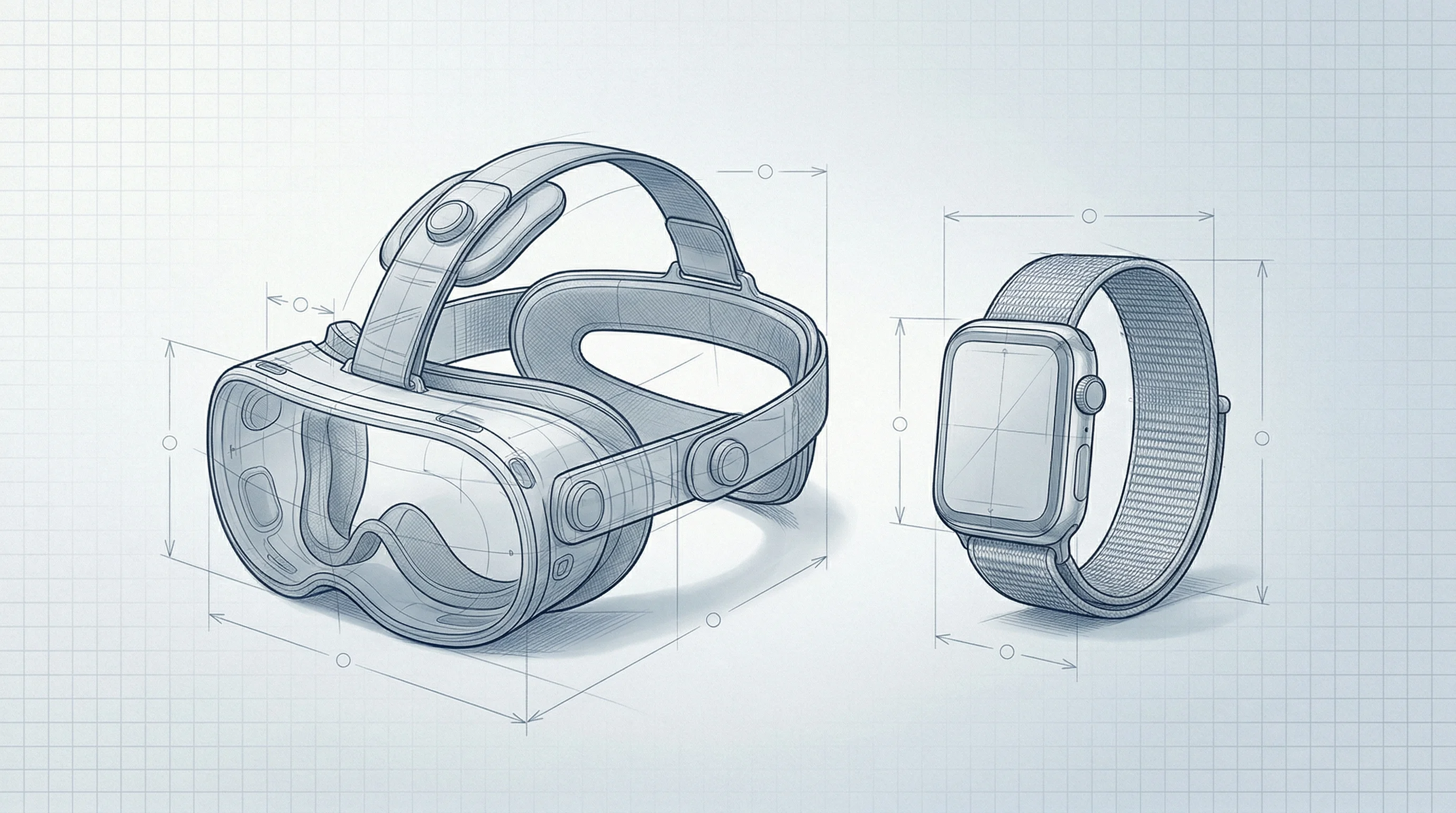
Connectome is currently running something called the LUCID Study, a collaboration with Imperial College London under Professor Simon Schultz. Participants come in for three or four short sessions wearing the Kernel Flow 2 headset, while the team pulls in data from whatever wearables they already use—Oura rings, WHOOP straps, Apple Watches.
It's an early proof-of-concept effort, designed to test whether pairing neural signals with behavioral context actually yields insights worth acting on. That last bit—worth acting on—is where most neurotech plays stumble. Data is easy. Utility is hard.
The six-person team, split between Zurich and London, is positioning itself as infrastructure rather than a consumer brand. Which makes sense, given the capital intensity and regulatory thickets involved in bringing brain-monitoring hardware directly to market. Better to be the engine under someone else's hood.
The Investor Landscape
Octopus Ventures, one of the backers, has played in this space before. It led a $60 million round for CoMind, another neurotech company, back in October 2025. Redstone, the lead here, operates across European healthcare from pre-seed through growth stages. Concept Ventures markets itself as Europe's largest pre-seed fund—a claim that's debatable depending on definitions, but the firm certainly writes checks early and often.
The broader context that makes this bet plausible: neurological conditions are staggeringly common. A World Health Organization report from March 2024 found that more than one in three people globally live with one, making neurological issues the leading cause of illness and disability worldwide. In the U.S., an American Academy of Neurology analysis from late 2025 put the domestic share even higher—over half of all residents affected by some neurological disease or disorder.
That epidemiological reality has pulled capital into diagnostics, monitoring tools, and early intervention platforms. But moving brain measurement out of specialized clinical settings and into routine use? That's proven far harder than the disease burden would suggest. EEG headbands and consumer neurofeedback gadgets have come and gone, often with more hype than staying power.
The Hard Part Ahead
Connectome's next phase involves onboarding partners in elite performance, clinical workflows, and research networks. The challenge—perhaps larger than the founders anticipated—will be threading technical rigor with commercial scale. Brain data is notoriously messy. Context is everything, yet infinitely variable. And the gap between a research-grade insight and something a coach, doctor, or user will actually trust and act on can be wider than it looks on a slide deck.
The company hasn't disclosed its valuation or named specific partners at this stage. Which is standard for a pre-seed round, but also means the hardest questions—Does this work outside controlled studies? Will partners pay enough to justify the infrastructure costs? Can the data quality hold up at scale?—remain unanswered.
Still, if you're going to bet on brain monitoring escaping the lab, this isn't a bad framework: B2B leverage, credible scientific founders, backing from investors who've seen adjacent categories mature. Whether Connectome becomes the Stripe of neurotech or just another well-intentioned pivot in a graveyard of wearable experiments, we'll know soon enough.
For now, the team is hiring, the headsets are scanning, and somewhere in London a few dozen early adopters are letting Connectome peek under the hood. What the data says—and whether anyone beyond the research community will care—is the story still being written.


