

DG Matrix lands $60 million to replace decades-old power equipment with technology the industry didn't know it needed—until AI changed everything
For years, the bulky gray boxes handling power conversion in datacenters have been the infrastructure equivalent of background noise. Nobody paid much attention. Why would they? The technology worked well enough for web servers and cloud storage.
Then came ChatGPT.
Suddenly, datacenter operators found themselves staring at a problem that legacy equipment simply wasn't built to solve: individual server racks pulling enough electricity to power a small neighborhood, all while AI workloads demand instant, uninterrupted power. The old architecture—a Rube Goldberg machine of AC-to-DC conversions, uninterruptible power supplies, and copper cabling thick enough to trip over—started looking inadequate. Expensive, too.
Enter DG Matrix, a Morrisville, North Carolina company that thinks it has the answer. On February 18, the startup announced it had raised $60 million in Series A funding, led by Engine Ventures (the MIT-affiliated firm that rebranded from The Engine). The round included an unusual mix of strategic investors: ABB, the century-old Swiss power equipment giant; Chevron Technology Ventures; and a constellation of climate-focused funds including Cerberus Ventures, Clean Energy Ventures, Fine Structure Ventures, Helios Climate Ventures, MCJ, and local player Piedmont Capital.
That investor roster tells you something. When a fossil fuel major and a legacy industrial conglomerate both write checks for the same power electronics startup, the market opportunity is probably real.
What DG Matrix Actually Built
The company's product—dubbed the "Interport"—is a solid-state transformer that consolidates 10 to 20 traditional power devices into one unit. Think of it as replacing an entire orchestra with a single synthesizer, except the music is electricity and the stakes are keeping AI training runs from crashing.
Solid-state transformers aren't new. Researchers have been tinkering with them for decades. What DG Matrix claims to have cracked is the commercial viability piece: a multi-port system that can juggle power from solar panels, batteries, and the grid simultaneously, then route it directly to high-voltage DC server racks at up to 2.4 megawatts of total connections. The company says its Interport hits 98.5% efficiency with microsecond response times—specifications detailed in a December 2025 white paper that read more like a graduate thesis than marketing copy.
For context, traditional datacenter power conversion chains limp along at 82–90% efficiency, bleeding energy at every AC-to-DC handoff. Clean Energy Ventures, which led DG Matrix's $20 million seed round back in March 2025, laid out the math in a public investment memo: all those conversion losses add up fast when you're running facilities that consume as much power as small cities.
The Interport also aligns—conveniently or strategically, depending on your view—with NVIDIA's 800-volt DC "AI Factory" architecture and the Open Compute Project's "Mount Diablo" specification for ±400-volt DC rack power. Both initiatives are betting that future datacenters will abandon century-old AC distribution in favor of DC power delivery, cutting copper weight and conversion waste in the process.
According to Power Electronics News, which profiled the founders last December, DG Matrix describes its device as "the first commercially available multi-port solid-state transformer." The technology leans on silicon carbide semiconductors and galvanic isolation—features that sound like technical minutiae until you consider that one electrical fault in a megawatt-scale facility could mean millions in lost compute time.
The AI Datacenter Gold Rush
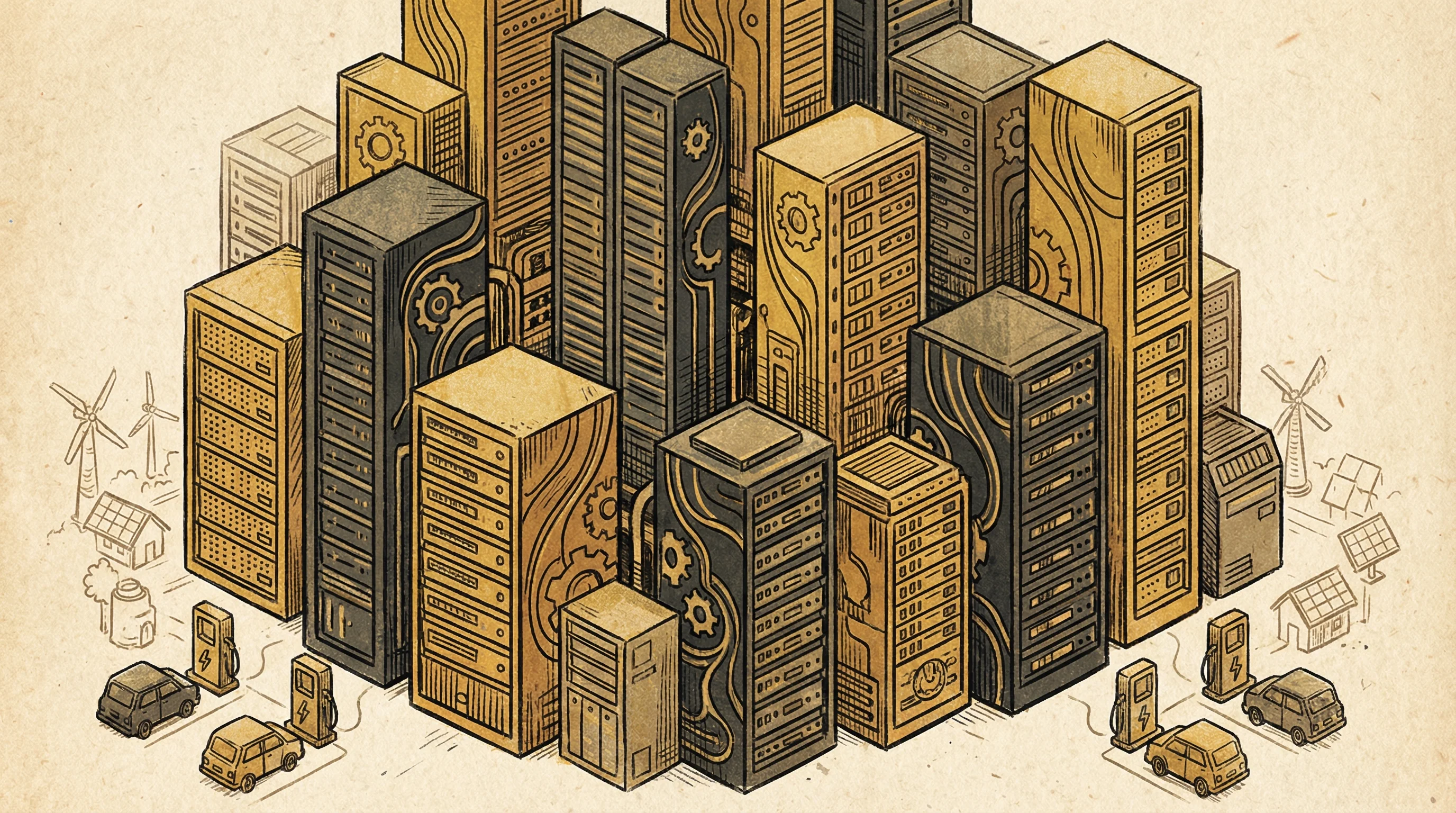
CEO Haroon Inam told TechCrunch that AI datacenters now represent roughly 90% of DG Matrix's pipeline. That's a striking concentration for a company that also serves EV fleet charging and microgrid applications. (In September 2024, XLR8 America handed DG Matrix a $20.7 million purchase order for Level 3 EV charging gear; two weeks before the Series A announcement, DG Matrix partnered with Exowatt on gigawatt-scale solar conversion systems.)
But AI is where the money is. DG Matrix announced "tens of millions" in purchase orders for 2025–2026 during its seed round, though the company hasn't broken out customer specifics. Initial unit rollouts are slated for June 2026—a date that will test whether solid-state transformers can survive contact with real-world datacenter operations, where downtime is measured in dollars per second and procurement cycles favor known quantities.
The urgency is palpable. AI workloads are pushing rack power densities toward levels that would have seemed absurd five years ago. Operators are scrambling for infrastructure that won't melt under the load. Canary Media reported in December that DG Matrix's North Carolina factory is targeting capacity of up to 1,000 units annually, though the timeline for hitting that production milestone remains fuzzy.
Deep Tech Meets Deep Pockets
The company's origin story follows a familiar pattern: academic research meets entrepreneurial ambition. DG Matrix was founded in 2021 or 2022 (sources differ slightly) by Inam, formerly CTO at Smart Wires, and Dr. Subhashish Bhattacharya, a Duke Energy Distinguished Professor at North Carolina State University. Bhattacharya has spent decades in solid-state transformer research, racking up more than 500 publications—the kind of credentials that lend technical credibility to what might otherwise sound like vaporware.
In January 2026, Cleantech Group named DG Matrix to its annual Cleantech 100 list and highlighted the company in a trend report on high-efficiency transformers. Recognition is nice. Revenue is better.
The strategic backing matters more than the dollar figure. ABB, which participated in the seed round, is actively pushing 800-volt DC architectures for next-generation datacenters—a product roadmap that dovetails neatly with DG Matrix's technology. Chevron Technology Ventures, managing a $500 million Future Energy Fund III launched in April 2024, focuses on deals that bridge decarbonization with energy infrastructure modernization. Engine Ventures raised roughly $400 million for its Fund III in June 2024, targeting what it calls "Tough Tech" in energy and climate.
These aren't VCs sprinkling seed money on moonshots. They're investors betting that the power infrastructure underpinning the AI boom is fundamentally broken and needs replacing. Fast.
What Happens in June
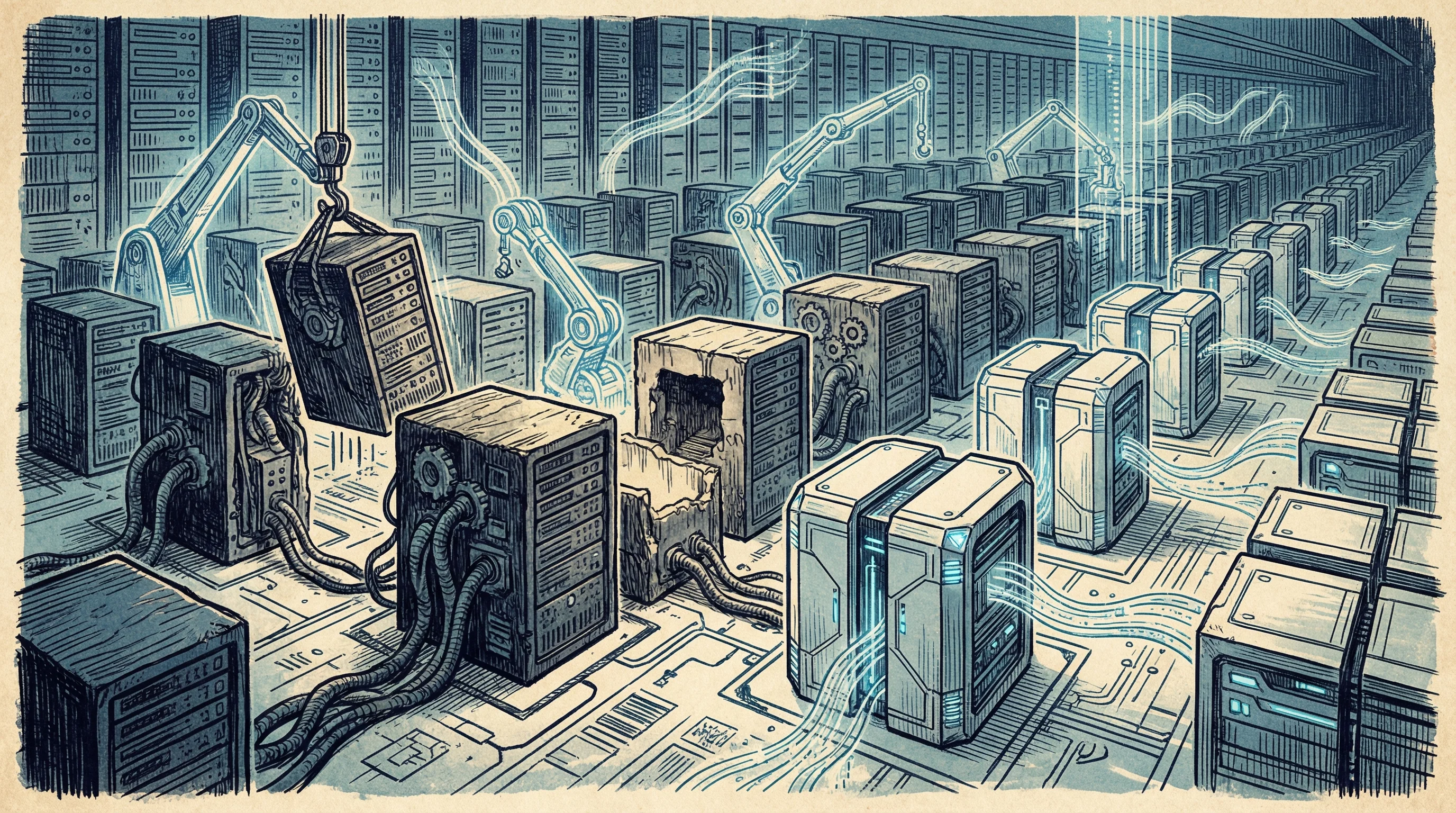
The real test comes this summer. DG Matrix's June 2026 customer rollouts will reveal whether the company's efficiency promises hold up at scale—and whether datacenter operators are willing to rip out entrenched infrastructure for unproven technology, no matter how elegant the engineering.
The company is also developing a next-generation rack "sidecar" power unit, though details remain sparse. Meanwhile, the partnership with Natron Energy (announced in December 2023) for sodium-ion battery integration suggests DG Matrix is hedging its bets across multiple applications, even as AI datacenters dominate the pipeline.
The Series A valuation? Undisclosed. That's typical for startups at this stage, though perhaps more notable given the caliber of investors involved. Then again, when you're selling into a market where customers are desperate for solutions and competitors are still publishing research papers, maybe you don't need to broadcast your numbers.
DG Matrix is betting that AI's insatiable appetite for power will force datacenter operators to abandon a century of electrical infrastructure orthodoxy. Whether that bet pays off depends on factors the company can't fully control: technology adoption curves, customer risk tolerance, and whether the AI boom sustains long enough to justify wholesale infrastructure replacement.
For now, the transformer wars are just beginning. And in Morrisville, North Carolina, one startup thinks it's built the weapon that wins them.


