

The pitch sounds almost too neat: a generator that runs on hydrogen, ammonia, or biofuels, contains no rare-earth magnets, and delivers the kind of compact footprint that makes sense for power-starved data centers. But H2CHP, a spinout from Durham University, isn't just pitching. The Newcastle-based company has closed a £1.5 million funding round—and it's testing its technology in the wild.
The round, announced on May 13, 2026, pulls together £500,000 in equity from Blackfinch Ventures, £300,000 from the North East Spinout Inspire Fund managed by Northstar Ventures, and a £700,000 Innovate UK grant through the government's Investor Partnerships program. It brings H2CHP's total capital raised to roughly £3.5 million since it spun out in July 2022, according to coverage in Data Center Dynamics.
For a company still in the prototype-and-pilot phase, that's a respectable haul. The question, as with most early-stage hardware ventures, is whether the technology can scale beyond controlled trials.
The Free-Piston Gamble
At the heart of H2CHP's proposition sits a free-piston linear generator—a mouthful of engineering jargon that describes a simpler, if unconventional, design. Unlike traditional generators that convert rotational motion into electricity via crankshafts and flywheels, H2CHP's system translates linear motion directly into power. Software manages the combustion cycle. No permanent magnets, no rare-earth materials.
The company claims electrical efficiency of up to 45 percent when running on pure hydrogen, with zero combustion emissions. That's competitive with larger industrial fuel cells, though H2CHP positions its units as cheaper and more flexible. The modular generators range from 50 to 500 kilowatts and are, according to the company, about 60 percent smaller and 25 percent lighter than conventional alternatives.
Whether those figures hold up in commercial deployments remains to be seen. But the rare-earth-free design has obvious appeal at a moment when supply chain fragility and geopolitical tensions have made materials sourcing a strategic headache for manufacturers.
Behind-the-Meter Power for Grid-Strapped Sites
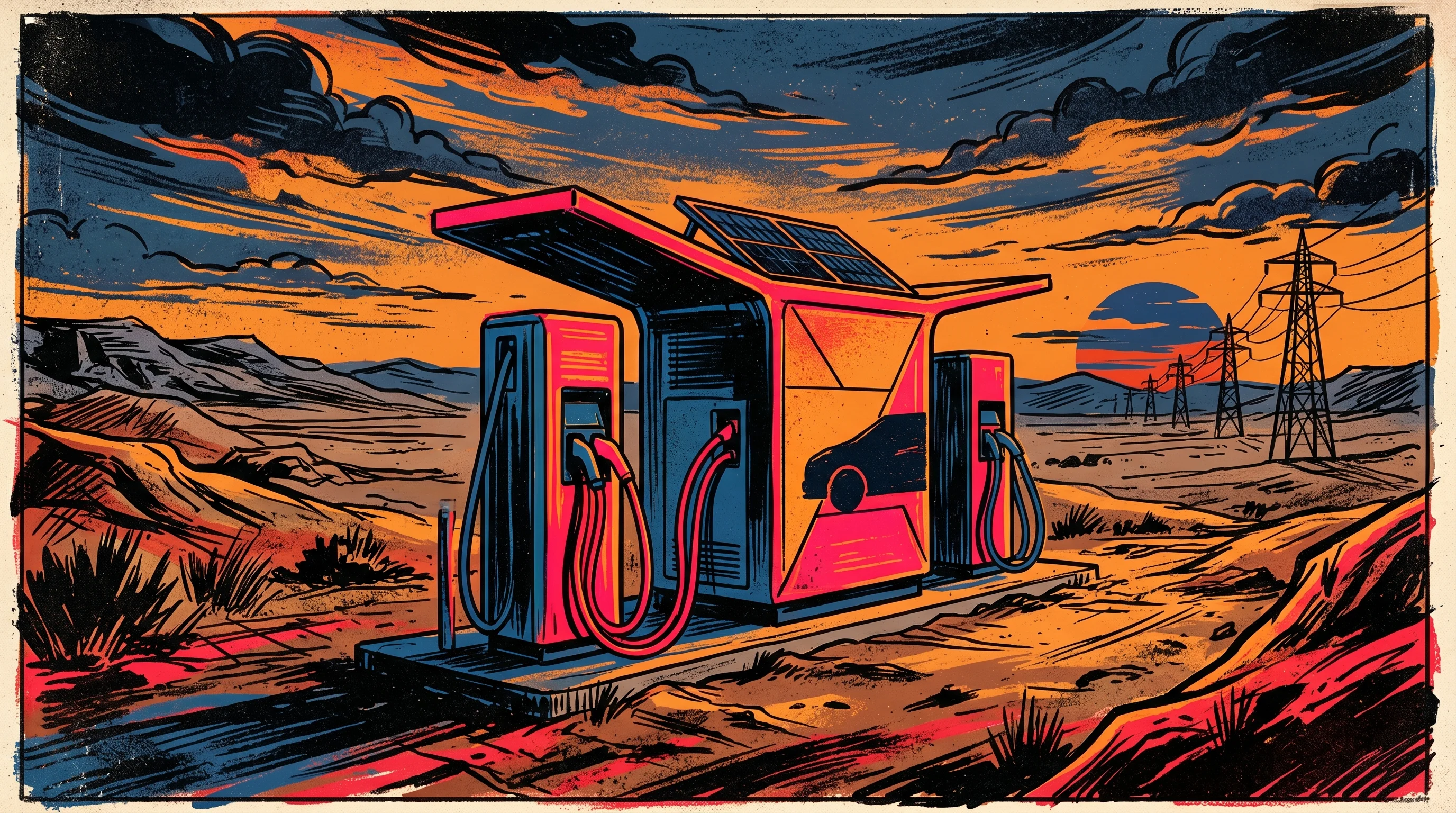
H2CHP isn't chasing the utility-scale market. Instead, it's targeting edge cases—literally. Data centers hemmed in by grid capacity constraints, remote industrial sites, EV charging hubs in underserved areas. Places where waiting years for a grid connection upgrade isn't viable.
The company points to warnings from ENTSO-E, Europe's transmission system operator network, that clustering data centers can destabilize regional grids. That concern has intensified as AI workloads drive up power demand, often in pockets of infrastructure that weren't designed for it. Recent reporting in Recharge underscored the supply crunch facing hyperscale developers.
H2CHP's answer: behind-the-meter generation that doesn't depend on diesel or natural gas pipelines. Right now, the company is trialing a hydrogen-to-electricity combined heat and power system on the CEME campus microgrid in Rainham, East London. The project, part of the Connected Places Catapult's Hydrogen Innovation Initiative (which launched earlier this year), uses off-grid hydrogen supply. It's a useful real-world testbed, though hardly proof of widespread commercial readiness.
A recent tie-up with Levistor, which makes high-power flywheel storage systems, adds another wrinkle: pairing H2CHP's generators with flywheels for load balancing in flexible EV charging setups. That's still early days, but it hints at the kinds of hybrid architectures that might emerge as hydrogen infrastructure matures.
Durham DNA, Regional Dollars

H2CHP traces its lineage to over a decade of free-piston engine research at Durham University. The founders—Professor Tony Roskilly, who chairs the university's energy systems program and directs the Durham Energy Institute, and CEO Dr. Stephen Hampson—spun the company out with a supporting portfolio of patents.
The North East Spinout Inspire Fund's £300,000 stake marks the first Durham spinout backed by the £22.5 million regional vehicle, which typically writes initial checks between £200,000 and £750,000. That's a notable endorsement from a fund focused on nurturing regional innovation clusters.
Blackfinch Ventures, a UK early-stage firm and official Innovate UK Investor Partner, led the equity slice of the round. Blackfinch has built a reputation for backing hardware-intensive cleantech plays, though the firm's portfolio also spans fintech and life sciences.
The Road So Far
The latest round follows an earlier December 2024 raise of over £2 million. That infusion combined £600,000 in equity—led by TRICAPITAL Angels, with Sustainable Ventures and NZTC TechX pitching in—with £1.3 million in Innovate UK support earmarked for prototype development and pilot trials.
H2CHP has also cycled through accelerators: the Net Zero Technology Centre's TechX program in 2024, and more recently, Tech Nation's Climate Programme, where the company's tagline—"Fuel-cell efficiency at generator cost"—distills the value proposition into a six-word dare.
The company now operates out of Newcastle and London, and counts partnerships with Sembcorp, Amp, and GeoPura, according to its website. Those names suggest inroads into industrial and off-grid power markets, though the depth and commercial terms of the relationships aren't publicly detailed.
What Comes Next
For all the momentum, H2CHP still faces the classic hardware startup gauntlet: scaling manufacturing, navigating hydrogen supply chain gaps, and proving reliability in the field over months and years, not weeks. The technology looks promising on paper. But generators, unlike software, don't iterate with a patch release.
If the pilots pan out, and if hydrogen infrastructure expands as policymakers hope, H2CHP could find itself in the right place at the right time. If not, well—there's a graveyard of elegant engineering solutions that never quite made it past the demonstration phase.
For now, the company has capital, partners, and a testbed. That's more than most spinouts can claim.


