

Four partnerships in less than 90 days. That's the pace Energy Robotics kept between December and early March, inking reseller agreements with Bilfinger, Smart NDT, Minsait, and Preditec—a roster spanning multinational engineering firms and specialized integrators with collective reach across more than 100 countries.
It's an uncommonly aggressive distribution push for a German startup that, until recently, was proving out its technology in pilot projects. Now the company is gambling that the market for autonomous industrial inspections is ready to scale beyond early adopters. And the product at the center of this bet? Software that makes robots inspect oil refineries and chemical plants. Not exactly the stuff of consumer tech hype cycles.
The Platform Play: No Robot Required
Energy Robotics doesn't manufacture hardware. Instead, it sells what it describes as an "Enterprise AI Platform"—software designed to orchestrate autonomous inspections using whatever robots a customer already owns, or wants to buy.
The platform supports Boston Dynamics' Spot quadrupeds, DJI's commercial drones, ExRobotics' industrial units, and other models. Fleet management runs through a single browser interface. The AI layer—deployed on-device, in the cloud, or somewhere in between—handles tasks like gauge reading, valve position detection, gas leak identification, audio analysis for equipment anomalies, people detection, and intelligent routing.
It integrates with the enterprise systems that facility managers already live in: ERP, computerized maintenance management software, asset registries. One feature the company highlights is what it calls an "Evergreen Digital Twin," a continuously updated digital model of physical infrastructure that, in theory, stays current without manual intervention.
More recently, the startup added LLM-driven mission planning. The idea is that operators can describe what they want inspected in plain language, rather than programming waypoints by hand. It's a layer of abstraction aimed squarely at facility managers, not the roboticists who might otherwise be needed to make these systems work.
A Cascade of Deals
The reseller strategy kicked into high gear last December. Bilfinger—a multinational with deep roots in industrial engineering and services—signed on December 11 to fold Energy Robotics' platform into its digital offerings. Internal projections Bilfinger shared at the time suggested the technology could cut operator round costs by roughly 20% and slash OPEX for tank inspections by a factor of ten. (Whether those savings materialize at scale remains to be seen.)
A week later, Smart NDT, an Italian specialist in non-destructive testing, came aboard as a reseller focused on oil and gas. Then the real breakthrough: on January 28, Minsait—part of Spain's Indra Group—signed a strategic agreement to distribute and integrate the platform across more than 100 countries. That deal opened doors Energy Robotics likely couldn't have knocked on alone, at least not quickly.
Most recently, on March 16, Preditec (a unit of Grupo Álava) partnered to advance autonomous inspection deployments in Spain and Portugal.
The timing is worth noting. Energy Robotics closed a $13.5 million Series A in October 2025, co-led by Blue Bear Capital and Climate Investment. The funding round came almost four months before the ISO certification. The investor capital and subsequent partnerships suggest a company moving quickly to capitalize on market momentum.
The startup spun out of TU Darmstadt, founded by Marc Dassler, Dr. Dorian Scholz, Dr. Stefan Kohlbrecher, and Dr. Alberto Romay. It's the kind of team that emerged from academic robotics but had to learn the hard way that enterprise sales require more than elegant algorithms.
Security Credentials as Table Stakes

On January 26, Energy Robotics secured ISO/IEC 27001 certification for information security management. In isolation, that might sound like bureaucratic box-checking. In practice, it's a gating requirement.
Refineries, power plants, chemical facilities—these are regulated, security-sensitive environments. AI-driven systems handling operational data from critical infrastructure face procurement hurdles that consumer tech companies never encounter. Security reviews can stall deals for months, or kill them outright.
For resellers like Minsait and Bilfinger, the ISO certification removes friction. It signals to their enterprise customers that Energy Robotics has thought through data sovereignty, access controls, and vulnerability management—the unglamorous work that determines whether a technology makes it past procurement committees.
The Competitive Landscape Is Getting Crowded
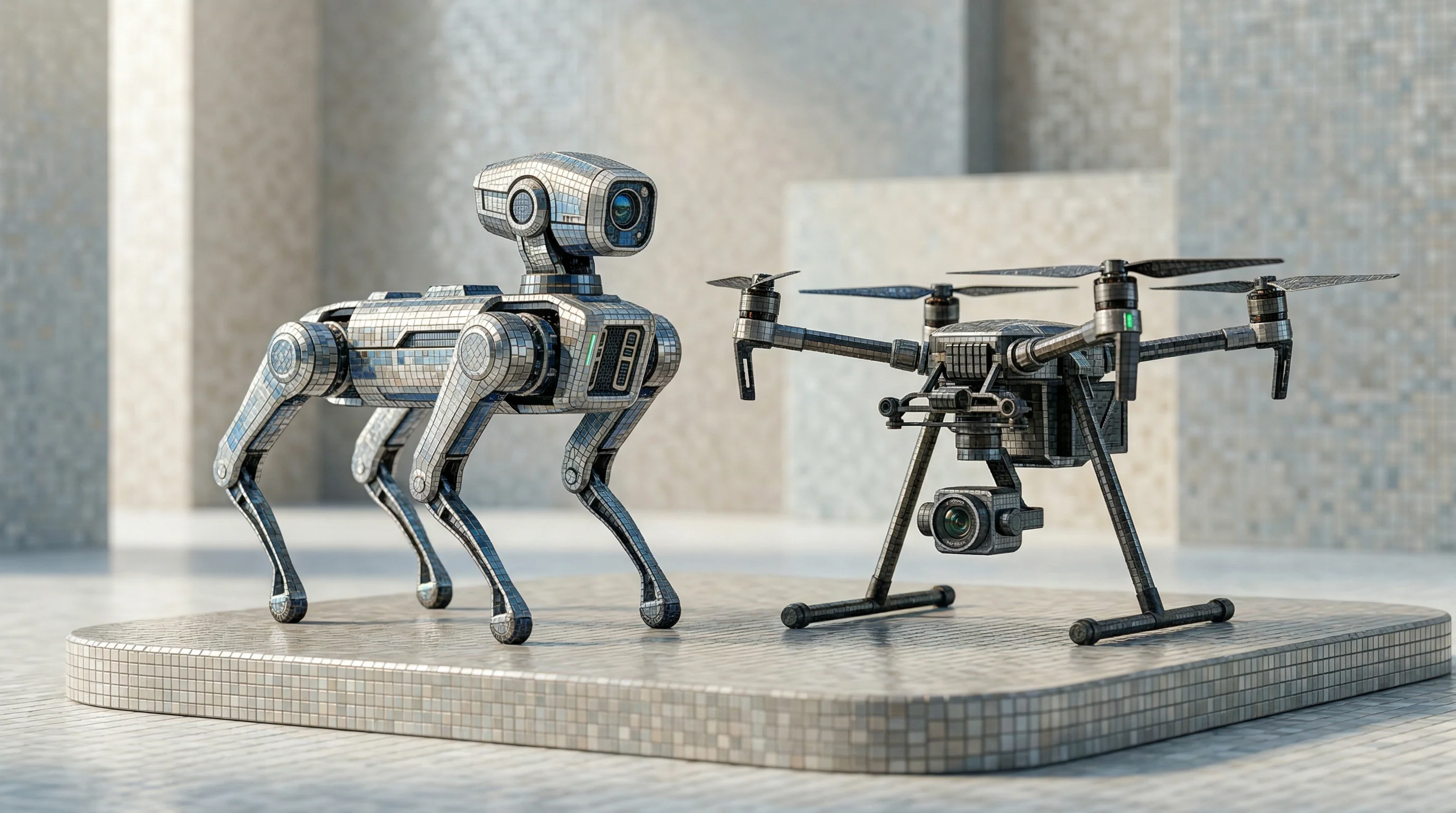
Energy Robotics is hardly alone in this space. ANYbotics rolled out its Data Navigator inspection analytics platform in February 2025. Percepto's AIM platform orchestrates drones and robots for beyond-visual-line-of-sight operations, with a particular focus on U.S. markets. IFS and Boston Dynamics announced a partnership last November to combine what they're calling "agentic Industrial AI" with field robots, targeting commercial availability sometime this year. Gecko Robotics—whose wall-crawling units inspect surfaces humans can't easily reach—signed a $100 million multi-year contract with NAES in February 2025 and hit unicorn valuation by mid-year.
What Energy Robotics emphasizes as its edge is hardware agnosticism. Customers aren't locked into a single vendor's robots. They can deploy the software on equipment they already own, or switch vendors as technology evolves and budgets allow. Whether that flexibility proves decisive in enterprise sales cycles, or whether customers prefer the simplicity of an integrated hardware-software solution, is an open question.
The company claims it has 80 robots operating across four continents, with 200,000 hours and 200,000 kilometers logged in completed missions. (Those figures appeared on the company's website in early April, though the underlying measurement periods aren't specified, so some caution is warranted about how current they are.)
Deployments the company points to include Shell's Energy & Chemicals Park Rheinland, where mixed ground and aerial fleets operate; Bayernwerk and E.DIS for substation inspections; and logos from BASF, Deutsche Bahn, E.ON, and Exelon that show up on the company's marketing materials.
The Reseller Gamble
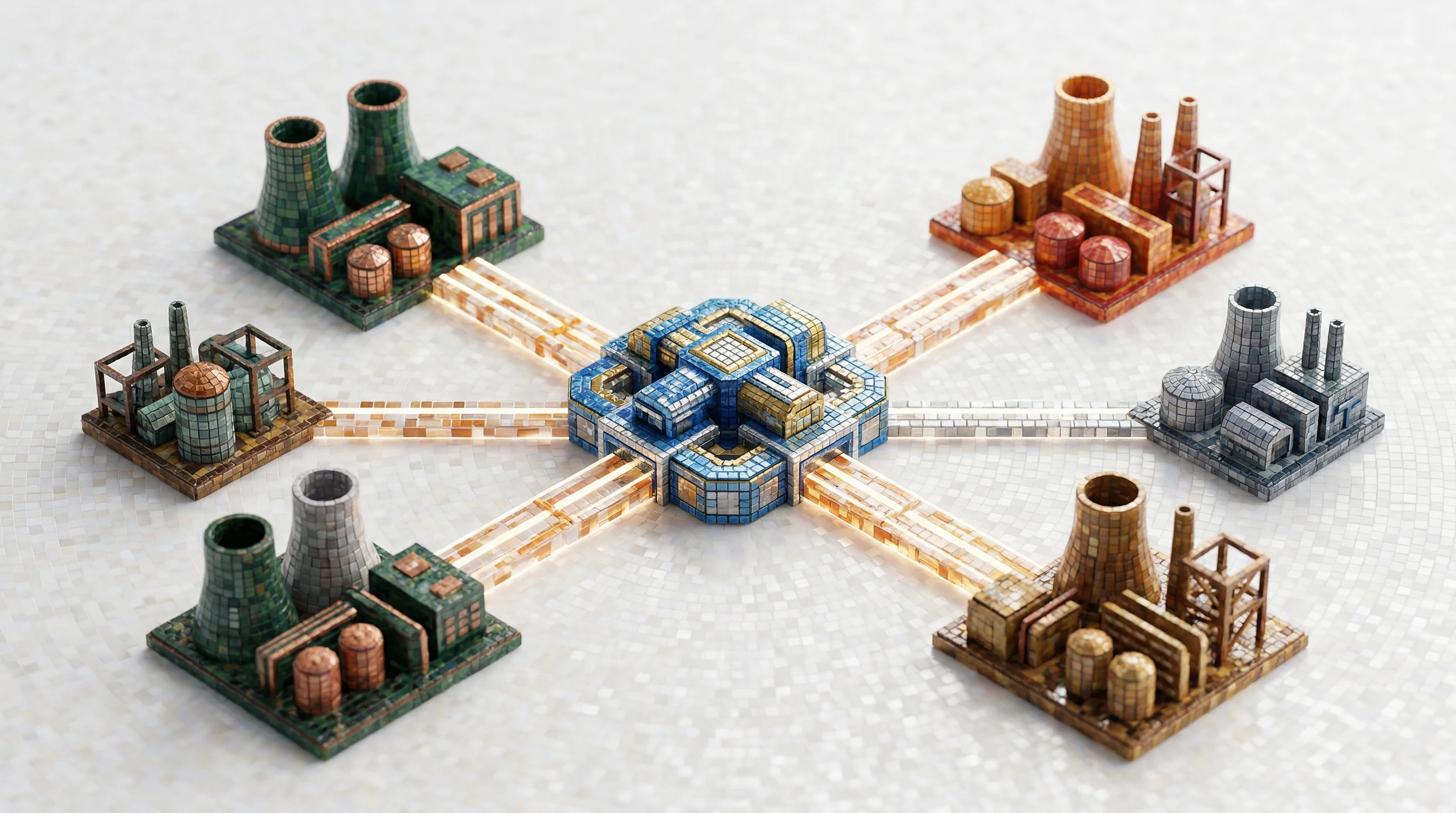
The reseller model offers an obvious advantage: Energy Robotics can scale without building its own global sales force or field integration teams. Bilfinger, Minsait, and the others already have relationships with facility operators, local regulatory knowledge, and the technical staff needed to deploy and support AI-driven inspection systems in live industrial environments.
But the model also introduces dependencies. Revenue hinges on partners prioritizing Energy Robotics' platform over alternatives—or over the temptation to build their own. Success requires not just signing agreements, but ensuring those resellers invest in training, marketing, and customer support.
Whether this distribution network can turn 80 deployed robots into thousands is the unresolved question. The partnership announcements suggest Energy Robotics believes the market is ready to move faster than it has. The next twelve months will likely show whether that confidence is justified, or premature.
For now, the company is placing its chips on the idea that industrial operators would rather adopt software that works with whatever robots they choose, than commit to a single vendor's ecosystem. It's a bet on flexibility over integration—a strategy that's worked in other enterprise software markets, though it's never guaranteed. The deals are signed. The hard part—execution—comes next.


