

Fibraterre, a Normandy startup that makes binder-free wheat straw insulation panels, has raised a €1.8 million seed round (about $2.02 million, per CB Insights) to build its first industrial unit, the company said in an October 11 announcement from Rouen.
UTC Alumni and SideAngels co-led the round, with Normandie Participations and Bpifrance also investing, according to the press release. Normandie Participations published the announcement on October 15, and Le Journal des Entreprises reported the same €1.8 million figure on October 19.
A bet on local, low-carbon materials
The company wants to move a low-carbon, locally sourced insulation out of pilot production and into mainstream and historic buildings. Its press release pointed to RE2020, France's environmental building regulation, and the Décret Tertiaire, which targets energy use in commercial buildings, as tailwinds for materials with a smaller carbon footprint.
Where the money goes
Fibraterre said the proceeds will fund five priorities: deploying the first industrial unit, automating and scaling continuous production, building a network of distributors and integrators within two years, advancing certifications and insurability, and securing long-term partnerships with farmers.
By 2030, the company aims to turn 3,000 tonnes of wheat straw a year into insulation, according to the release.
What the panels are
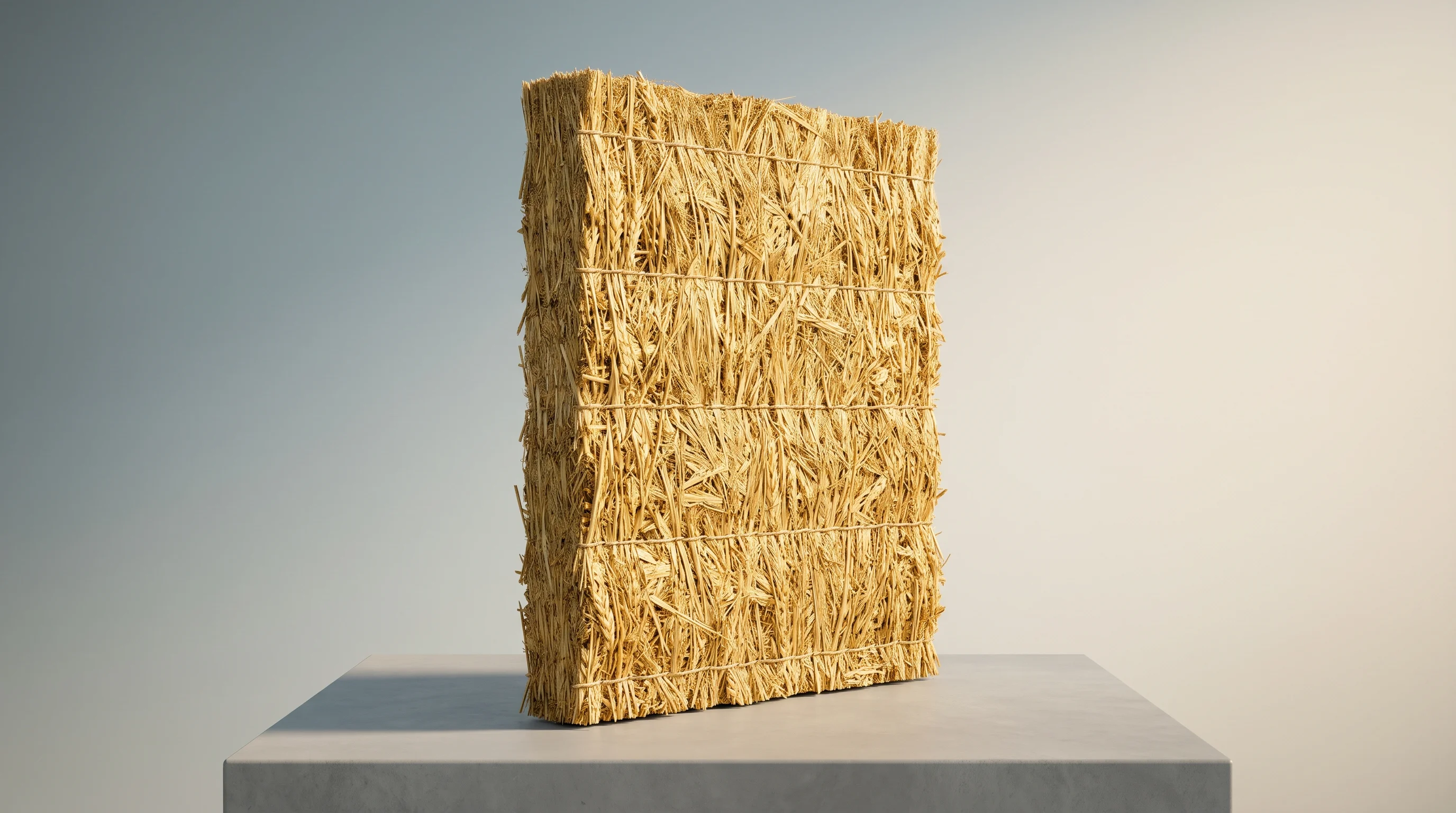
The panels are semi-rigid thermal and acoustic insulation made entirely from wheat straw, according to the company's website. They are cold-compressed without resin or glue and stitched to hold together. The press release described a dry manufacturing process with no thermal treatment.
Fibraterre designed the product for cavity fill in timber-frame construction and for external insulation under render or ventilated cladding. It stresses compatibility with conventional construction and with historic buildings.
The site lists a thermal conductivity of 0.042 W/m·K (a measure of how readily heat passes through a material; lower is better) from a test dated October 2, 2025. Other figures, including density above 80 kg/m³ and acoustic reduction of at least 29 dB, are declared by the manufacturer, and the site attaches no external lab reports. No newer third-party certifications turned up in public sources, which helps explain why certification is a stated use of the new funds.
The team and the workshop
Alain Le Berre is co-founder and president. Gilles Froidure is the other co-founder, according to a Cerema newsletter. Wikipedia lists Le Berre among the co-founders of Linkfluence, created in 2006, and La Gazette reported in October 2025 that he later worked in social housing in Normandy before starting Fibraterre.
The company was founded in 2024 and registered with the Rouen commercial registry on July 10 of that year. Production began at its workshop in Oissel in June 2025 with an initial capacity of 500 m² a year, La Gazette reported, and the company then targeted 5,000 m² by the end of 2026. Those goals are more than a year old, and no 2026 update was available.
The origins of the equipment are modest. La Gazette quoted Le Berre saying the company "détourné des machines destinées à la fabrication de tatamis" (diverted machines built to make tatami mats) to compact straw between two woven meshes.
Dealroom estimates the company has 2 to 10 employees, a third-party figure Fibraterre has not verified.
Investors and public money
"Ce qui nous a convaincus chez Fibraterre, c'est une équipe qui a déjà fait le plus dur," said Samuel Norych, investment manager at SideAngels, and Paul-Victor Duquaire, vice-president of UTC Alumni, in the release. The line translates as: what convinced us is a team that has already done the hardest part.
SideAngels said in the release that it counts more than 4,000 investors and has deployed €146 million across 157 startups, with 15 exits. Normandie Participations is a regional fund wholly owned by Région Normandie.
The release also noted support from ADEME, Région Normandie and the EU's Just Transition Fund, which came as grants rather than equity. Région Normandie announced more than €1.1 million in research and innovation funding on December 1, 2025, for a project led by Fibraterre with UniLaSalle and Cerema. A December 2025 UTC Alumni profile listed €830,000 in public funding secured at that point.
A crowded corner of the market
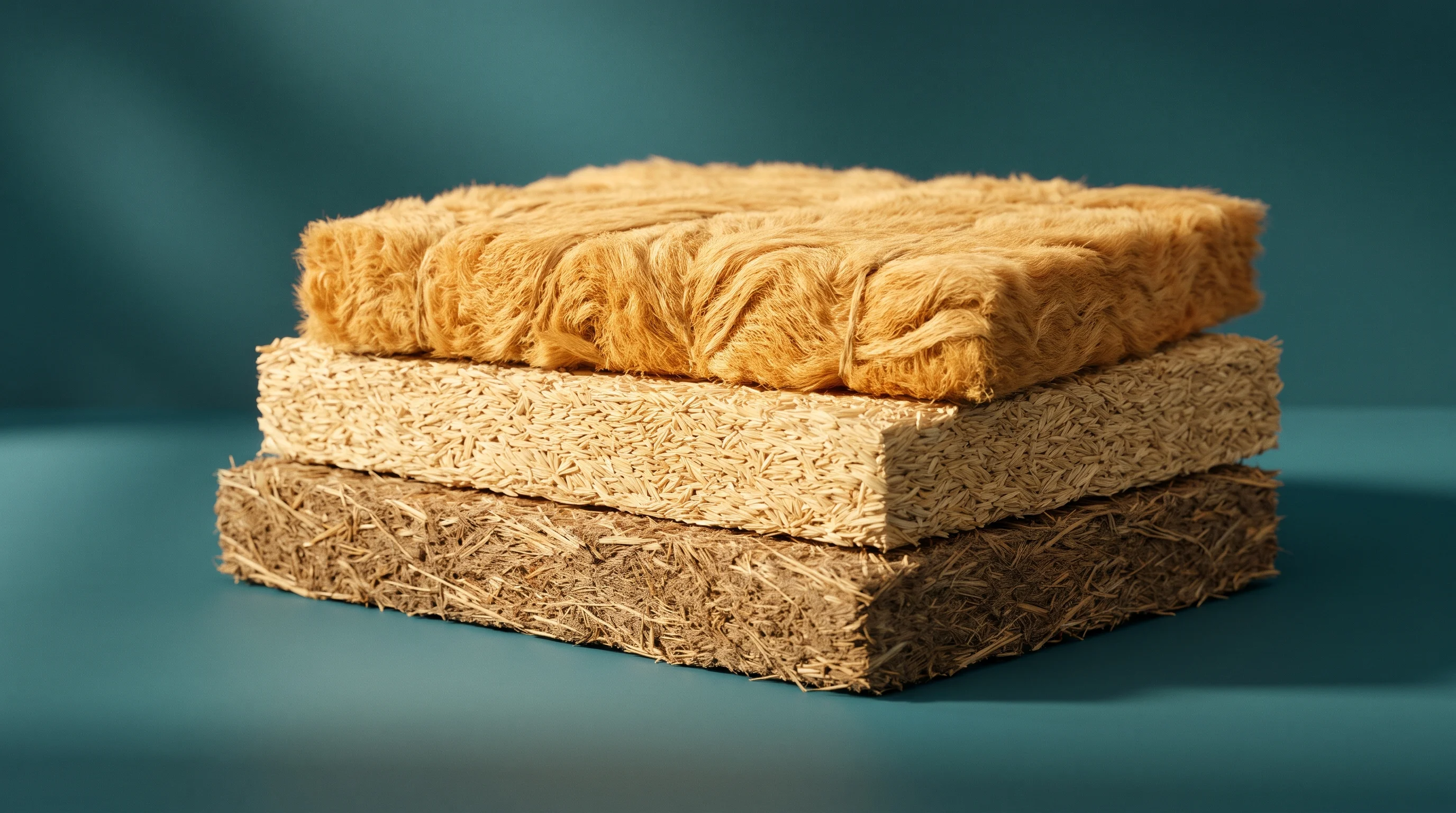
Fibraterre is not the only French maker of straw insulation. Biofib Paille sells straw-based products, and its catalogue shows a thermal conductivity around 0.052 W/m·K for certain configurations, though it uses a different product form and binder approach. FBT Isol makes rice straw panels, and ielo operates a cooperative producing blown straw insulation. Strawtex, which sells CE-certified wheat and rice straw panels, operates globally.
What comes next
Le Berre framed the push as a matter of urgency. "Il est économiquement et climatiquement urgent de réduire nos dépendances aux produits fortement consommateur de pétrole," he said in the release, which translates as: it is economically and climatically urgent to reduce our dependence on products that consume heavily from oil.
For now, the near-term list is short: build the first industrial unit, secure certifications, and put a distributor network in place within two years.


