

The freeze came hard and fast in February 2021. Within days, Texas petrochemical plants—sprawling complexes that churn crude oil and natural gas into the building blocks of modern industry—went dark. Pipes burst. Equipment seized. The disruption rippled through supply chains as methanol, acetyls, and other basic chemicals became scarce in spot markets. Prices spiked. Manufacturers rationed inventory.
It was a clarifying moment, one that exposed a vulnerability most consumers never think about: the U.S. chemical industry is concentrated along a single coastline, dependent on fossil fuels, and acutely exposed to weather, geopolitics, and regional infrastructure failures. In recent years, a quiet shift is underway. A cohort of startups and established players are betting they can produce those same chemicals from waste—biogas from sewage plants, landfill methane, exhaust from steel mills—and do it closer to where the feedstock already sits, often flared or vented.
The technology isn't new. What's changed is the convergence of policy, shipping demand, and infrastructure investment that might, finally, make the economics work.
A Structural Fragility
The U.S. Gulf Coast remains the nerve center of American chemical manufacturing. Vast petrochemical complexes convert natural gas and oil derivatives into methanol, ethylene, and other molecules that underpin everything from automotive parts to pharmaceuticals. But that concentration is a liability. The Dallas Federal Reserve documented how the 2021 disruption cascaded through supply chains, a reminder that weather isn't the only risk. Sanctions on Iranian methanol exports and turbulence in Russian energy markets have added geopolitical volatility to an already brittle system.
George Rose, co-founder of Rise Reforming, a Chicago startup that emerged from Y Combinator's 2026 cohort, sees an opening. His pitch: deploy modular chemical plants directly at biogas sources—wastewater facilities, dairy farms, landfills—to produce methanol and dimethyl ether locally. Hedge against supply shocks. Sidestep carbon costs. Decentralize an industry that has spent a century doing the opposite.
It's an argument industrial strategists have floated for years. The question is whether the conditions have finally aligned to make distributed production viable, or if this is another wave of cleantech optimism destined to crash against capital costs and incumbent scale.
Sitting on the Feedstock
The raw material is abundant, often wasted. In 2025, U.S. investment in new biogas systems topped $2 billion. Twenty new landfill gas projects came online. Renewable natural gas output climbed 24% to 225.6 million MMBtu, according to the American Biogas Council. Yet an EPA survey found that 84% of food-waste anaerobic digestion facilities reported flaring some or all of their biogas—burning it off without productive use. IRS guidance from the same period even assumes flaring as the baseline when calculating greenhouse gas credits for wastewater-derived biogas, a tacit acknowledgment that the sector hasn't figured out what to do with the gas it produces.
More than 17,000 additional U.S. sites could support biogas systems, the Biogas Council estimates. The EPA's AgSTAR program counted 191 manure-based renewable natural gas systems in operation as of mid-2024, with 69 under construction. A study in Nature Sustainability last year highlighted methane leakage risks at water treatment facilities, reinforcing the climate logic: capturing and converting that biogas beats letting it slip into the atmosphere or torching it for compliance.
Biogas—typically a methane-CO₂ blend—can be reformed into syngas (hydrogen and carbon monoxide), then catalytically synthesized into methanol or dehydrated into DME. The chemistry is textbook. The trick is doing it economically at small scale, close to the source.
Technology Routes Proliferate
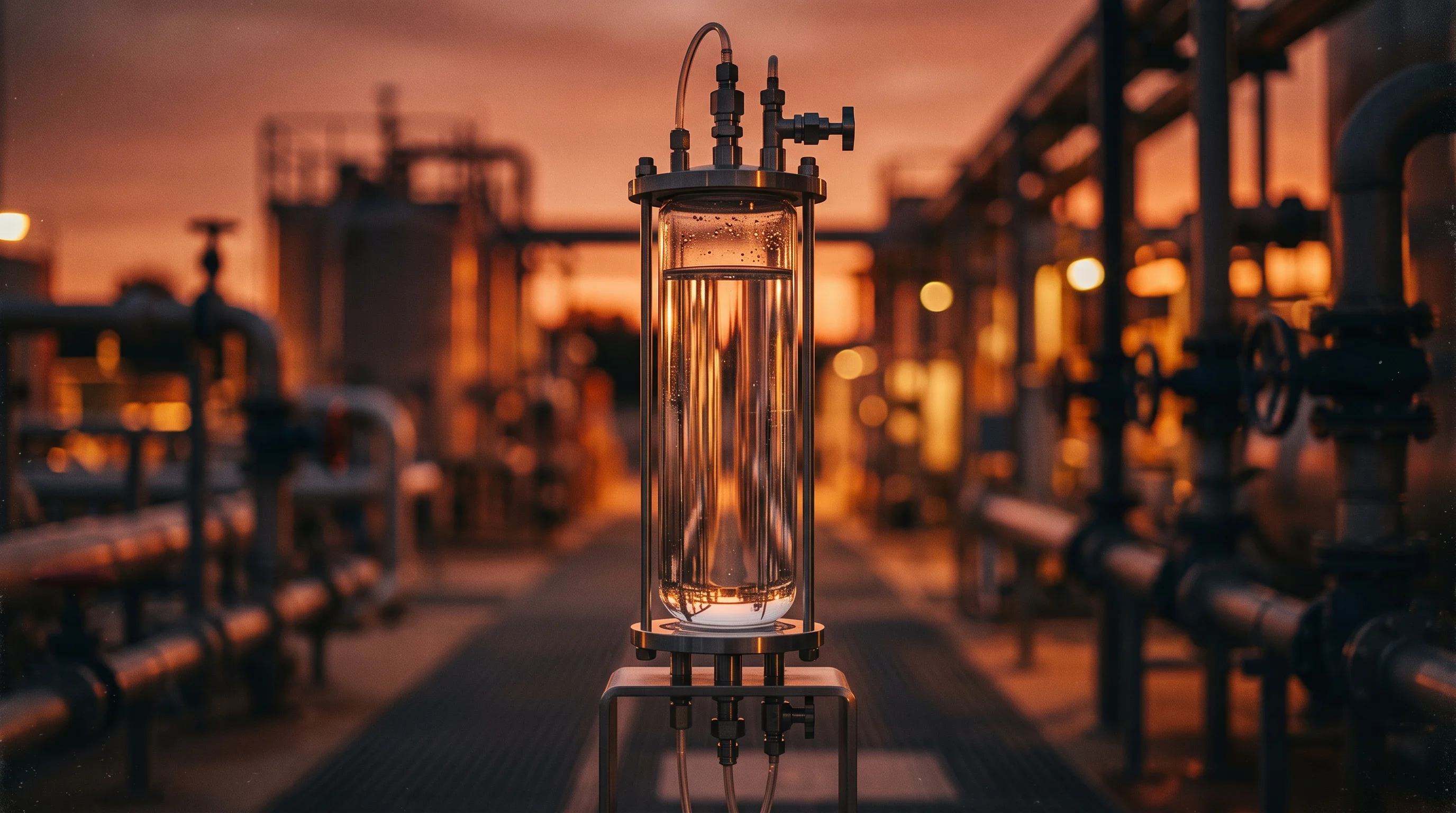
Recent research explores electrified and auto-thermal reforming, which integrates renewable electricity and electrolytic hydrogen to cut fossil energy inputs. A 2025 paper in a Royal Society of Chemistry journal detailed a pilot at a German wastewater plant that produced methanol on-site from sewage biogas, using auto-thermal reforming paired with electrolysis. The study, updated in 2026, demonstrated that electrified pathways can flex with intermittent renewable power—addressing one of the sector's persistent challenges.
Other approaches are advancing in parallel, sometimes with different chemistries altogether. LanzaTech ferments waste gases—carbon monoxide, CO₂, hydrogen—into ethanol and other chemicals using engineered microbes. A Department of Energy piece in April 2026 highlighted microbial conversion routes to acetone and isopropanol. Enerkem gasifies municipal solid waste and plastics into syngas for biofuels. Carbon Recycling International licenses emissions-to-liquids technology that converts CO₂ to methanol; as of mid-2026, more than 200,000 tons per year of capacity had been installed under its licenses.
Twelve, an electrochemical startup, opened AirPlant One in Moses Lake, Washington, last June—a commercial facility producing e-jet fuel and e-naphtha from CO₂ and renewable power. CEO Nicholas Flanders framed it as proof that "fuels and chemicals can be made from renewable power and air, anywhere." The technology spread is wide—gasification, gas fermentation, electrochemical reduction—but the narrative is converging: waste carbon and stranded biogas can displace fossil feedstocks. Maybe.
Policy Shifts Open a Window
The economics hinge on policy incentives, full stop. The U.S. 45Z Clean Fuel Production Credit, effective from January 2025 through late 2027 for most sales (with some extensions in statutory provisions), offers lifecycle-based subsidies. IRS guidance in 2026 has provided clarification on adjustment factors and emissions brackets for various fuel pathways, with marine fuels potentially qualifying under certain conditions. The 45V Clean Hydrogen Credit provides up to full credit for hydrogen produced at or below 0.45 kg CO₂e per kg H₂. The 45Q Carbon Capture Credit includes utilization pathways where CO₂ is locked into a product. IRS notices in 2026 provided safe harbors and administrative detail, signals that the credit architecture is maturing—or at least becoming less chaotic.
California's Low Carbon Fuel Standard updated guidance in 2025 and again in 2026, with ongoing FAQs relevant to low-carbon methanol and DME if used as transportation fuels. Oberon Fuels, which has produced renewable DME from biogas at its Brawley, California, facility since 2021, secured an EPA Renewable Fuel Standard pathway in February 2025. That allows it to generate D3 and D5 Renewable Identification Numbers—tradable credits—for waste-biogas-derived DME.
LanzaTech CEO Jennifer Holmgren told S&P Global Platts in January 2026 that waste-carbon routes hedge feedstock scarcity and cost swings, but "utilization must be paired with policy and partnerships" to pencil out. Translation: without subsidies, the math doesn't close.
Europe is moving faster, or at least more bluntly. FuelEU Maritime came into force January 1, 2025, mandating a 2% greenhouse gas intensity cut initially and ramping to 80% by 2050. The EU Emissions Trading System now requires full surrender for shipping emissions as of 2026, with methane and nitrous oxide added to the scope. The Carbon Border Adjustment Mechanism's enforcement period began January 1, 2026, requiring importers to hold accounts and purchase certificates. These overlapping regulations are shifting the cost structure for fossil marine fuels, opening a wedge for low-GHG methanol that wasn't there a few years ago.
Shipping Demand Builds, Slowly
Methanol is gaining a foothold in maritime fuel markets. According to DNV's Alternative Fuels Insight tracker, 38 methanol-fueled vessels were delivered in the first half of 2026. June alone saw two new orders. The orderbook showed resilience in early 2025, with 40 methanol-capable vessels totaling 4.6 million gross tons ordered in the first half of that year. Methanex, the world's largest methanol producer, reported an average realized price of $351 per ton in Q1 2026, up from $331 per ton in Q4 2025. Monthly contract price sheets for April and May 2026 are publicly available, offering a rare window into near-term pricing.
Global methanol market valuations from Fortune Business Insights in June 2026 pegged the sector at $39.99 billion, projecting growth to $49.40 billion by 2034. DME's trajectory is steeper: $12.05 billion in 2026, climbing to $24.13 billion by 2034—a 9% compound annual growth rate. Mordor Intelligence expects DME volume to grow from 8.99 million tons in 2026 to 12.12 million tons by 2031. Shipping is a driver, but so are aerosol propellants and potential blending into liquefied petroleum gas for heating and cooking.
That last application remains aspirational in the U.S., at least for now. DME is an ozone-friendly aerosol propellant, already used in some consumer products. But standards for blending it with propane are still evolving. ASTM notes that DME/LPG blends are not currently within the ASTM D1835 LPG specification; standardization work is ongoing. The National Propane Gas Association has flagged open items. Until those codes align, the domestic propane-blending opportunity stays theoretical.
The Modular Gambit
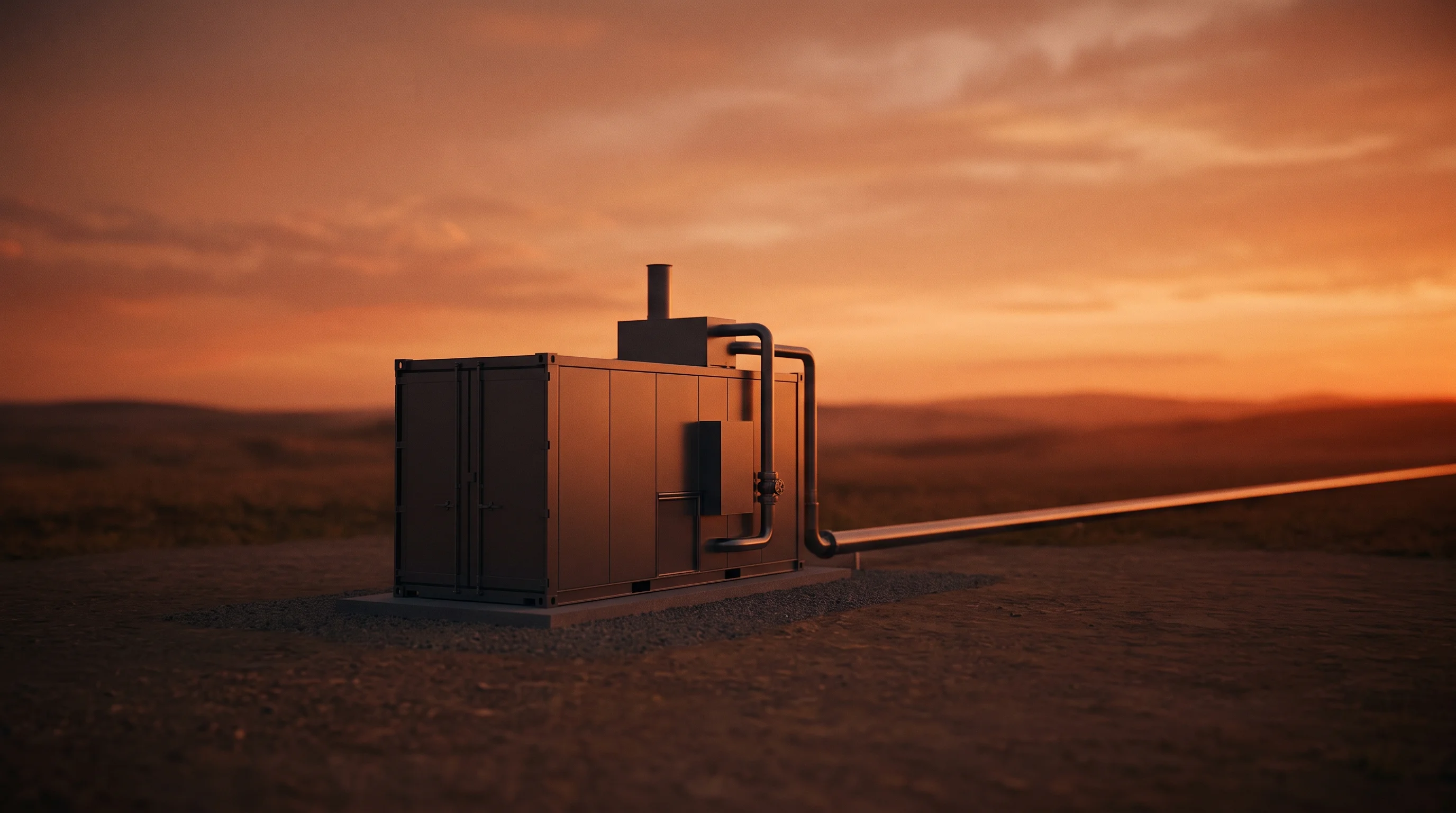
Rise Reforming's strategy centers on modularity—containerized or skid-mounted units that can be dropped at biogas sources rather than feeding into centralized plants. A guide from Biofuels Digest last year highlighted the shift toward modular biogas-to-chemicals systems, emphasizing supply security and the ability to monetize stranded or low-value biogas. The Chicago startup, a team of four including CEO George Rose, CTO Lucas Zubillaga, and COO Jona van Oord, is targeting wastewater plants first. DME as a beachhead product (for aerosols), methanol to follow. Advisors include Jack Lewnard, Garry Cooper, and Richard Penning. Investors include Y Combinator, 776 Foundation, LongJump VC, and UChicago affiliates. The U.S. Department of Energy is noted as a supporter, though specific grant amounts weren't detailed in public filings as of mid-2026.
The Chicagoland region offers a convenient testing ground. A Methane Recapture Project coalition of regional wastewater facilities, documented in Illinois Commerce Commission materials updated around April 2026, is collaborating on biogas capture and renewable natural gas infrastructure. Local momentum that Rise Reforming can tap into for its pilot, which the company says will demonstrate the first wastewater biogas-to-methanol system in the Americas later this year.
Other players are pursuing similar distributed models, with mixed results. Enerkem, which gasifies municipal waste, announced a renewed expansion strategy in February 2026 targeting 1 million tons per year of sustainable methanol following financial restructuring—a polite way of saying the company hit turbulence and recalibrated. Carbon Recycling International signed a China licensing agreement in June 2026. WasteFuel's Ankara biomethanol project began marketing 45,000 tons per year in March 2025.
Not every project makes it. SunGas Renewables halted its Louisiana wood-to-methanol project in June 2026, a reminder that first-of-a-kind deployments carry execution and financing risk. Capital can evaporate when timelines stretch or costs overrun, no matter how compelling the pitch deck.
The capital environment is cautiously improving, though "improving" is relative. An IEA report from 2026 noted that more than 30 carbon capture, utilization, and storage-related final investment decisions were made in the prior two years, with growing private capital participation in North America and Europe. Transport and storage networks are gaining traction, which matters for projects that rely on captured CO₂ as a feedstock. BloombergNEF's New Energy Outlook 2026, released in June, argued that electrification and newer technologies strengthen energy security—a framing that supports power-to-molecules narratives where grid conditions and policies align.
The Devil, Specifications
The path from pilot to scale is cluttered with technical and regulatory hurdles, some mundane, some existential. E-methanol projects require abundant low-cost renewable power and a CO₂ feed. Policies around CO₂ source qualification—biogenic versus fossil—materially affect 45Z and LCFS eligibility. California LCFS amendments in 2025 and guidance updates in 2026 addressed some of these nuances, but ambiguity persists in certain pathways.
For DME to penetrate the U.S. propane market at scale, ASTM and equipment manufacturers need to finalize blending limits and safety protocols. That's a standards-body slog, not a technology breakthrough. Lifecycle accounting adds another layer of complexity. The 2026 IRS guidance for 45Z and 45V reiterates emissions-rate brackets, but calculating lifecycle greenhouse gas intensity for a biogas-to-methanol pathway involves modeling fugitive methane, upstream energy use, and downstream product fate. A 2026 study in Nature Sustainability emphasized that wastewater facilities must control fugitive methane to ensure net climate benefit—capture and conversion alone aren't sufficient if leaks undermine avoided emissions.
Then there's hydrogen. E-methanol routes that combine captured CO₂ with electrolytic hydrogen can achieve very low carbon intensities, but they require large volumes of green hydrogen. The 45V credit incentivizes that production, but power costs and electrolyzer capital remain high. Biogas-to-methanol pathways sidestep the need for external hydrogen by using the biogas itself as both feedstock and energy source, which may offer near-term cost advantages even if the carbon intensity doesn't quite match e-methanol's floor.
These are details. But details matter when you're trying to displace an industry that has spent a century optimizing cost and scale.
What Comes Next
The next 18 to 24 months will test whether this cohort of waste-to-chemicals projects can move from press release to operation. Rise Reforming's Chicagoland demo, if successful, would mark a proof point for the modular, feedstock-adjacent model—small, nimble, local. Enerkem's 1-million-ton pipeline and Infinium's Roadrunner project in Texas—financed by Brookfield and awarded an offtake contract in 2026—represent larger bets that commercial-scale plants can compete with fossil incumbents on both cost and carbon.
Shipping will be a critical demand signal. If methanol-fueled vessel orders continue to climb and FuelEU Maritime enforcement tightens, shipowners will need reliable low-GHG methanol supply—not just from a handful of large facilities, but from a distributed network that can serve ports globally. Oberon's renewable DME production and the EPA's February 2025 RFS pathway approval suggest that DME could carve out niches in transportation and propane blending, assuming standardization hurdles get sorted.
The most intriguing possibility, though, is whether these technologies redefine industrial resilience in a way that matters beyond carbon accounting. If distributed plants can produce methanol and DME economically at thousands of biogas sites, the U.S. chemical supply chain becomes less dependent on Gulf Coast mega-complexes and less exposed to weather, outages, and geopolitical disruption. That's the thesis Rise Reforming and its peers are advancing—not just decarbonization, but a fundamental shift in how and where chemistry happens.
The research is advancing. The policies are converging, however unevenly. The first commercial units are coming online. Whether this wave reshapes supply chain security or remains a niche within the broader petrochemical landscape will depend on execution, financing, and how quickly regulatory frameworks mature. For now, the pieces are moving. Whether they click into place is another question entirely.


