

The economics of shooting down a $1,000 drone with a $100,000 missile have never made sense. But until recently, air defense forces didn't have much choice—you either spend wildly to intercept incoming threats, or you let them through. Skapion, a startup that emerged from stealth in July 2026 with $36 million in seed funding, is betting that imbalance is finally ready to crack.
The company, co-founded by veterans of Israel's defense establishment, announced the raise on July 9 with backing from UP.Partners and Khosla Ventures, joined by Fusion VC, Stratos Ventures, TBD VC, and q fund. Its pitch is straightforward, if ambitious: a mobile counter-swarm system capable of intercepting drones at under $10,000 per shot. That's a fraction of what current kinetic solutions cost, and potentially a game-changer if the technology works.
The timing matters. NATO allies have watched Ukraine's skies fill with cheap, abundant drones for over two years now—both attacking and being knocked down at a cost-per-kill rate that makes procurement officers wince. Iron Dome's Tamir interceptors run north of $40,000 each. Patriot PAC-3 rounds? Closer to $4 million. Skapion's founders think the market is finally ready to pay for something purpose-built and affordable, even if that means rethinking the missile entirely.
Defense Pedigree, Startup Speed
Skapion lists five co-founders, all with deep Israeli defense backgrounds. CEO Ido Bar-On came from XTEND, where he served as Chief Business Officer. CTO Gal Goren held VP roles in R&D and engineering at Roboteam. Then there's Pini Yungman, the former EVP and General Manager of Rafael's Air & Missile Defense Systems Division—the unit behind programs like David's Sling. Yaron Karp and Zafrir Yoeli round out the founding team.
It's the kind of roster that gets investor attention in defensetech circles. The company itself was founded in October 2024, which makes a $36 million seed round eight months later either wildly optimistic or a sign that backers see something concrete. Skapion operates out of Washington, D.C. for its headquarters, with R&D teams in Ramat Gan, Israel—a setup that signals ambitions beyond a single national market.
According to Israeli media reports from mid-July, the company has been working with Israel's Ministry of Defense on subsystem testing, with live-fire interception trials planned. That's early, but not unusually so for a startup with this much defense-sector experience baked into its founding DNA.
Small Missiles, Big Ambitions
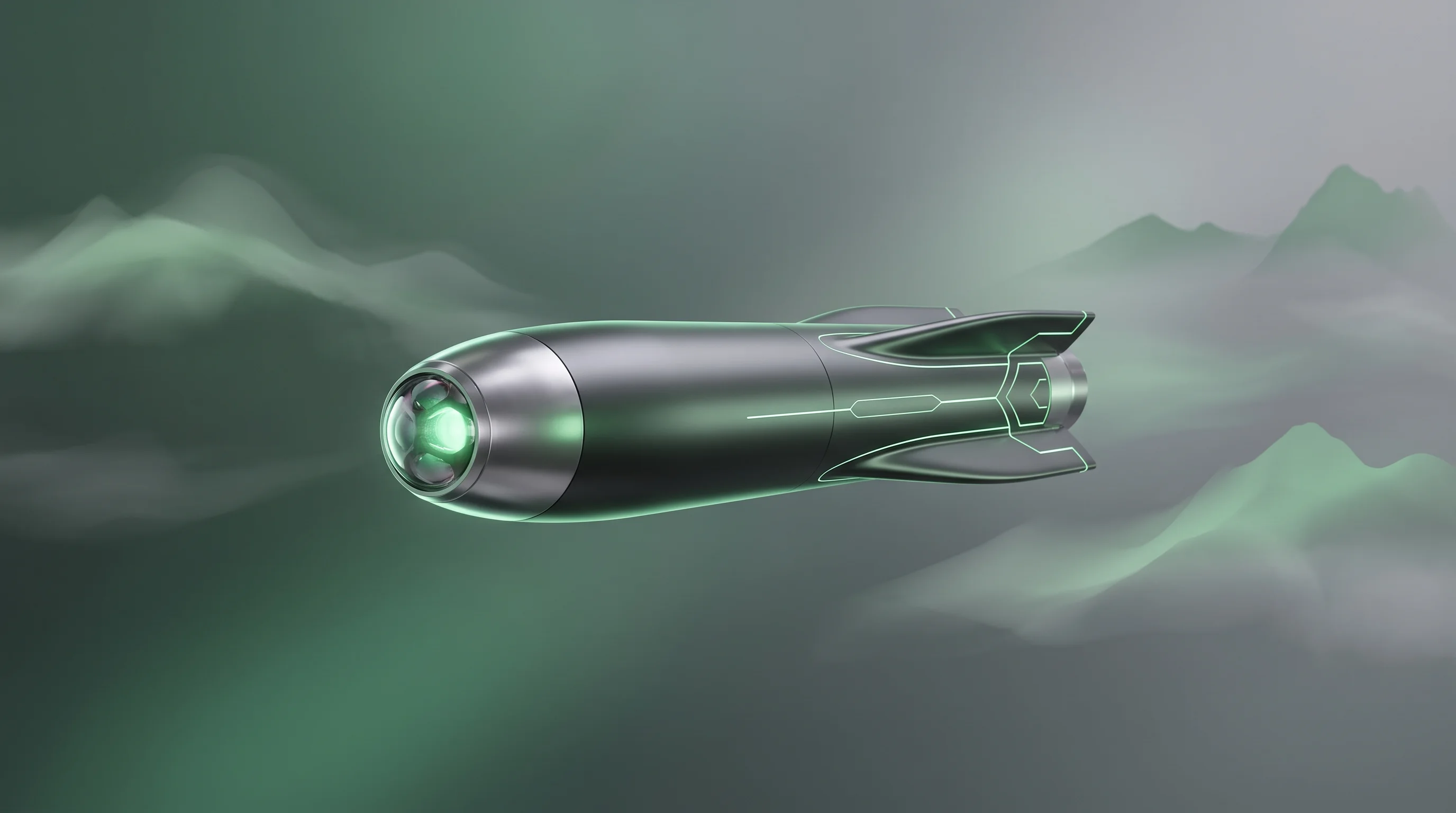
What exactly is Skapion building? Job postings on the company's site offer clues: roles in seeker systems (RF, electro-optical, infrared, multi-mode), guidance and navigation, rocket propulsion, command-and-control integration. The technical profile suggests something compact, mobile, and designed to be deployed in volume against swarms rather than high-value aircraft.
"Drone swarms require a fundamentally different approach to air defense," Bar-On said in statements around the funding announcement. Perhaps. But the challenge isn't just technical—it's economic and operational. A defense system that costs $50,000 per intercept might work against a sophisticated adversary launching $20,000 drones. It starts to fall apart when those drones cost $2,000, or when you're facing dozens at once.
Skapion's stated target of under $10,000 per shot would undercut nearly every kinetic counter-drone solution currently in service. Whether the company can actually deliver at that price point while maintaining reliability and performance—well, that's what the next 18 months of testing will determine.
The company had somewhere between 11 and 50 employees as of July, according to LinkedIn data, with active hiring across missile systems, avionics, software, and business development. It's lean, even for a seed-stage defense startup.
A Crowded, Complicated Market

Skapion isn't alone in chasing this problem. Anduril's Roadrunner—a vertical-takeoff airborne interceptor already drawing U.S. Department of Defense contracts—takes a different architectural approach. So does Fortem Technologies' DroneHunter, which uses nets for reusable capture rather than single-use missiles. Then there are directed-energy systems, RF jammers, and a constellation of other counter-UAS technologies at various stages of maturity.
Each approach involves tradeoffs. Missiles are single-use by nature, which means logistics, inventory, and resupply become operational constraints. Reusable systems can be more economical over time but introduce mechanical complexity and failure modes. Directed energy sounds elegant until you factor in power requirements and atmospheric conditions.
Still, there's clearly appetite for new solutions. In June, Askari Defense raised $9 million for hand-launched drone interceptors. Rilian, working on agentic AI for cyber and defense operations, pulled in $17.5 million in April. Defense budgets are prioritizing exactly what Skapion is promising: low cost, high volume, and the ability to flip the cost-exchange ratio back in favor of defenders.
The investor group reflects that dual-use potential. UP.Partners focuses heavily on aerospace, robotics, and defense applications. Khosla Ventures, while multi-sector, has been quietly building exposure to defense tech over the past few years. Stratos Ventures—a newer Israeli-American defensetech fund—raised $50 million of an $80 million target as of late June and lists Skapion in its portfolio. It's the kind of syndicate that opens doors in Tel Aviv, Washington, and Brussels alike.
What Happens Now

The immediate path is straightforward, if unforgiving: move from subsystem validation to full live-fire demonstrations with the Israeli Ministry of Defense, prove the system works under operational conditions, and start conversations with allied procurement offices. Skapion hasn't disclosed timelines for production readiness or specific contract discussions beyond Israel, but its D.C. headquarters and investor composition suggest broader ambitions.
The harder question is whether missile-based interception will remain the dominant paradigm, or whether alternative technologies gain traction first. Defense procurement moves slowly—except when it doesn't. The war in Ukraine accelerated timelines and opened budgets for counter-drone tech in ways that would have seemed implausible three years ago.
For Skapion, the $36 million buys runway to find out if the market is ready to pay for what it's building. The company has a credible team, real technical challenges to solve, and a clear value proposition in an increasingly urgent problem space.
Whether that's enough—well, the missiles will have to speak for themselves.


