

There's a particular kind of audacity required to say no when Mark Zuckerberg personally dangles millions of dollars in front of you. Rishabh Agarwal had it. The reinforcement learning researcher—already on Meta's payroll at the time—walked away from what the New York Times would later describe as an offer worth "millions of dollars in stock and salary" to join the company's new AI lab. Instead, last September, he signed on with Periodic Labs, a Menlo Park startup that announced its $300 million seed funding round on September 30, 2025, armed with a mission that bordered on the grandiose: build an AI scientist capable of discovering new materials and advancing the physical sciences.
The story went semi-viral when someone on X claimed Agarwal had spurned a $1 million package. He corrected them quickly, posting that Meta's offer had been "an order of magnitude higher." Neither Meta nor Agarwal has disclosed the precise offer figure. He'd left a fortune on the table.
It's the kind of decision that looks either visionary or reckless, depending on how things shake out. For now, it's simply striking.
A Pedigree Built for This Moment
Agarwal didn't arrive at that crossroads by accident. He'd spent years constructing the kind of résumé Silicon Valley devours: B.Tech. from IIT Bombay, a PhD from Mila in Montreal under Aaron Courville and Marc Bellemare, and stints at Google Brain and Google DeepMind. His work on offline reinforcement learning earned recognition—including an Outstanding Paper Award at NeurIPS, though he hasn't publicly specified which one—and he contributed to flagship models like Gemini and Gemma. By the time Zuckerberg came calling, Agarwal had also taken on an adjunct professorship at McGill and was embedded at Meta, working on reinforcement learning and reasoning for large language models.
He was, in other words, exactly the kind of talent Meta wanted to keep as it pushed deeper into AI research. But Agarwal chose what he later described to the Hindustan Times as "a different kind of risk." That risk had a name: Periodic Labs.
The Founders and Their Bet
Periodic was the brainchild of Liam Fedus and Ekin Doğuş Çubuk, two researchers with their own heavyweight credentials. Fedus had left OpenAI in March after serving as VP of Research and helping create ChatGPT. Çubuk came from Google Brain and DeepMind, where he led materials and chemistry research and co-authored GNoME, Google's 2023 breakthrough in materials discovery that landed in Nature. They weren't interested in building just another LLM. They wanted to solve something more fundamental.
Their thesis, laid out on Periodic's website, is straightforward: the internet's text data is finite, and frontier AI models have nearly exhausted it. Progress now depends on proprietary experimental data—including the kind of negative results that never see the light of publication. So Periodic is building AI agents that form hypotheses, run experiments in automated laboratories, and refine their understanding through reinforcement learning and multiphysics simulations. The company calls it using "nature as the RL environment." The initial focus is on materials science and physical sciences, with explicit ambitions like discovering higher-temperature superconductors. They're already collaborating with an unnamed semiconductor manufacturer for chip heat dissipation analysis, deploying agents trained on experimental data.
Agarwal appears on the company's team page as a founding member—though TechCrunch's September 30 coverage named only Fedus and Çubuk as co-founders. The distinction might seem semantic, but it reflects how the founding team was structured. Other early members include Dzmitry Bahdanau, Reiichiro Nakano, Muratahan Aykol, and Joe Checkelsky. The advisory board, meanwhile, reads like a physics dream team: Carolyn Bertozzi, Mercouri Kanatzidis, Steve Kivelson, Zhi-Xun Shen, Chris Wolverton.
An Exodus, Not an Anomaly
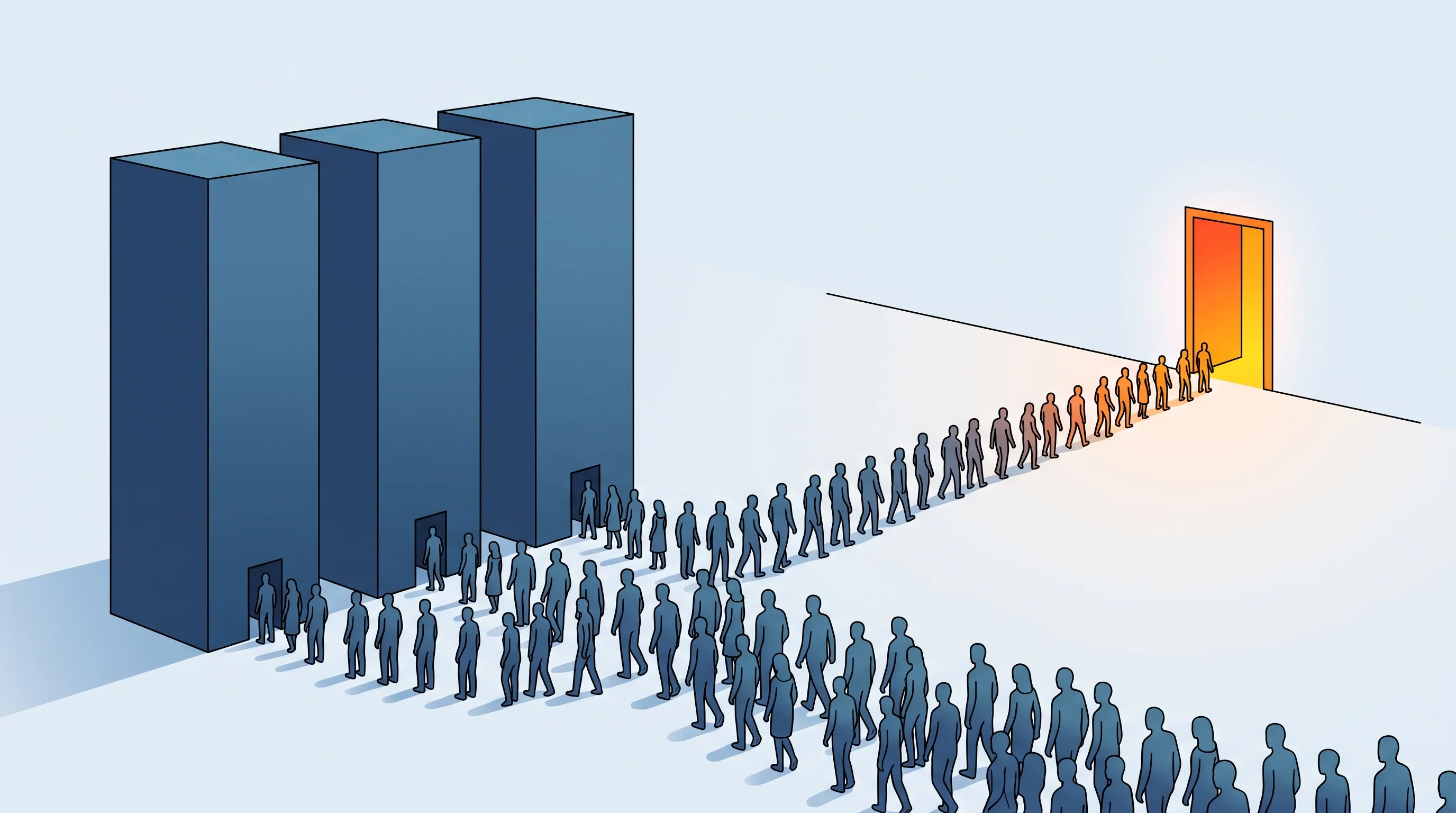
Agarwal wasn't the only high-profile defector. The Times reported in September that more than 20 researchers had left OpenAI, Google, and Meta for Periodic. That's not just a hiring spree. It's a pattern. Something deeper seems to be pulling researchers out of big labs and into startups, even when the financial logic doesn't immediately add up.
Late last May, Agarwal posted on X, criticizing the secrecy at private AI labs and arguing it forces researchers in the open to waste time re-discovering proprietary techniques. The frustration isn't unique to him—the AI research community has grown uneasy with the widening gap between what gets published and what stays locked behind corporate walls. For some, joining a startup offers an escape valve. Perhaps it's also about ownership, or the chance to build something new from scratch without the bureaucratic weight of a tech giant. Or maybe it's simpler: the allure of risk itself.
The Money Pouring In

When Periodic emerged from stealth on September 30, 2025, it announced a $300 million seed round led by Andreessen Horowitz—one of the largest on record. The list of participants was a Silicon Valley who's who: Felicis, DST Global, Accel, NVentures (Nvidia's venture arm). Individual backers included Jeff Bezos, Eric Schmidt, Jeff Dean, and Elad Gil. Bloomberg had initially reported the seed-stage valuation as $1.3 billion.
That was just the opening act. On March 25, 2026, Bloomberg reported Periodic was in talks to raise hundreds of millions more with a valuation around $7 billion. Two months later, Forbes sharpened the details: $500 million at a $7.5 billion valuation, with AMP—a vehicle founded by former Andreessen Horowitz GP Anjney Midha—reportedly leading. As of early July, the deal hadn't officially closed, but the trajectory was unmistakable. A company less than a year old, with no public product to speak of, was on the verge of becoming one of the most valuable AI startups in the world.
The funding surge reflects broader investor enthusiasm for AI-for-science ventures, a category that includes Tetsuwan Scientific, the nonprofit Future House, and the University of Toronto's Acceleration Consortium. Isomorphic Labs, focused on drug discovery, raised $2.1 billion in May. The bets are enormous because the potential payoffs are transformative: new materials, better drugs, faster chip designs. Maybe even room-temperature superconductors, if you're willing to dream big.
What Lies Ahead
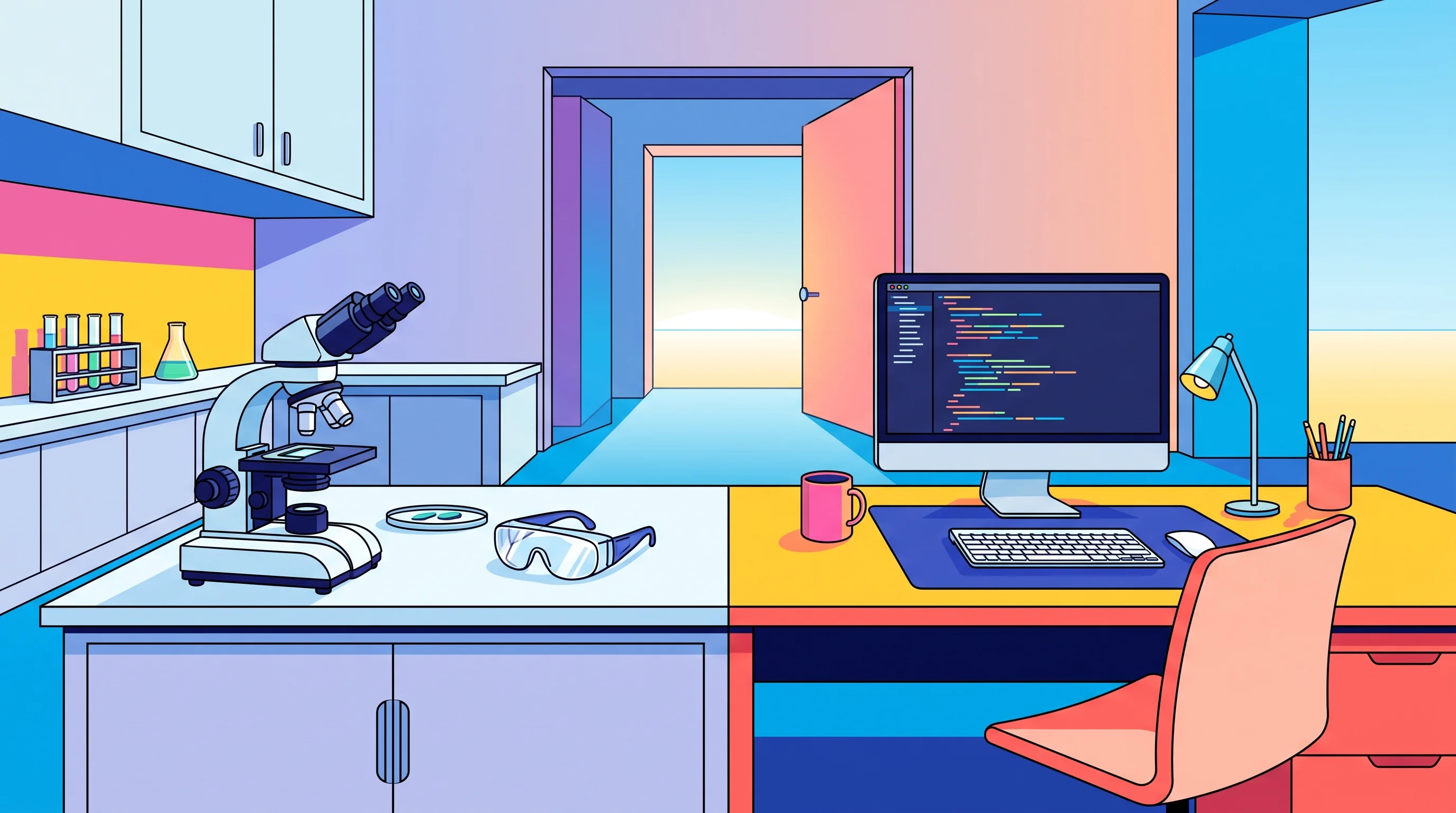
Periodic now employs 11-50 people as per LinkedIn; BuiltIn lists a specific figure of 32 employees as of July 2026. The team operates out of 4055 Bohannon Drive in Menlo Park, and the company is actively hiring—roles in lab operations, environmental health and safety, software engineering, research. The job postings suggest Periodic is building out physical infrastructure alongside its AI systems, which makes sense if you're trying to run real experiments in the real world.
For Agarwal, the gamble is existential in a way Meta's offer never would have been. Startups fail, even the well-funded ones with star-studded teams. But they also offer something big tech can't: the chance to reshape an entire field from the ground up, unencumbered. His decision to join Periodic wasn't simply about rejecting millions. It was about choosing uncertainty over comfort, potential over security.
Whether that bet pays off won't be clear for years. But Agarwal seems willing to wait. And in an industry increasingly defined by caution and consolidation, that kind of conviction—however risky—stands out.


