

A Harvard spinoff thinks it can upend protein snacks with technology the size of a washing machine. The hard part? Making people care.
The machine humming away in Lasso's production facility is roughly the size of a household appliance, which is precisely the point. Mike Messersmith wants you to know this because in the protein snack business—where scale usually means multi-million-dollar extrusion lines stretching across warehouse floors—a washing machine-sized contraption churning out hundreds of thousands of pounds annually sounds almost absurd.
And yet, here we are. On February 23, Lasso launched two consumer brands built on technology that spins protein and fiber into edible matrices using physics borrowed from cotton candy machines. Which raises an obvious question: Can centrifugal force actually disrupt the way America snacks?
Messersmith thinks so. The former Oatly executive, who also spent years at Frito-Lay and Chobani, is betting that consumers have grown tired of protein snacks that taste like laboratory experiments dressed up in aggressive packaging. His pitch: Lasso's SpinTech platform—developed originally at Harvard's Wyss Institute for alternative meat applications—can produce cleaner-label, better-tasting protein snacks without the starch binders and chemical additives that define most extruded products.
The company unveiled two brands Tuesday: Froobies, protein-fortified fruit snacks aimed at the Welch's crowd, and CronchClub, high-protein crisps targeting the Quest Nutrition faithful. Both went live for direct-to-consumer pre-orders, with select New York City specialty retailers expected to carry them in coming weeks.
Whether anyone will buy them remains to be seen.
Cotton Candy Physics, Applied to Chickpeas
The technology itself is legitimately interesting, even if the execution still feels speculative. Lasso's SpinTech uses focused rotary jet spinning—essentially, the same centrifugal principles that turn sugar into cotton candy—to mechanically weave protein and fiber into food structures. No extrusion. No starch coatings. Just rotation, pressure, and what the company describes as "precise control over fiber properties."
Bioengineers Kit Parker, Luke MacQueen, Christophe Chantre, and Grant Gonzalez originally developed the system at the Wyss Institute to create muscle-like textures for lab-grown and plant-based meat. Lasso licensed the technology and pivoted beyond its original Tender Food alternative-meat brand into a broader platform for snacks. A patent covering the focused rotary jet-spinning devices was granted in November 2024.
According to Messersmith, the system uses less energy than a toaster oven and supports over 1,000 ingredient combinations. The company claims lower capital expenditure and faster time-to-market compared to traditional extrusion, which often requires production lines costing several million dollars. Of course, those traditional lines also produce snacks at proven scale for pennies per unit. Lasso's advantage, if it exists, lies in flexibility and speed—not necessarily cost, at least not yet.
A $5.4 million U.S. Department of Energy grant awarded in January 2025 lends some external validation to the efficiency claims. The funding, earmarked for energy-efficient production under the Tender Food brand, suggests someone in Washington finds the technology credible enough to back with taxpayer dollars.
What You're Actually Eating
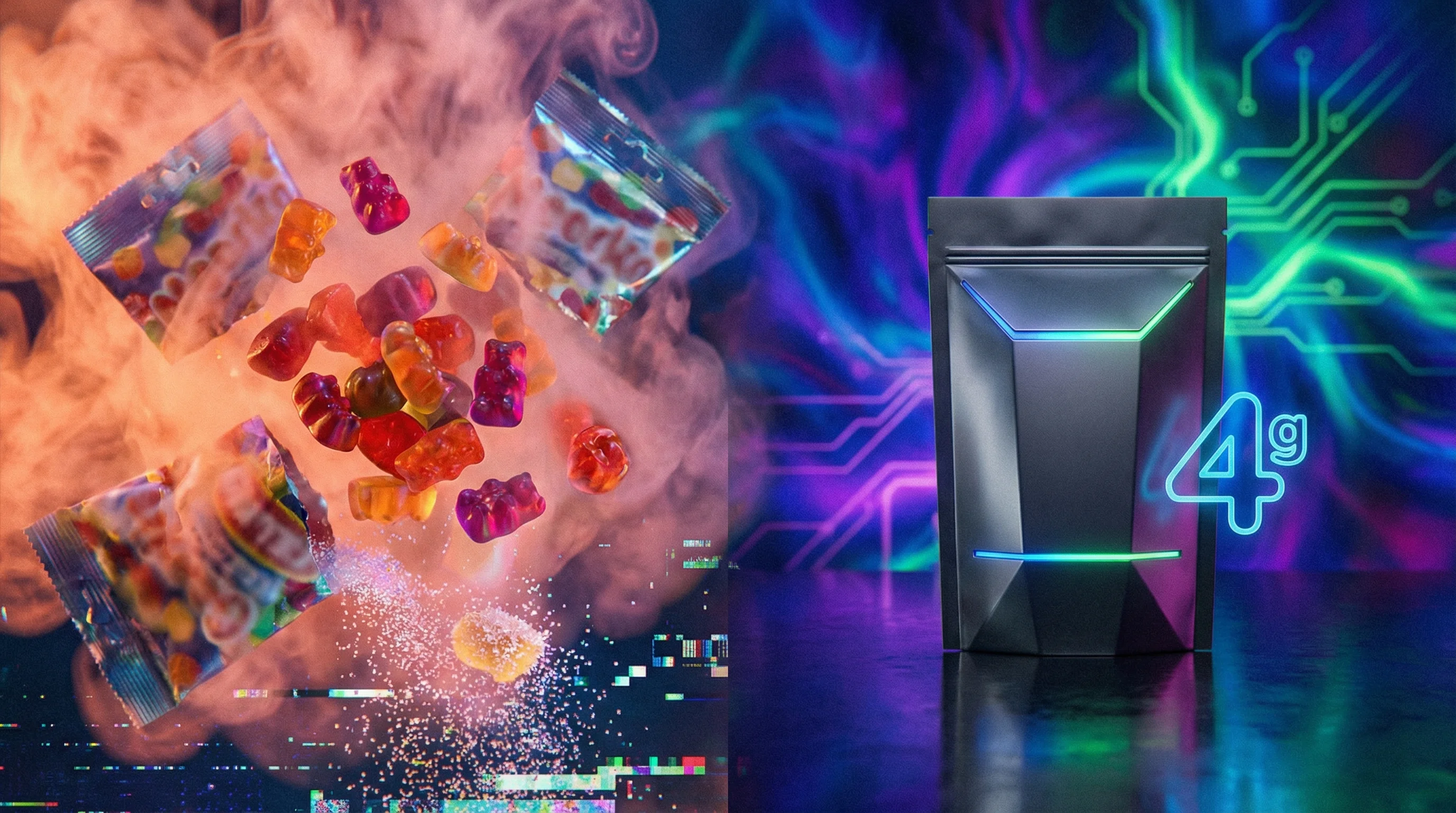
Froobies enter a category dominated by nostalgia and sugar. Welch's and Annie's Organic fruit snacks typically deliver 10 to 12 grams of added sugar and zero protein per pouch. Parents buy them anyway because kids like them and they're convenient. Lasso's version attempts to flip the formula: 4 grams of protein, 3 grams of fiber, zero added sugar. Two flavors launched—Strawberry and Citrus Mango—with no artificial dyes or flavors.
It's positioned for both kids and adults, though that dual-market strategy often means appealing fully to neither. Parents want healthy; kids want gummy bears. Threading that needle has tripped up more than a few well-funded startups.
CronchClub takes on the protein chip segment, where Quest Nutrition and Legendary Foods hold shelf space with products built on dairy protein isolates, vegetable oils, and various emulsifiers. CronchClub delivers 21 to 23 grams of protein and 7 to 8 grams of fiber per serving across four flavors: Original, Herby Ranch, Garden Salsa, and Zesty BBQ. The brand's website boasts an "87-decibel crunch"—a detail that suggests someone in marketing has a sense of humor—and claims roughly 1 gram of net carbs per serving. That positions it squarely at keto dieters and the growing cohort of GLP-1 drug users looking for protein-dense, low-carb options.
The ingredient list is notably short: chickpea protein, gelatin, and avocado oil form the base. Worth noting for plant-based buyers: the gelatin makes these non-vegan, a choice that may limit appeal in certain channels but also makes texture easier to achieve. CronchClub's site emphasizes what's absent—starch binders, coatings, and the long additive lists typical of extruded protein snacks.
Whether any of this translates to repeat purchases depends entirely on taste and texture, neither of which can be evaluated yet since the products are still in pre-order mode.
Timing Is Everything, Maybe

The launches arrive as major CPG players scramble to fortify legacy snacks with protein. Pop-Tarts Protein and protein-forward Doritos lines hit shelves in recent months, signaling that even Kellogg's and PepsiCo see where consumer preferences are drifting. Market projections suggest protein-driven foods could reach $100 billion globally by 2030, according to Grand View Research data cited by Bloomberg and Axios. The protein crisps subcategory alone ranges from $1.6 billion to $3.5 billion in current market size depending on how you slice the data, with double-digit compound annual growth rates forecast through 2035.
Messersmith framed the launch around what he called a "structural shift" in consumer expectations, driven partly by GLP-1 drugs like Ozempic and Wegovy. Users of these medications often seek protein-dense, nutrient-rich foods that satisfy without volume. Economic pressures also play a role—inflation has made consumers more selective, less forgiving of products that underdeliver.
"Consumers want real innovation, not just protein line extensions," Messersmith said in the launch announcement. Perhaps. Or perhaps consumers mostly want snacks that taste good and don't cost a fortune. The protein boom has produced plenty of products that checked nutritional boxes but failed the repeat-purchase test.
The Money and the Roadmap

Lasso raised $6.5 million in October 2025 in a round led by Rhapsody Venture Partners, with participation from Safar Partners and Claridge Venture Partners. That's enough to get products into market and generate early feedback, but not enough to compete head-to-head with Quest or build national distribution through conventional channels. The company will need to prove traction quickly—and probably raise again before the year is out—if it wants to scale beyond specialty retail.
Pricing and pack sizes haven't been disclosed, and both brands remain in "notify me" mode on their direct-to-consumer sites. Retail distribution details beyond "select specialty retailers in NYC" are vague. Independent taste tests and third-party reviews haven't surfaced yet, which means the current narrative rests almost entirely on the technology story.
And that story is compelling, particularly if the efficiency claims hold up. A production system that fits in a small facility and uses a fraction of the energy could theoretically enable faster iteration, smaller production runs, and more experimentation—all advantages in a crowded market where differentiation is hard to achieve.
But technology alone doesn't win in CPG. Quest didn't dominate protein chips because of superior manufacturing; it dominated because the products tasted decent, the branding resonated, and the distribution machine worked. Lasso has the first piece—interesting technology. Whether it can deliver on texture and taste at scale, and at a price point that makes sense against entrenched competitors, will determine if SpinTech becomes a platform or remains a footnote in food-tech history.
For now, the washing machine hums.


