

The pitch sounds like science fiction layered on venture capital fever dreams: data centers that orbit Earth, powered by the sun, cooled by the void of space itself. But when Sophia Space announced a $10 million seed round last week, the Pasadena startup joined what has quietly become a genuine race to move computing off-planet.
Not that everyone's convinced it'll work.
The February 24 funding—led by Alpha Funds, KDDI Green Partners Fund, and returning backer Unlock Venture Partners—will push Sophia's TILE platform closer to orbit. TILE stands for exactly what you'd expect from engineers: modular compute slabs, each one meter by one meter by one centimeter, designed to slot into arrays that could eventually house thousands of processors floating somewhere between 600 and 1,000 kilometers above the surface.
"Solar powered, space cooled, AI-ready," goes the company tagline. Subtle, it's not.
Hardware That Radiates (Literally)
Each TILE carries its own solar panels and packs NVIDIA Jetson or Blackwell-based chips in what the company describes as a vendor-agnostic architecture. The real engineering bet, though, is thermal. Without air to carry heat away, Sophia's design relies on passive radiation—essentially letting processors bleed warmth directly into space.
CEO Rob DeMillo told an aerospace conference in January that overhead power consumption drops to around 8% of the total, a striking contrast to terrestrial data centers where HVAC can eat half the energy budget or more. Whether that math survives contact with orbital realities remains an open question. Radiation hardening, component lifespans, the sheer mass of radiators—these aren't trivial problems.
The company envisions three tiers of deployment: single tiles or small racks hitching rides on host spacecraft, mid-sized clusters of 40 tiles flying in formation nearby, and eventually full-scale orbital data centers approaching 2,500 tiles. Sophia's SOOS orchestration layer—yes, another acronym—handles workload distribution, thermal balancing, and failover when tiles overheat or die.
Sun-synchronous orbits are the target. Constant sunlight, predictable paths, and altitudes where the atmosphere isn't quite so eager to drag everything back down.
The Team Knows Deep Space (and Exits)
Founder Leon Alkalai retired from NASA's Jet Propulsion Laboratory as a JPL Fellow before launching Mandala Space Ventures. DeMillo, who runs day-to-day operations, spent years at JPL and MIT Lincoln Lab, then served as CTO at Nimble Collective before its acquisition by Amazon Web Services. Co-founder Brian Monnin logged time at Intel and Microsoft. VP of Engineering Jim Chase, brought on last October, was Systems Engineering Chief Engineer at JPL.
The advisory roster reads like a who's-who of space pedigree: former NASA Administrator Dan Goldin, Hans Koenigsmann (ex-SpaceX VP of Build and Flight Reliability), JPL Technical Fellow John Brophy. Early backers include Mandala, CEAS Investments, and strategic support from NVIDIA Inception and edge computing firm Armada.
In September 2025, Sophia and Armada announced plans for an integrated Earth-to-space edge platform. More recently came exploratory agreements with Outpost Technologies and Orbital Robotics around on-orbit manufacturing and compute cycles. The Outpost tie-up is particularly notable—Carryall, Outpost's rapid-return platform, could offer a way to test hardware iterations without waiting months for new launch windows.
The Suddenly Crowded Void
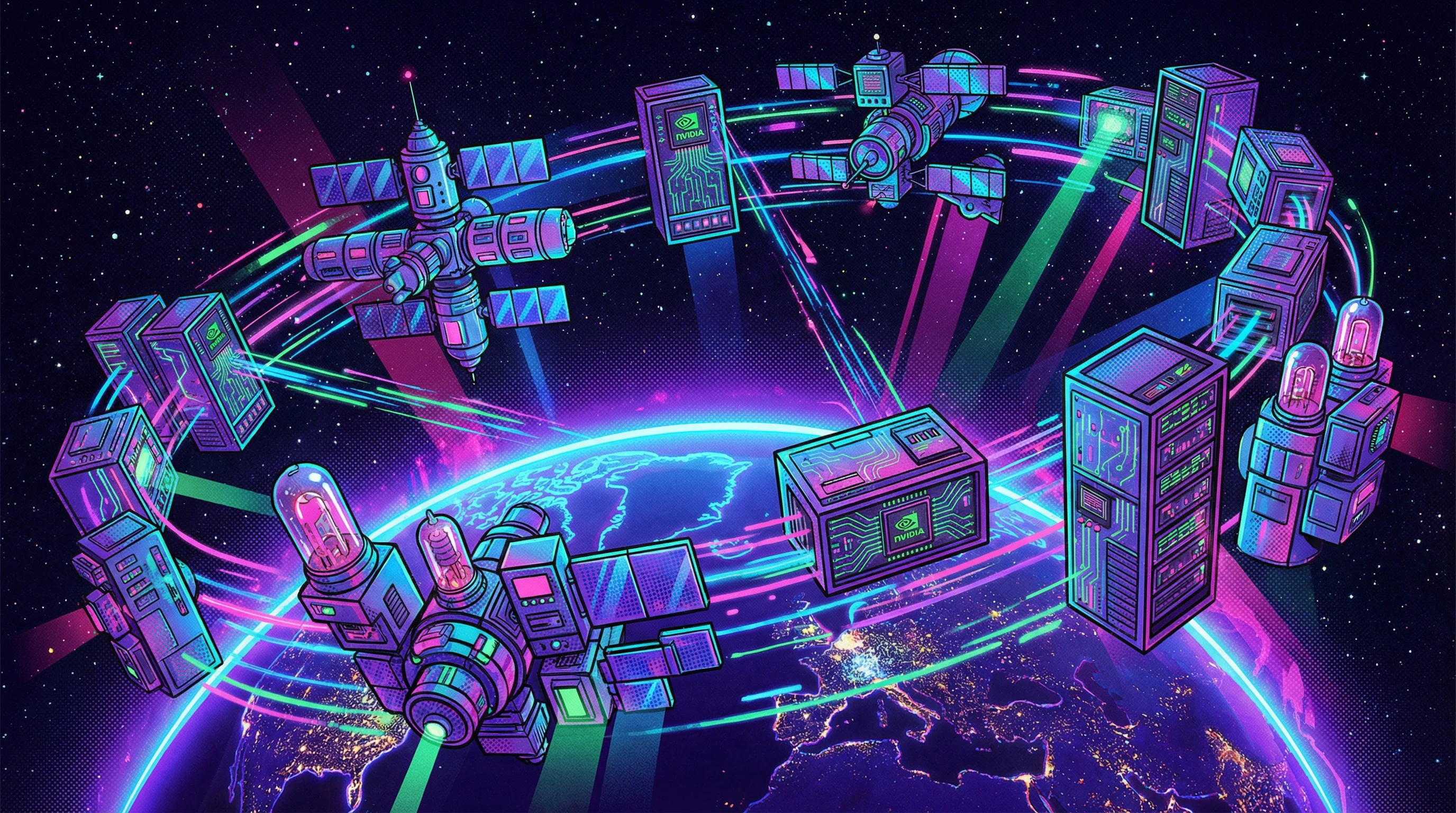
Sophia isn't alone up here. The field went from theoretical to funded faster than most observers expected, maybe faster than anyone expected.
Starcloud—formerly Lumen Orbit—closed an $11 million seed in late 2024 and recently claimed it trained large language models in orbit using NVIDIA H100 hardware. SpaceX filed with the FCC for what can only be described as a maximalist vision: a constellation approaching a million satellites, integrating xAI, Starlink, and Starship into a single compute-and-connectivity stack. Blue Origin unveiled TeraWave, a multi-orbit optical network designed for data-center-scale throughput. Google is reportedly eyeing a Project Suncatcher demo in 2027. In India, AgniKul Cosmos and NeevCloud are targeting a proof-of-concept by year's end, with operations planned for 2027.
The momentum feels real. Whether the economics do is another matter entirely.
Sam Altman, never one to mince words, called Elon Musk's space data center ambitions "ridiculous for current AI computing needs" in a late February interview. Scientific American's recent analysis flagged familiar obstacles: radiator mass, radiation damage to chips, the brutal logistics of refreshing hardware that's already 400 miles up. Launch costs would need to fall below $200 per kilogram for orbital compute to approach parity with terrestrial alternatives, the magazine noted—a threshold Google's internal estimates peg around 2035.
That's a long time to wait for break-even.
Climate Capital Weighs In
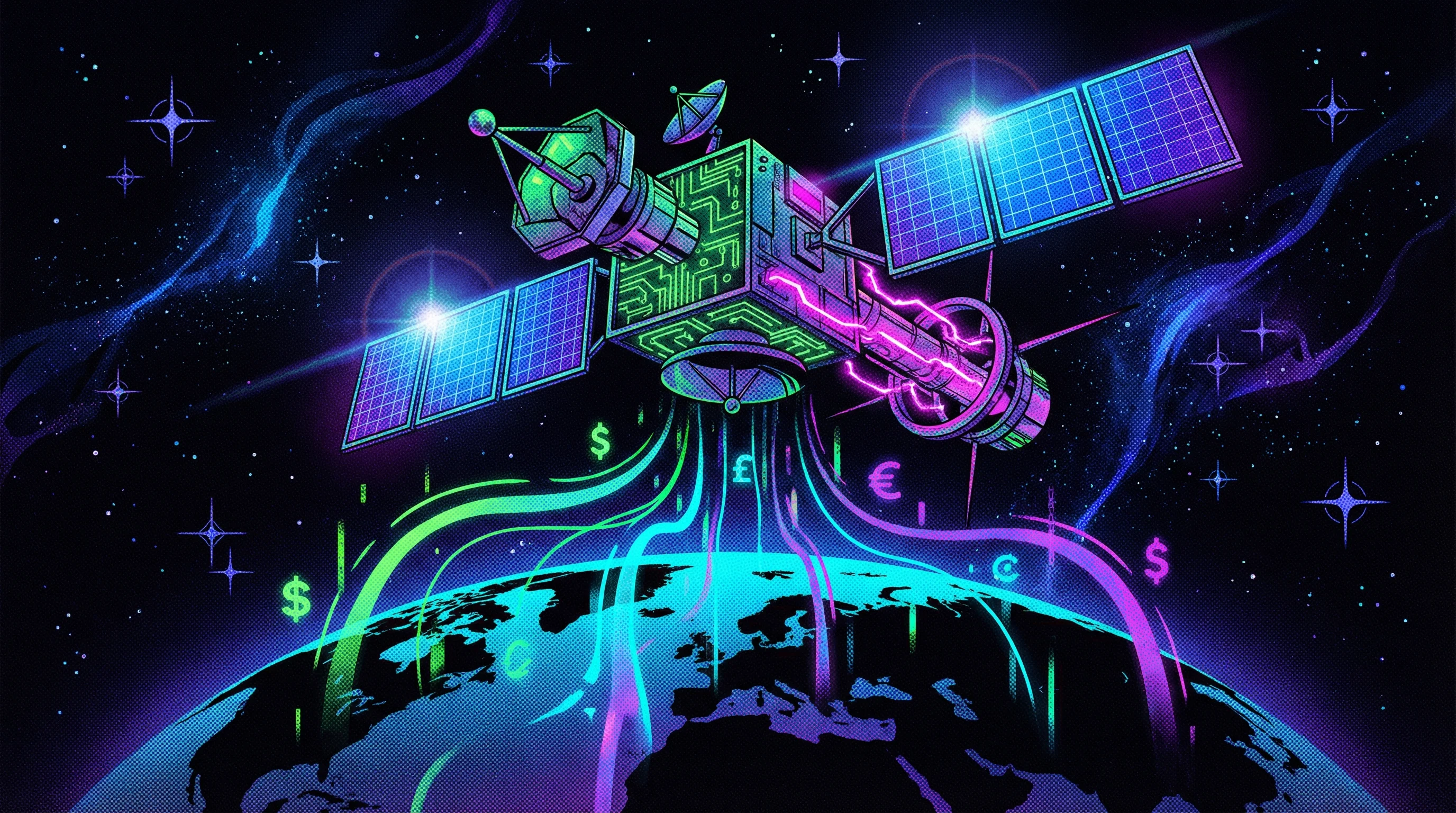
KDDI Green Partners Fund's participation is worth noting. The climate tech arm of Japanese telecom giant KDDI manages roughly ¥5 billion, launched in 2021 with a mandate around carbon-neutrality innovations. SBI Investment administers the fund. For a climate-focused investor to bet on orbital infrastructure suggests the pitch isn't purely about performance—there's an emissions argument embedded here too, however speculative.
Sophia's materials lean into the energy efficiency narrative, contrasting space-based passive cooling with the carbon-intensive HVAC systems that keep terrestrial server farms from melting. The logic holds, in theory. In practice, you're still launching thousands of kilograms of hardware on rockets.
What Happens Next
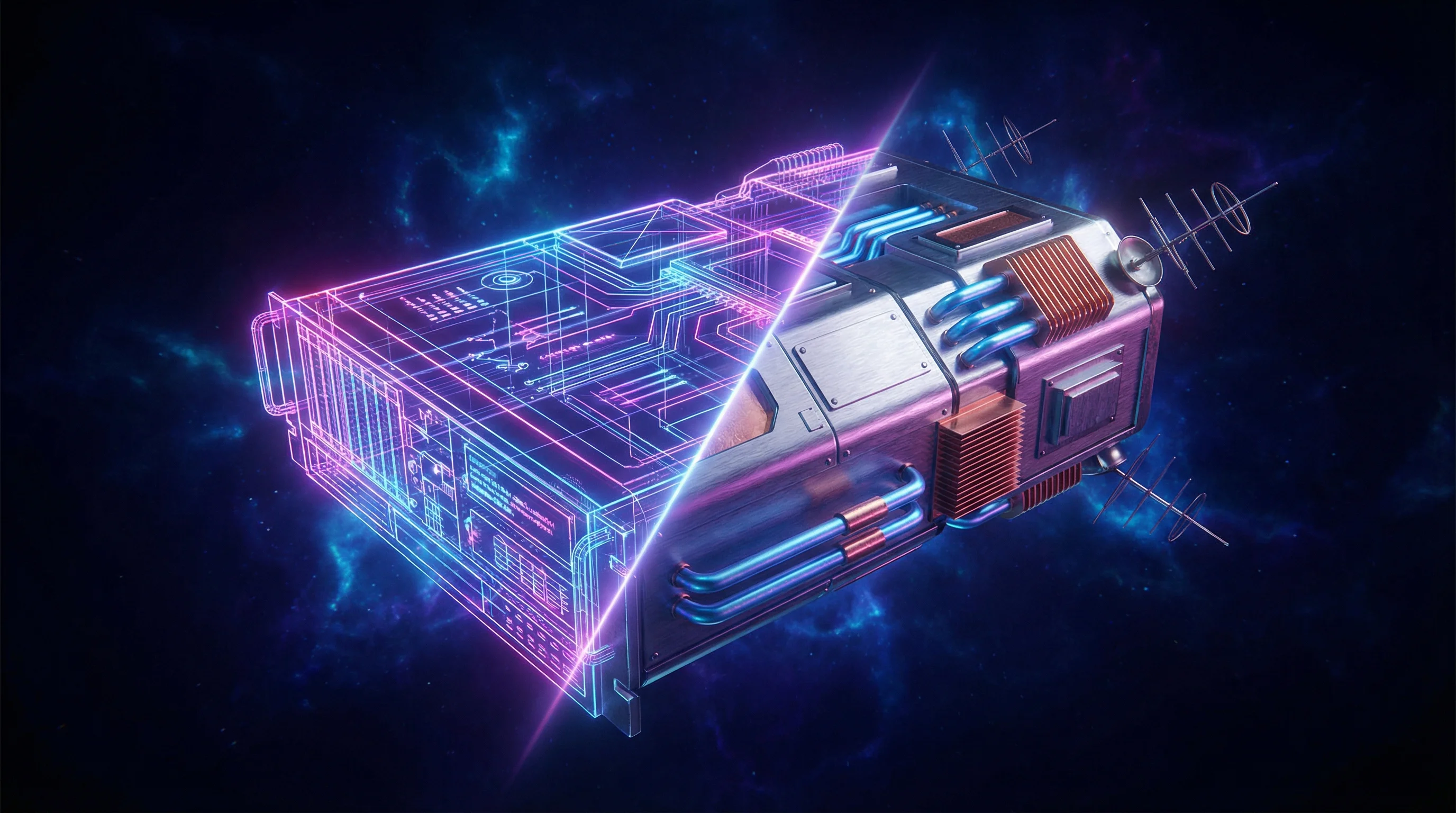
"This funding is validation that we are progressing from slideware to hardware," DeMillo said in a statement, language that SpaceNews picked up. The company hasn't disclosed a firm timeline for its first on-orbit compute demonstration, nor named launch partners publicly.
Executive Chairman Alkalai framed the mission in broader terms: "pioneering scalable supercomputing in orbit" capable of "processing massive volumes of space-generated Earth observation data in real time." DeMillo's version was blunter. "Moving high-performance compute into orbit isn't just growth," he said. "It's a separator."
Perhaps. Or perhaps it's another moment when the space industry's ambitions outrun the infrastructure required to make them pencil. The $10 million gives Sophia runway to mature its engineering, expand its team, and advance proprietary cooling technology—assuming radiative thermal management proves out at scale, and assuming launch costs cooperate, and assuming the chips survive radiation long enough to justify the expense of putting them there.
Those are a lot of assumptions for one seed round to carry. But then again, nine months ago Sophia raised $3.5 million in a pre-seed from some of the same backers. Someone, at least, believes the math might eventually work.
Or maybe they just believe that someone else will believe it does. In venture capital, that's often enough.


