

This spring, a petri dish played Doom.
Roughly 200,000 human neurons, cultured on a microelectrode array, learned to maneuver through the pixelated corridors of id Software's 1993 shooter. They weren't good at it. The cells moved and fired with all the coordination of someone who'd never touched a keyboard—which, to be fair, they hadn't. But competence wasn't the point. The fact that brain tissue could be coaxed into interacting with a video game at all meant something stranger than the game's demonic premise: biological computing, while still largely experimental, was receiving attention from venture capital, exemplified by companies like Parasma.
In June of this year, Y Combinator backed Parasma, a San Francisco outfit founded by Sean Cole, whose pitch is admirably blunt: "We write the algorithms to turn brain cells into compute." The startup joins a small, slightly frantic cohort racing to prove that cultured neurons can run AI workloads more efficiently than silicon. How much more efficiently? If early vendor claims hold—and they remain largely unverified—perhaps orders of magnitude. The timing is not coincidental. Data centers now devour roughly 1.5% of global electricity, according to the International Energy Agency. Wholesale power prices increased significantly, influenced by AI infrastructure, according to referenced analysis. The question hanging over the industry is whether wetware computing can move beyond laboratory spectacle into something resembling real infrastructure.
Or whether it's just an expensive curiosity wrapped in hype.
A Grid Buckling Under AI's Weight
Start with the numbers, which tell a blunt story. The U.S. Energy Information Administration projects the strongest four-year surge in electricity demand since 2000, propelled in large part by data centers and large computing facilities. Uptime Institute's predictions for this year warned that power constraints are tightening everywhere—onsite generation is becoming a necessity, not a luxury, and deployment timelines for high-density AI loads are stretching into years. In some regions, up to 11 gigawatts of announced data center capacity sits stalled, delayed by community pushback over power and water use.
Modern GPU clusters make the crisis visceral. Nvidia's B200-era cards run around 1,000 watts per unit. Facilities housing thousands of them face grid-scale infrastructure headaches. Federal watchdogs overseeing PJM—the regional transmission organization covering 13 states and the District of Columbia—have issued warnings that border on apocalyptic: unless AI data center loads are addressed, the impact on electricity prices could become "irreversible."
This is the backdrop against which biological computing has lurched from fringe research to funded startups in less than two years. Call it desperation, or opportunism. Either way, the money is moving.
The Wetware Contenders
Cortical Labs, a Melbourne-based company, released what it calls the CL1 "biological computer" in 2025. The unit is shoebox-sized and houses approximately 200,000 human neurons cultured on a high-density microelectrode array. Life support systems and interface hardware are sealed inside. Estimates from press reports in February suggest a price of around $35,000 per unit, though this isn't officially confirmed and exact figures remain fluid, as they tend to with early hardware. By March, Cortical Labs had the CL1 playing Doom in a closed-loop setup: video frames encoded as electrode stimulation patterns, neurons firing in response, a silicon decoder translating those spikes into game actions, and a reinforcement signal delivered as electrical pulses to guide learning over time.
The company isn't stopping at novelty. That same month, Cortical Labs announced partnerships with DayOne to construct biological data centers—120 CL1 units in Melbourne and a phased rollout targeting roughly 1,000 units in Singapore, with planning milestones expected around September. CEO Hon Weng Chong has claimed that energy consumption per CL1 is "less than a handheld calculator," though this claim has not been independently audited.
FinalSpark, headquartered in Vevey, Switzerland, takes a different tack: remote access. The company's Neuroplatform offers brain organoids controllable via API. Subscriptions reportedly start around $500 per month. A May 2024 paper in Frontiers in Artificial Intelligence detailed the system's architecture. Tech coverage from 2024 and 2025 cited vendor claims of approximately 100-day organoid viability, though those figures remain unaudited and the data is, at this point, somewhat stale.
Parasma is the newest entrant, accepted into Y Combinator's Summer 2026 batch. Founder Sean Cole, who holds a master's degree in artificial intelligence from the University of Sussex, frames the company as an infrastructure and algorithms layer rather than a hardware play. Parasma's website keeps the messaging simple: "We write the algorithms to turn brain cells into compute." On June 18, Cole published a lengthy technical and ethics note explaining the company's Doom experiment—single culture, approximately 200,000 neurons, feedback delivered via biphasic electrical pulses modulated by a silicon critic. Cole argues, with some force, that cultures at this scale lack the prerequisites for sentience: no pain receptors, no global workspace integration, no embodied experience.
Whether that argument will satisfy skeptics remains to be seen.
What "Learning" Actually Means Here
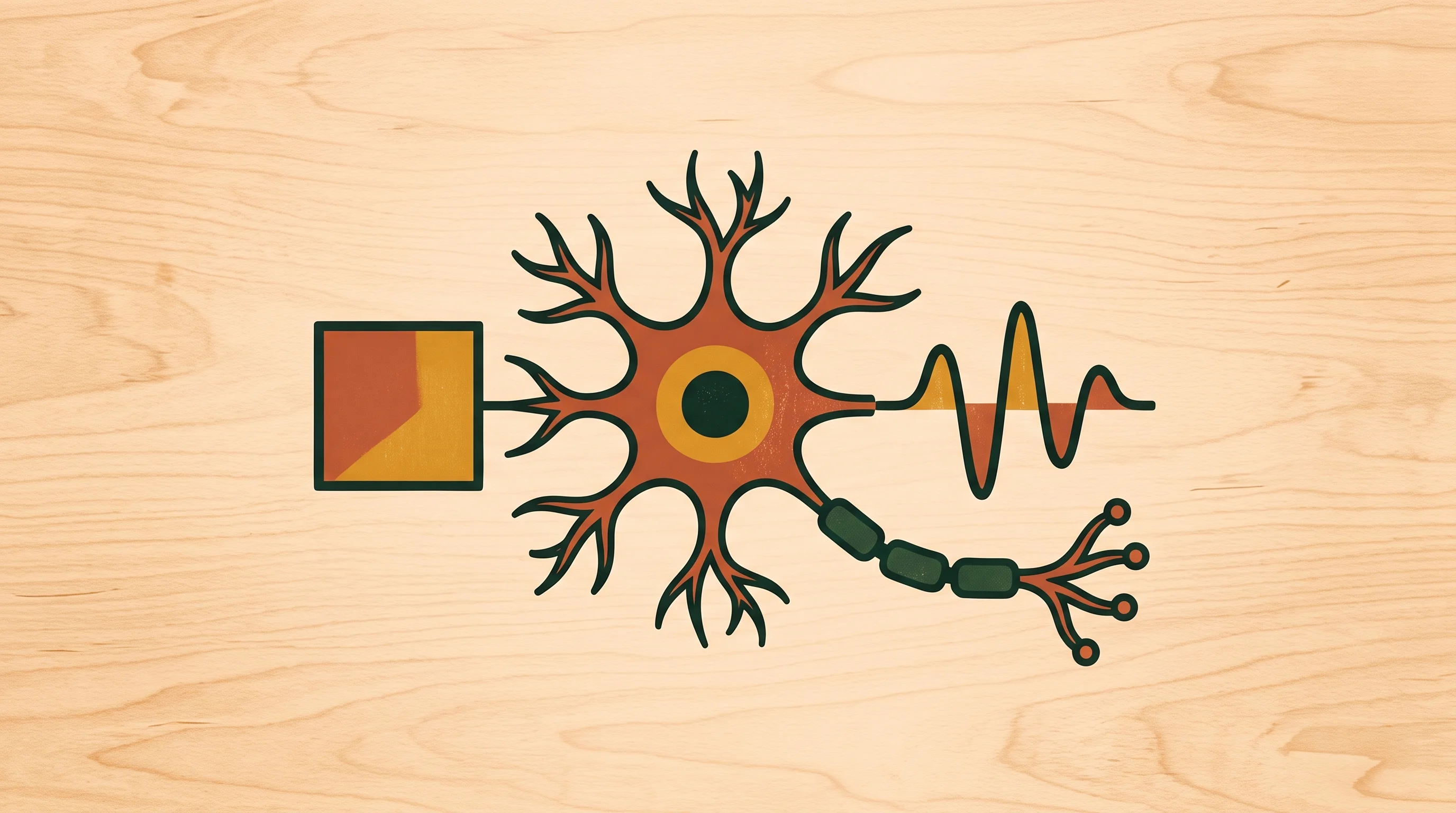
Strip away the marketing, and the systems demonstrated so far rely heavily on conventional computation. In Parasma's Doom setup, for instance, video frames get converted to stimulation patterns by an encoder. Neurons respond with spikes. A decoder—typically a linear readout—maps those spike patterns to game commands. A silicon-based "critic" evaluates outcomes and generates reinforcement signals to tweak neural activity over time.
This is reservoir computing with a biological substrate, essentially. The neurons provide a nonlinear, time-varying dynamical system—useful for certain adaptive tasks. But the intelligence, the ability to interpret inputs and outputs in any meaningful way, lives largely in the silicon wrapper. A Frontiers paper on organoid intelligence put it plainly: current demonstrations show proof of adaptive behavior, not general-purpose programmable logic.
Developer access is expanding, at least. Cortical Labs maintains a Python SDK and API documentation that includes sub-millisecond latency recording and programmable stimulation plans, enabling third-party experiments. Open-source code for the Doom demo circulates on GitHub. FinalSpark's Neuroplatform allows remote researchers to run experiments via browser, lowering the barrier to entry for institutions without wetware labs.
But serious obstacles remain—ones that venture capital can't easily solve. Cultures and organoids require daily fluid exchanges, sterile conditions, precise environmental controls. Variability between batches complicates reproducibility. Two-dimensional neuron cultures lack the organizational complexity of three-dimensional brain tissue. Organoids, though more structurally sophisticated, develop unpredictably. MaxWell Biosystems' MaxOne platform offers 26,400 electrodes with 1,020 routable readout channels, enabling dense neural interfacing. Scaling from hundreds of thousands of neurons to the billions found in mammalian cortex? That's an unsolved engineering challenge, and possibly an unsolvable one.
The Pentagon Weighs In

In March, reports surfaced of a DARPA program called O-CIRCUIT, aimed at developing "unconventional biological processing units" for AI training and inference at the edge over a 42-month timeline. The program signals potential defense-sector interest in wetware systems optimized for low-power, real-time applications where silicon alternatives struggle. Perhaps that's reconnaissance and robotics. Perhaps it's something stranger.
Academic funding is accelerating in parallel. Johns Hopkins received $15 million in March for its DROIDp platform, which will use organoids to study neurological diseases and screen chemicals with learning and memory endpoints. The project is officially framed around New Approach Methodologies for toxicology, but the tools and analytics developed could indirectly advance biocomputing capabilities. Johns Hopkins has been running an Organoid Intelligence program since 2023, coordinating research across ethics, electrophysiology, and computational tracks.
A February report from the Harvard Science Review noted that while proof-of-concepts are multiplying, large-scale practical biocomputers remain speculative. The field's trajectory depends on solving biological reproducibility, interface density, and total cost of ownership. Timelines are uncertain, but various research initiatives are exploring solutions.
The Sentience Problem
The prospect of computers built from human brain cells provokes visceral unease—and not just squeamishness. A paper published in the Cambridge Quarterly of Healthcare Ethics in April argued that current cortical organoids lack the structural and functional features necessary for sentience: no thalamocortical loops, no integrated sensory processing, no extended temporal coherence. But the authors urged a proportionate precaution framework as complexity increases. Their worry is less about present-day cultures than about what happens when organoid systems grow larger and more interconnected. When do 200,000 neurons become a million? When does a million become something else?
Regulatory frameworks lag the technology, badly. The EU AI Act, which entered force in phases starting in 2024, defines AI systems as "machine-based." Legal scholars writing in May on SSRN pointed out that wetware substrates may fall outside the Act's scope entirely, creating a potential gap in oversight for bio-hybrid computational platforms. No formal guidance has emerged to clarify whether living neural systems running inference tasks fall under AI certification and liability rules.
In the United States, human subjects regulations under the Common Rule (45 CFR 46) govern research involving donor biospecimens used to derive induced pluripotent stem cells and neural cultures. Whether commercial wetware platforms using anonymized cell lines require institutional review board oversight depends on funding sources and institutional context. Many organizations apply ethical review voluntarily. Export controls on human biological materials add jurisdictional complexity for any company hoping to operate internationally.
Parasma's June ethics note takes an explicit stance: the company commits to avoiding systems that could plausibly support consciousness absent scientific consensus. Cole cites the absence of pain sensing and global integration in 200,000-neuron cultures as evidence against sentience risk. Cortical Labs has made similar public statements. Neither company, however, has articulated specific thresholds or governance mechanisms that would trigger precautionary pauses if cultures were scaled up. That ambiguity feels deliberate, or at least convenient.
The Real Test Ahead

Cortical Labs' data center prototypes in Melbourne and Singapore will offer the most visible near-term test of whether any of this works outside a lab. If 120 units can operate reliably in a co-located facility, with acceptable maintenance overhead and demonstrable energy savings for targeted workloads, the value proposition sharpens. If cultures degrade faster than anticipated, or if the silicon input/output and life-support infrastructure consumes more power than the neurons save, the experiment collapses.
DARPA's O-CIRCUIT program, assuming it proceeds, could establish technical benchmarks and milestones that force the field toward standardized metrics. Academic platforms like Johns Hopkins' DROIDp may pull best practices around reproducibility and evaluation out of vendor-specific ecosystems and into the open.
But expectations need tempering. No independent, peer-reviewed energy benchmarks exist comparing wetware systems to modern AI accelerators under standardized workloads. The energy efficiency claim awaits independent verification. Organoid longevity, once reported at roughly 100 days on FinalSpark's platform, has not been validated longitudinally at scale. Total cost of ownership analyses—accounting for culture media, biosafety protocols, replacement cycles—are absent from public discourse.
The grid pressures driving interest in alternatives are real enough. The IEA's electricity report and Uptime Institute's predictions both emphasize that power constraints will shape data center strategy for the rest of the decade. Whether biological substrates can deliver practical compute at scale, rather than niche reservoir tasks wrapped in silicon scaffolding, remains very much an open question.
Perhaps the most telling indicator is architectural. Vendors already describe hybrid systems where biological cores handle adaptive, real-time learning while silicon manages vision, storage, and high-throughput operations. That framing suggests even optimistic projections see wetware as a complement, not a replacement, for conventional hardware. A helper, not a revolution.
Parasma, Cortical Labs, FinalSpark, and the academic programs pursuing organoid intelligence are placing bets on a future where neurons can be programmed like processors. The demos work—in a limited, provisional sense. The energy crisis is undeniable. But laboratory stunts and data center infrastructure exist on different planes of reality, separated by questions of reliability, economics, and ethical governance that no startup pitch deck or Doom video can answer.
The race is underway. Whether it leads to a paradigm shift or an expensive footnote depends less on algorithmic cleverness than on the stubborn constraints of biology, regulation, and capital. And perhaps more than the founders expected, on whether the public will accept computers grown from human cells in the first place.


