

Sean Cole's laboratory setup looked almost absurdly simple: a multi-electrode array chip hosting roughly 200,000 human neurons, a computer running DOOM, and a training algorithm that delivered tiny electrical pulses when the neurons got better at navigating the game's corridors. No joystick. No traditional processor. Just brain cells, learning.
When Cole demonstrated the system in March 2026, it generated the predictable viral moment—"Living Neurons Play Video Games!" But beneath the spectacle lay something more consequential: evidence that biology might offer an escape route from the energy crisis threatening artificial intelligence's expansion.
The crisis is real, and worsening. Global data center electricity consumption grew at a rate that accelerated significantly through 2025, according to the International Energy Agency's Electricity 2026 report published in January. Then came 2026, when more than 75 U.S. data center projects—representing some $130 billion in investment—hit delays or outright blocks over power and water constraints in just the first four months. By June, Henrico County, Virginia, home to over 400 data centers, was asking schools and county employees to conserve electricity as AI-driven demand pushed rates up 24.9%. That same month, Sen. Bernie Sanders and Rep. Alexandria Ocasio-Cortez introduced legislation proposing a nationwide moratorium on new data center construction until the grid could catch up.
Into this tangled moment steps Parasma, the San Francisco startup Cole founded after that DOOM demo. The company joined Y Combinator's Summer 2026 cohort with a pitch distilled to one audacious sentence: "We write the algorithms to turn brain cells into compute."
Whether neurons-on-chips can genuinely alleviate AI's appetite for electricity—or whether this is just another overhyped frontier technology that will fade once the next semiconductor breakthrough arrives—remains very much an open question. But the fact that YC is betting on wetware at all signals how seriously Silicon Valley is taking the power bottleneck.
When the Grid Says No
The numbers sketch a straightforward problem, even if the solutions remain elusive. The IEA's Electricity 2026 outlook, published in January and extending forecasts to decade's end, flagged AI and data centers as core drivers of demand growth. Axios later put a finer point on it: data centers could account for roughly half of all U.S. electricity demand growth between now and 2030.
Meanwhile, McKinsey noted in a June report that grid interconnection timelines now average four years and stretch beyond a decade in congested markets. Permitting snarls and infrastructure bottlenecks threatened to delay half of the capacity additions planned for 2026.
Hardware supply loosened somewhat—NVIDIA H100 GPU hourly rates on cloud platforms declined through 2025 as production ramped up—but spring 2026 market trackers still pegged on-demand costs around $2.50 to $5.40 per hour, depending on provider and region. That's manageable for a university researcher running a weekend experiment. It's a different story for an AI lab training foundation models around the clock.
High-bandwidth memory constraints persist. Price volatility persists. And now, increasingly, local opposition persists. The Sanders-Ocasio-Cortez moratorium bill (S.4214 and H.R.9442), filed in March and June respectively, reflects a broader political shift: power isn't just expensive anymore—it's contested.
The DOOM Demo, Decoded
Cole came to this problem with a relatively unusual background. He holds a master's in artificial intelligence from the University of Sussex, completed in 2025, and then partnered with Cortical Labs, a Melbourne-based company that had been experimenting with living neural cultures since the early 2020s.
Cortical's CL1 platform arrays human neurons on a multi-electrode array chip—a grid of tiny sensors and stimulators that can both "listen" to neurons firing and nudge them with electrical pulses. For the DOOM demo, video from the game was encoded as patterned electrical stimulation fed to the culture. The neurons' spiking responses were decoded into movement commands. A silicon "critic" layer—think of it as a digital referee—delivered low-amplitude, charge-balanced, biphasic pulses (microamps at a few hertz to around 100 Hz) to reward the culture when it improved or punish it when performance lagged.
Scientific American covered the integration in April 2026, noting that Cole had coded the first CL1 DOOM version using Cortical's API. The demo built on earlier work: Cortical's 2022 "DishBrain" paper, published in Neuron, had shown 2D neuron cultures learning a Pong-like task in closed loop. That paper sparked both technical interest and ethical discomfort, particularly over language that flirted with terms like "sentience."
Parasma announced itself publicly on June 18, 2026, with a brief note thanking Cortical Labs' team—Brett Kagan, Hon Weng Chong, Alon Loeffler—and collaborators at Sussex. The same day, Cole published a research note titled "Consciousness and Suffering," laying out the company's ethical framework in unusually direct terms for a startup announcement.
The core argument: a culture of ~200,000 neurons, lacking the long-range connectivity and architectural complexity of a mammalian brain, and subjected only to low-amplitude, charge-balanced stimulation with no pain-receptor pathways, does not plausibly support consciousness or suffering. The note struck a precautionary tone—safeguards will scale as capabilities do—but it was also clearly anticipatory, signaling that Cole understood the optics of commercializing living brain tissue.
Y Combinator's directory lists Parasma's team size as one. A job posting for a Founding Scientist appeared shortly after the company's YC acceptance. No funding round beyond the accelerator's standard backing has been disclosed.
Neurons as Infrastructure
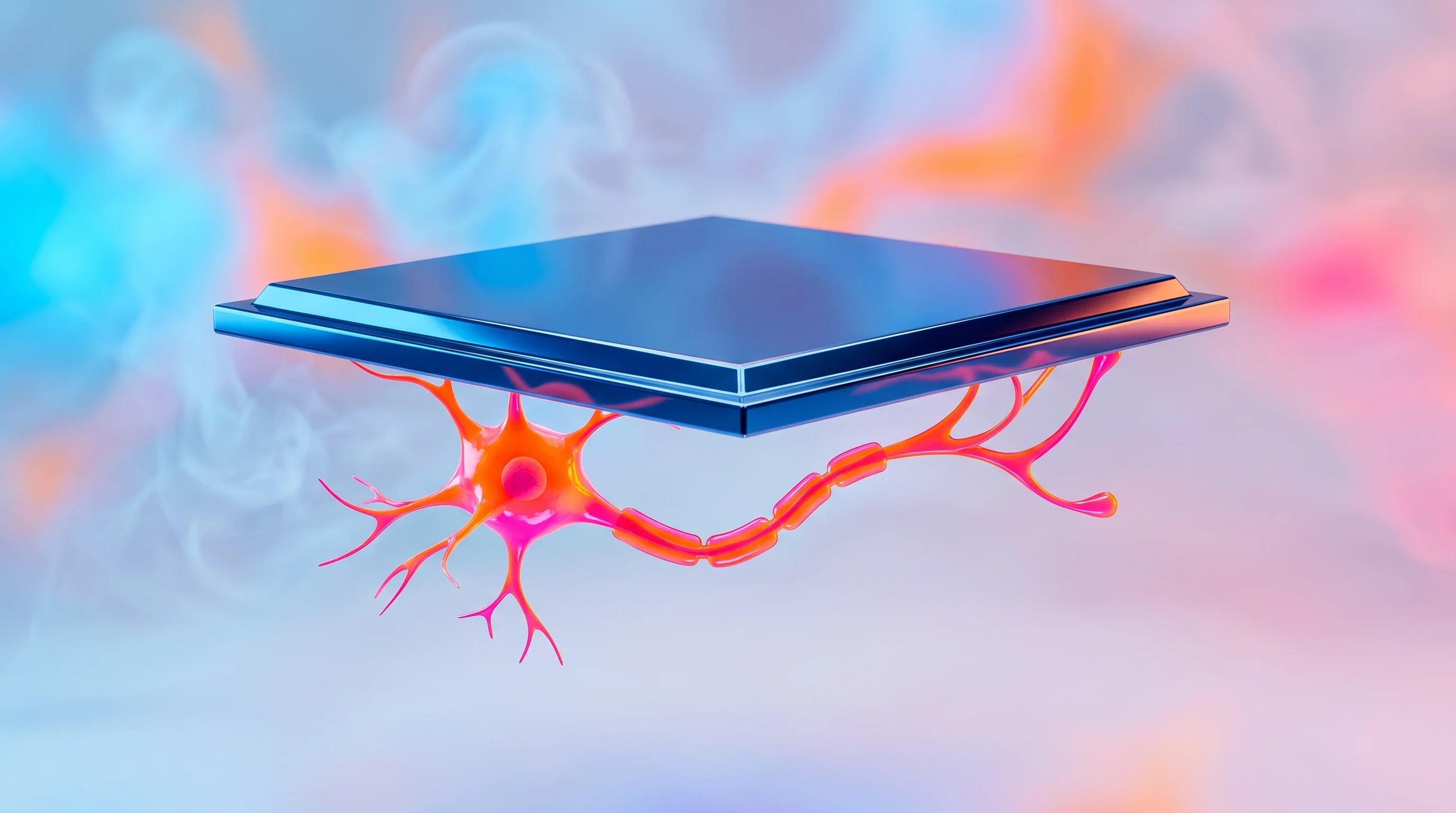
Parasma isn't alone. What's striking about the current wave of wetware startups is how consistent their positioning has become: neurons as an efficiency layer augmenting silicon, not replacing it.
The Biological Computing Company (TBC) raised a $25 million seed round on February 12, 2026, describing "bio-adapters" that integrate living neurons with existing foundation models for computer vision and generative video. Intactis Bio in Salt Lake City runs a "Biocomputation Alpha" program, inviting customers to train models on living neural biochips and receive back model weights plus preliminary inference results. FinalSpark in Switzerland operates what it calls a "Neuroplatform"—remotely accessible organoid-based bioprocessing with a Python SDK—documented in a peer-reviewed May 2024 paper in Frontiers in Artificial Intelligence.
Cortical Labs itself moved commercial in early 2025, launching "Cortical Cloud," a wetware-as-a-service offering. In March 2026, the company partnered with DayOne, a data center operator, to pilot what it called "biological data centers" in Melbourne and Singapore. A prototype was installed at the National University of Singapore's Life Sciences Institute on March 11 to test whether living neural systems could slot into existing rack infrastructure—thermal management, electrical envelopes, all the mundane but essential details.
Energy efficiency claims dominate the marketing materials, often dramatically so. Press coverage routinely cites figures like "million times less power" or "orders of magnitude lower," typically sourced from vendor statements rather than standardized benchmarks. FinalSpark's 2024 paper noted ultra-low power potential; TBC's investor blog in February 2026 claimed a 23× efficiency gain compared to silicon for certain tasks.
But as a 2026 review in Nature Reviews Bioengineering observed, the field still lacks task-normalized, wall-plug measurements that would allow fair comparisons across platforms and against GPUs. In other words: the efficiency story is compelling in theory, less proven in practice.
The Race Gets Serious
If Parasma is lean—one founder, pre-seed capital—others are further capitalized and arguably further along. TBC's $25 million seed, led by investors including neurosurgeon Alex Ksendzovsky and entrepreneur Jon Pomeraniec, positioned the company as "first to deploy applied biological computing" and "first paid for biological compute." Those are company claims; independent technical validation remains scarce, and in interviews, TBC's founders have discussed a 10-to-20-year commercialization horizon.
Cortical Labs, founded in 2019, reportedly raised $10 million in a 2023 round. Its CL1 units and cloud access have put working wetware into developers' hands, though adoption metrics aren't public. Secondary press from 2025 cited pricing around $300 per week for cloud access and $35,000 for purchasing a CL1 unit outright, though those figures may have shifted.
FinalSpark, founded in 2014, has cultivated an academic user base. In late 2025, the first publication from a Neuroplatform user appeared—a project encoding Braille recognition into organoid cultures. The company emphasizes what it calls "digital twins of organoids" and continuous culture replacement cycles, an implicit acknowledgment that longevity is measured in weeks to months, not years. Reviews note cultures often last around 100 days; reproducibility, quality control, contamination risk, and inter-culture variance remain active challenges.
Biological Black Box emerged from stealth in early 2025 with a "Bionode" platform. Koniku, focused on living-cell olfactory sensors, operates in adjacent biohybrid space but isn't positioned as an AI compute substrate.
What's notable is the access layer these companies are building. Remote APIs, Python SDKs, cloud-hosted neural cultures—all designed to lower the barrier to entry. But the underlying biology remains fragile and lab-intensive. Standardization protocols, benchmarking frameworks, supply chain logistics for living cultures? Those lag considerably behind the hype.
The Consciousness Problem Nobody Wanted
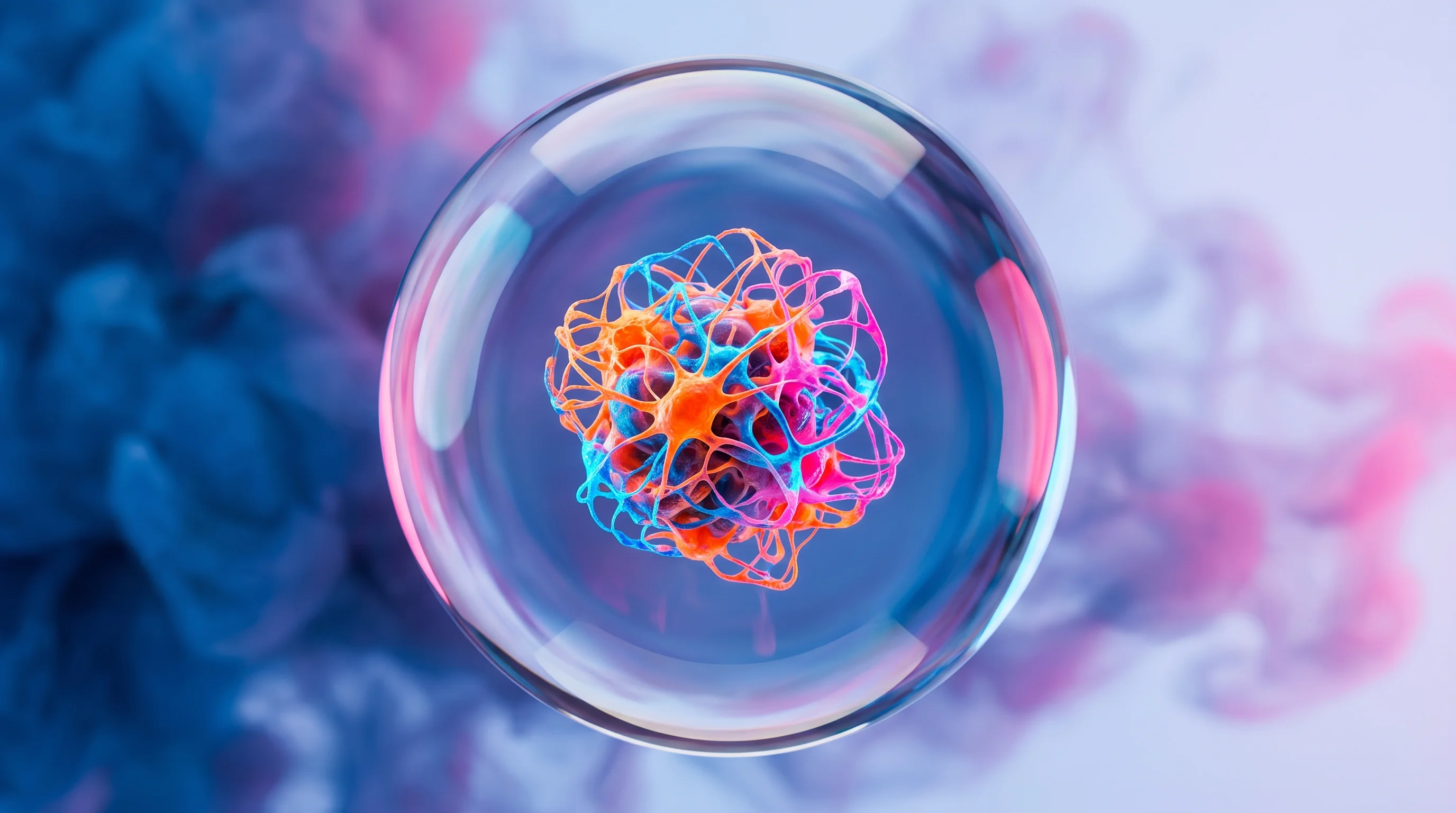
Parasma's June 18 ethics note is perhaps the most explicit public treatment of the consciousness question in the commercial wetware space. Cole's argument is essentially this: a 200,000-neuron culture—smaller than a fruit fly brain—lacks the scale, architectural complexity, and long-range connectivity associated with awareness in mammals. The training pulses are low-amplitude, biphasic, charge-balanced, designed to avoid damage and preclude anything resembling pain signaling. "We do not believe this system supports meaningful consciousness or pain," the note states, while committing to safeguards as future systems scale.
It's a careful hedge, and a necessary one. The International Society for Stem Cell Research (ISSCR) guidelines, published in 2021, cover organoid research and human biological material procurement but predate the current commercial push. The Nuffield Council on Bioethics issued a briefing in March 2024 identifying key challenges: consent for cell sourcing, potential moral status, commercialization pressures, governance gaps. The UK's Health Research Authority welcomed Nuffield's proposals in 2026. A July 2024 perspective in Nature Reviews Bioengineering called for "mindful innovation," arguing ethics must keep pace with technical advances.
No U.S. FDA framework governs "biological compute" devices used purely for general computation—medical device regulations apply only to medical-purpose software. But corporate use of human cells implicates tissue procurement consent, biosafety protocols, and ethics board oversight where applicable.
Cortical Labs' Brett Kagan, in April 2026 interviews around the DOOM demo, stressed caution about consciousness claims while framing the work as spanning research, medical diagnostics, and compute applications. TBC's public materials have been less detailed on ethics, focusing instead on efficiency gains and infrastructure integration.
The question isn't whether current systems are conscious—consensus in neuroscience suggests they're not, not remotely. It's whether the trajectory toward larger, more integrated biological systems will cross a threshold that demands new ethical frameworks. And perhaps more uncomfortably: whether anyone will know when that threshold has been crossed.
What Comes Next

Market forecasts for wetware and biocomputing vary wildly in methodology and baseline definitions, but directional signals suggest rapid growth from small starting points through the early 2030s. Organoid research tools and adjacent neuromorphic (silicon) computing markets are both projecting steady mid-20s compound annual growth rates. The biological computing market remains nascent—pilot-scale, fragmented, far from standardized benchmarks.
Political and infrastructure headwinds could accelerate interest in alternatives. If the Sanders-Ocasio-Cortez moratorium advances, or if grid interconnection delays continue bottlenecking hyperscale buildouts, wetware's pitch—radical energy efficiency, novel learning dynamics—stops being a curiosity and starts sounding like a lifeline.
The technical hurdles remain real. Culture longevity. Reproducibility. Quality control. Task-appropriate benchmarking that doesn't cherry-pick favorable comparisons. Parasma is hiring a founding scientist, presumably to tackle some subset of these problems. Cortical Labs is piloting data center integration in Singapore and Melbourne. TBC is positioning bio-adapters as near-term products. FinalSpark is expanding its academic footprint.
Whether living neurons become a meaningful layer in AI infrastructure or remain an intriguing research direction will likely be decided in the next 24 months. That's when standardized benchmarks either materialize or don't. When operational stability either proves out at scale or hits biological limits. When policy clarity either emerges or fractures into jurisdictional chaos.
Y Combinator's bet, apparently, is that the energy crisis won't wait for silicon to solve itself. Sean Cole is betting the same. The neurons in his lab dish, for what it's worth, have no opinion on the matter. They're too busy learning DOOM.


