

The numbers out of Texas sound almost fictional. Roughly 410 gigawatts of large loads sitting in the state grid operator's interconnection queue as of April 9, 2026—87% of them data centers. For context, that's more computing capacity waiting to plug in than exists today across most of the Western world.
And yet. The electricity grid is straining. Water tables are falling. And a two-person startup thinks it has the answer—or at least, a piece of one.
Madrone, participating in Y Combinator's Spring 2026 batch, has a pitch that's both technically dense and bracingly simple: ditch the chillers. The company says it can cut data center cooling costs by 30%—in both power and water—using dew-point cooling, a thermodynamic trick that's been kicking around engineering journals for years but has never quite broken through in the hyperscale world. Now, with Texas racing to overtake Northern Virginia as the planet's largest data center market (something analysts at JLL projected could happen by 2030), Madrone is betting the industry has finally run out of easier options.
Land Rush, Infrastructure Crunch
Texas isn't just growing its data center footprint. It's detonating it. Recent figures from JLL showed 6.5 gigawatts of capacity under construction statewide earlier this year, much of it driven by AI workloads that demand dense, power-hungry server racks. Dallas-Fort Worth alone absorbed 470.8 megawatts in the back half of last year, according to CBRE—up 424.0 megawatts year-over-year.
The appeal is easy to parse: cheaper land than coastal markets, business-friendly permitting, proximity to wind and solar farms. What's harder to parse is whether the state's infrastructure can keep up.
ERCOT, the grid operator, has rolled out new interconnection rules this year—batch study frameworks, $50,000-per-megawatt security deposits—to manage what one grid planner privately described as a "flood of requests we've never seen before." Meanwhile, the Texas Water Development Board has been circulating drafts of a 2027 State Water Plan that estimates the state will need $174 billion in long-term investment to avoid what it neutrally terms "water supply challenges." For data center developers, these aren't abstract policy debates. They're gates on project timelines and operating margins.
Google's announcement earlier this year of a new facility in Wilbarger County offered a tell. The company said explicitly the site would use advanced air cooling and "limit water to critical campus operations" like kitchens. That's not how hyperscalers usually talk. It's a signal, perhaps, that even deep-pocketed operators are recalibrating their exposure to water scarcity in the Southwest.
The Hidden Energy Sink
Here's the thing about data centers: cooling isn't a side expense. It typically eats 30 to 40% of a facility's total power draw. That means a 30% reduction in cooling energy translates to roughly 9 to 12% of the entire building's electricity load—capacity that can be redirected to compute. In AI deployments, where every watt of uptime on a GPU cluster drives revenue, the math shifts fast.
Madrone's internal estimates, cited in its launch materials, suggest that every 1% gain in cooling efficiency could unlock $2.6 million more in GPU revenue per 100 megawatts annually. At a 30% efficiency gain, that's around $78 million a year per 100 megawatts. The company hasn't published independent validation yet, and it's worth noting that claims like these tend to get stress-tested quickly in an industry where energy bills are measured in tens of millions. But the directional pull is real.
Traditional cooling setups rely on mechanical chillers paired with cooling towers—a combination that works, mostly, but carries penalties. Chillers require hefty upfront capital, consume significant electricity, and depend on water for heat rejection. In Texas, where summer wet-bulb temperatures climb and water permitting draws increasing scrutiny, that's a triple bind. A February projection from Bluefield Research estimated U.S. data centers would spend more than $4.1 billion on water-related costs through 2030, with hyperscale facilities directly withdrawing over 150 billion gallons during that period. Indirect water use—the water consumed generating the electricity those same facilities burn—was forecast to jump from 54 billion gallons in 2025 to 91 billion gallons by decade's end.
Old Physics, New Urgency
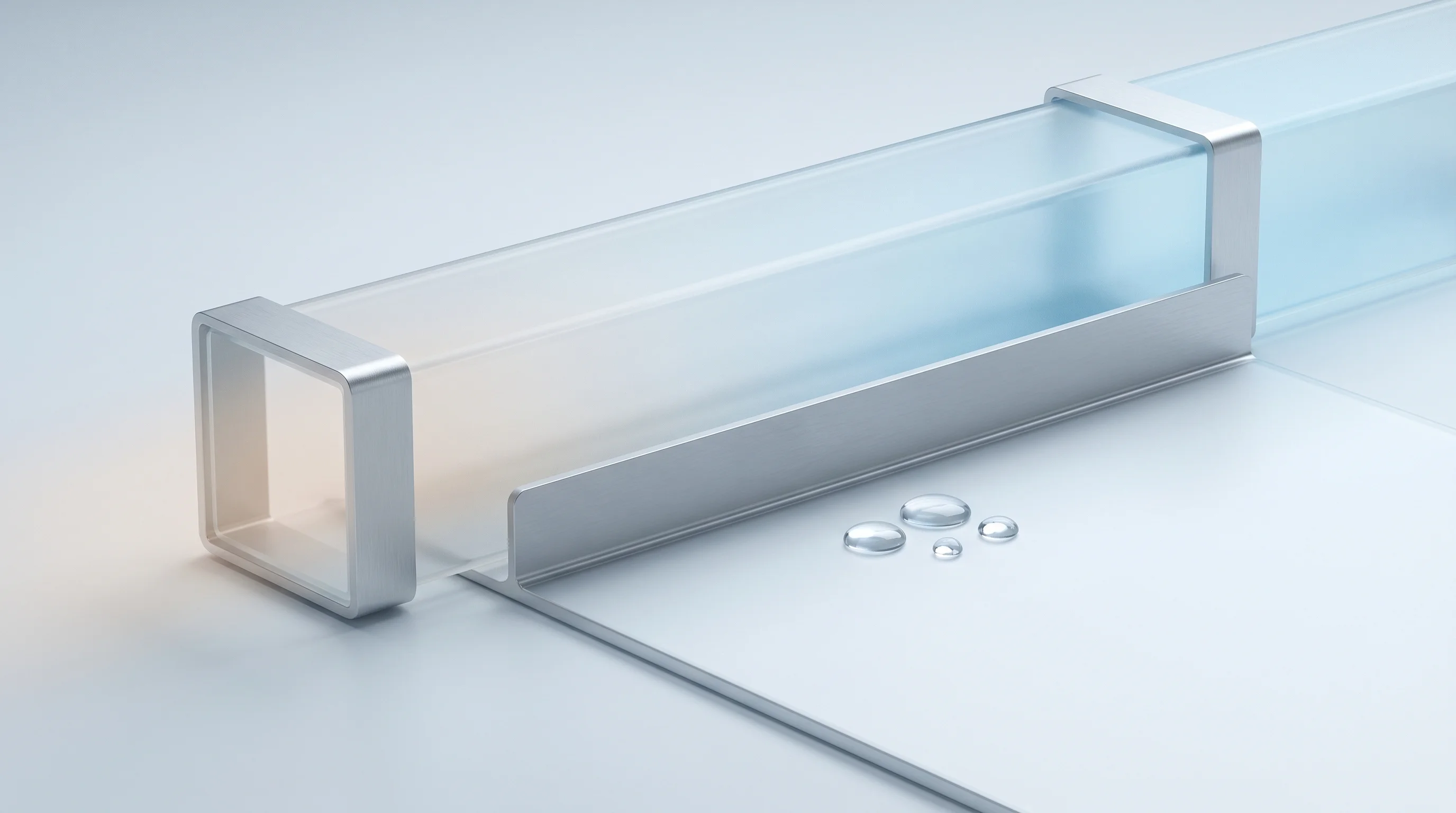
Dew-point cooling, also called indirect evaporative cooling using the Maisotsenko Cycle, isn't new science. Academic papers going back years have documented how the process can cool air below the wet-bulb temperature and approach the ambient dew point without adding moisture to the supply stream—something conventional evaporative systems can't pull off. Recent studies have refined the geometry and control strategies. A preprint published this spring presented the first full-year monitoring of a dew-point system in a live edge data center in the UK, noting solid performance but also flagging the need for hybrid control logic and careful water-side maintenance.
What makes the physics compelling in Texas specifically is the climate. Hot-dry or hot-moderate regions with significant wet-bulb depression let dew-point systems achieve substantial cooling without compressor energy. West and Central Texas—where many of the new gigawatt-scale campuses are going up—fit that profile reasonably well. The Gulf Coast, with its sticky humidity, pushes designs toward hybrid approaches that blend dew-point assist with higher-temperature chillers or direct-to-chip liquid cooling.
Madrone's founders bring an unusual mix of backgrounds to the problem. Akshay Trikha, a former machine learning engineer at QuantumScape, studied materials science at UC Berkeley. Erik Meike worked on iPhone power and thermal engineering at Apple. They're designing everything in-house—electronics, heat exchangers, software. Their pitch is that cooling "to the dew point (lower than competitors) while using less power and water" unlocks a cost and speed advantage for developers scrambling to bring capacity online.
The company has shown off 1-kilowatt and 100-kilowatt prototypes on its Y Combinator page. What it hasn't shown, at least publicly, is a named pilot site or third-party performance data.
Market Entry, Murky Details
Madrone is targeting two segments. First, new hyperscale builds—the multi-hundred-megawatt campuses breaking ground across Texas that need cooling infrastructure designed and delivered fast. The modular, chiller-free pitch is meant to shave months off deployment schedules and reduce upfront capital. Second, brownfield retrofits—existing facilities hunting for ways to free up power for additional compute. There, the value proposition hinges on operational savings and water reduction.
The company's backing by NVIDIA Inception and Y Combinator gives it entrée to the AI infrastructure ecosystem and investor discovery channels, though funding details remain undisclosed. What's clearer is that Madrone is playing into a narrative hyperscalers and colocation providers are already living: resource constraints are real, and conventional cooling approaches are showing their age.
San Antonio Water System, for instance, runs an active recycled water program that delivers to data center operators. Google's air-cooled Wilbarger County facility is another data point. The industry is experimenting, and vendors who can credibly claim lower water and power intensity—especially in markets like Texas where those resources are contested—have a window.
Crowded Field, Narrow Wedge
Madrone isn't alone in chasing dew-point cooling for data centers, though the field isn't exactly crowded. Munters offers its Oasis line of polymer-tube indirect evaporative coolers, with case studies at Equinix sites in Melbourne and Slough. Nortek Data Center Cooling promotes StatePoint Liquid Cooling with a semi-permeable membrane heat exchanger, claiming partial power usage effectiveness (PUE) figures as low as 1.025 to 1.06 depending on climate. Oxycom's IntrCooll two-stage adiabatic systems handle industrial and some data center precooling applications. Seeley International acquired Coolerado's dew-point technology and has deployed it in industrial settings, including a Tesla facility in Washington state. A UK spin-out called Dew Point Systems is marketing similar units for data centers, though independent validation of its claims hasn't emerged publicly.
Direct-to-chip liquid cooling vendors—Schneider Electric, Johnson Controls, Vertiv—occupy a different slice of the thermal stack. They target the highest rack densities, often in AI training clusters, where air cooling alone can't handle the heat flux. Dell'Oro Group projected in January that global liquid cooling manufacturer revenue would approach $7 billion by 2029, driven by AI deployments. But the Uptime Institute cautioned this spring that direct liquid cooling will likely remain concentrated in high-density niches rather than becoming universal across all racks.
That leaves space, at least in theory, for facility-level solutions like Madrone's. Dew-point systems can reduce or eliminate compressor hours for the remaining facility cooling load, or supply higher-temperature water loops that complement direct liquid cooling in hybrid topologies. The question—and it's a live one—is whether Madrone's water-side focus and modular speed give it enough differentiation against larger incumbents with established customer bases and field-proven products.
What Happens Next
The Texas market's trajectory looks locked in, for now. Analysts expect the state to overtake Northern Virginia by the end of the decade, and there are few signs of a slowdown. ERCOT's interconnection backlog and new batch study framework mean project timelines remain uncertain, but the volume of capital chasing AI compute capacity suggests developers will find workarounds. Water permitting, labor shortages (Texas housing projects have been delayed by electrician shortages due to data center build-outs, according to a recent report), and grid upgrade costs are the friction points.
For cooling vendors, the window is arguably now. Hyperscalers are making site-specific commitments that will define operational footprints for decades. Google's air-cooled Texas facility and Microsoft's "water positive by 2030" pledge signal that sustainability metrics—real or performative—are influencing procurement decisions. EU regulations requiring annual reporting of water usage effectiveness and power usage effectiveness under the recast Energy Efficiency Directive add transparency pressure that will ripple into U.S. markets as multinationals standardize reporting.
Madrone's 30% claims are aggressive. They're not yet backed by independent field data—prototypes are one thing; deployed megawatts in a live production environment are another, as most hardware startups learn the hard way. The dew-point physics are sound. Decades of academic work and recent field pilots confirm that. But translating those gains into a product that scales across Texas's diverse microclimates (humid Houston versus dry West Texas) and integrates with existing facility designs is where the theory meets the concrete.
If Madrone can deliver, it enters a market where every incremental efficiency gain carries real financial weight and where constraints on power and water are tightening faster than supply can adjust. That's a tailwind, certainly.
Whether a two-person startup with in-house designs can move fast enough to capture it before larger players adapt—or before the next wave of cooling innovation arrives—is the question that will define this particular bet. The Texas data center boom isn't slowing down. The infrastructure underneath it, though, is creaking.


