

Not many startups can say they've been raising their Series A since 2021. Then again, Myota isn't trying to sprint toward a $100 million round and a valuation that demands hypergrowth. The Blue Bell, Pennsylvania company just closed another $3 million, according to a February 2026 filing with the SEC—its fifth documented slice of what has become a marathon Series A.
All told, the cyberstorage startup has now pulled in more than $12 million under that same round designation, a fundraising arc that sprawls across half a decade and multiple investor groups. The latest tranche brought eight backers into the fold, though their names remain undisclosed in public documents. CEO James C. Walker signed the filing from the company's headquarters on Sentry Parkway, a quiet office park northwest of Philadelphia.
For context: most venture-backed companies either close their Series A in one go or, at most, tack on a small extension a year later. Myota's approach—piecemeal capital, staggered closes, incremental milestones—is unconventional, bordering on eccentric. Whether that signals disciplined capital efficiency or hints at a harder fundraising environment isn't entirely clear from the paperwork.
A Round That Won't Quit
The Series A started in 2021 with a two-part close that raised $5,769,537. A $3.65 million "A2" tranche, led by PACA Ventures, landed in June that year with a press release touting the investment. That was the last time Myota publicly named a lead investor.
Since then, the company has filed additional equity raises without fanfare: $2.25 million in March 2024, $1.55 million in April 2025, and now the February 2026 close. Funding databases like CB Insights aggregate totals that vary from the confirmed primary filings, and while they list names like JumpStart NJ and Collective Capital, those investors don't appear in Myota's own materials. Only PACA Ventures gets a confirmed mention.
Why the drawn-out structure? Myota hasn't said. It could reflect a founder preference for matching capital to near-term goals, a deliberate hedge against dilution, or perhaps something less strategic—investor reluctance to commit larger checks upfront. The filings don't answer that question, and the company hasn't offered commentary beyond the numbers.
The Cyberstorage Pitch: Shred, Scatter, Sleep Easy

Myota's product centers on what it calls "Shard & Spread" technology, a term that sounds vaguely medieval but describes a modern approach to data protection. The software encrypts information, chops it into fragments (shards), and scatters those pieces across multiple independent storage locations, each with separate authentication. Think of it as the digital equivalent of tearing up a treasure map and mailing the pieces to different cities.
The company holds two U.S. patents on the method, granted in 2022 and 2024. Its value proposition hinges on ransomware defense. Myota's marketing claims the architecture renders encrypted data "100% useless to unauthorized access" and allows customers to "instantly rewind to one second before an attack." Bold language, though the company also notes it has never experienced a successful breach, data exfiltration, or ransomware-induced loss—claims that remain unverified by independent third-party audits but form the backbone of its marketing.
There's a cost argument, too. Myota says customers can slash storage expenses by 50% or more compared to traditional redundant backup setups. A case study involving Sun Capital and a July 2023 endorsement from CDISC, a healthcare data standards organization, lend some outside validation.
A Crowded, Anxious Market
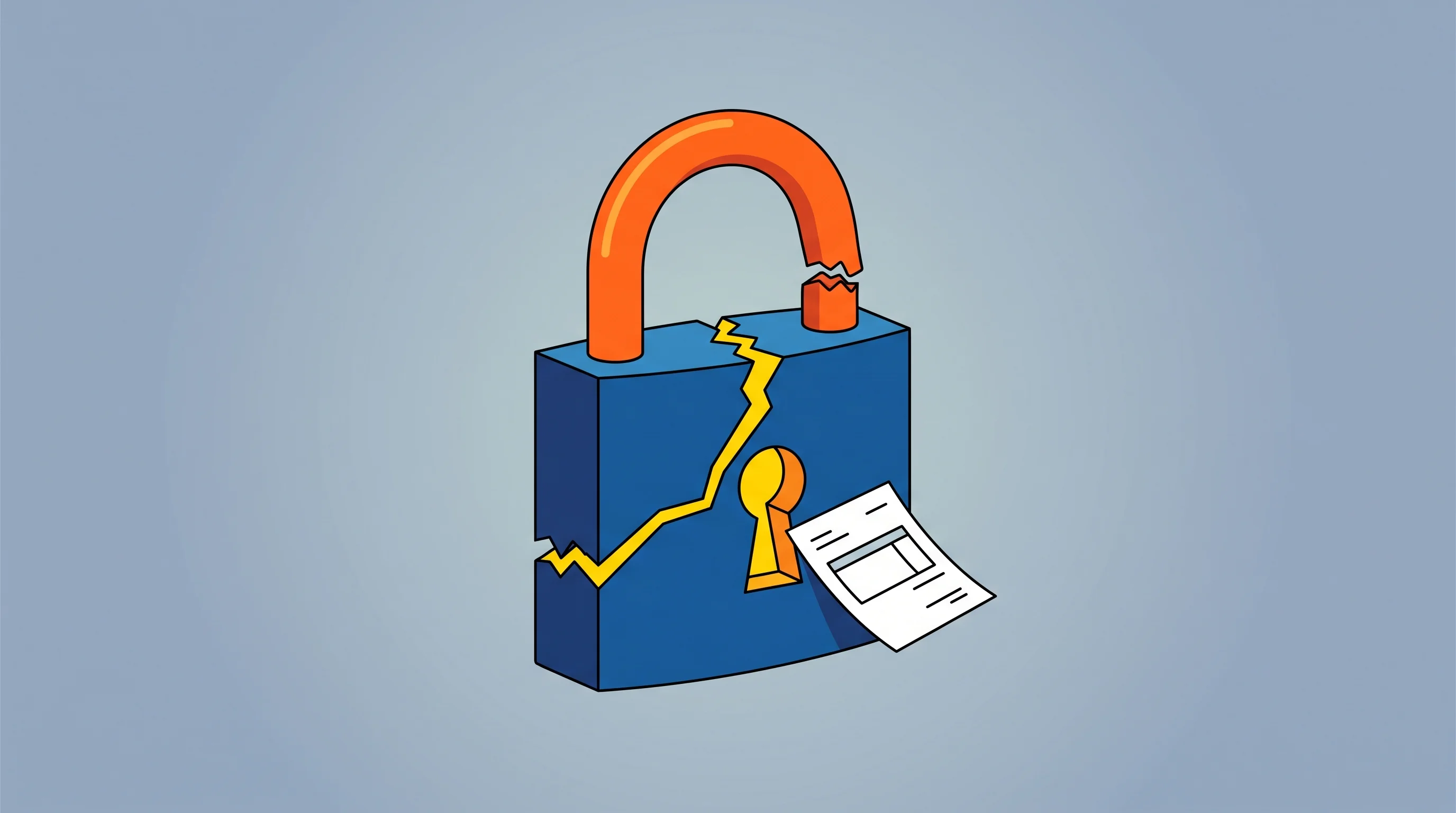
The timing makes sense, if nothing else. Ransomware remains a persistent corporate nightmare. Sophos pegged average recovery costs at $1.53 million per incident in a 2025 report, while Fortinet's May 2026 Global Threat Landscape analysis flagged a worrying uptick in AI-enabled cybercrime. Check Point's first-quarter data this year showed ransomware groups expanding their activity. Enterprises are scared, which means they're spending.
But Myota isn't operating in a vacuum. ShardSecure offers a similar microshard approach. Object First markets purpose-built ransomware-proof appliances for Veeam environments. Cloudian and Rubrik push immutable object storage with zero-trust branding. The distinctions blur—everyone claims some version of "ransomware immunity," though the underlying architectures differ. Myota's software-defined, distribution-first model contrasts with appliance-heavy competitors, but whether that differentiation resonates with buyers is harder to gauge from the outside.
The company did earn Veeam Ready – Object certification in February 2025, a stamp that matters in enterprise IT circles. Last August, it launched a "$10,000 ShardWars Challenge," inviting anyone to crack its architecture—a PR stunt that doubles as a confidence signal. More recently, Myota brought on Jerry Hoff as chief information security officer in April and inked a partnership with DāSTOR in June to bolster backup-as-a-service offerings.
What the Filings Don't Say
Public documents reveal little about Myota's revenue, customer count, or strategic roadmap. The company maintains a headcount of roughly 20 employees, according to mid-2026 data from Growjo, though its LinkedIn page shows 1,483 followers—a respectable if not exactly viral following for a B2B infrastructure play.
Leadership has shifted. A. Stephen Wray signed as CEO on the 2021 filings; James C. Walker holds the title now. CFO Sergey Slipenchuk and directors Ira M. Lubert and Jo Webber appeared on the February filing. The transition suggests some internal evolution, though the specifics—why, when, under what circumstances—remain outside public view.
The incremental raise structure raises questions a journalist can't easily answer without insider access. Is Myota deliberately staying lean, avoiding the venture treadmill that demands aggressive scaling and eventual exit pressure? Or has the company struggled to convince investors to write bigger checks all at once?
Both narratives fit the facts. What's undeniable: five years is a long time to stay in Series A mode. Most startups either graduate to a B round by now or run out of runway entirely. Myota has done neither. It's still here, still raising capital in slices, still selling the same core technology story it started with in 2021. Whether that persistence signals resilience or stagnation depends on what happens next—and on numbers the company hasn't shared publicly.


