

Jeff Liu's elevator pitch sounds almost too clean: you insert any diseased genetic code, the drug finds it, reads it, destroys the cell. One platform. Unlimited targets. The whole thing.
It's the kind of promise that makes investors lean forward and scientists reach for their red pens. FinalDose, a five-person London outfit that participated in Y Combinator, is betting that programmable DNA therapeutics can crack what the pharmaceutical industry has long written off as impossible—the roughly 80% of cancer-causing proteins that conventional drugs simply can't reach.
Bold? Without question. Proven? Not even close.
The company has no published peer-reviewed data. No disclosed financing beyond its YC backing. A website that raises more questions than it answers. What FinalDose does have is timing. The science of DNA-based logic systems is maturing faster than many expected, oncology spending continues its climb toward what some project as $441 billion by 2029, and the race to unlock previously intractable cancer targets has never been more intense. Or more crowded.
When "Undruggable" Meant Impossible
The phrase "undruggable" has functioned for decades as polite shorthand for therapeutic futility. The majority of cancer-driving proteins lack the binding pockets that small molecules need. They resist antibody access. They exist in cellular compartments beyond conventional reach.
Researchers at Mass General noted recently that roughly 80% of disease-relevant targets fall into this category—a statistic that has become something of a rallying cry for next-generation modalities. KRAS mutations, which drive substantial fractions of lung, pancreatic, and colorectal cancers, have long served as a prominent example of this problem. For years, KRAS was considered essentially untouchable, until recent breakthroughs finally yielded mutation-specific inhibitors that actually work.
Yet even with that progress, the gap remains vast. Transcription factors, scaffolding proteins, intrinsically disordered regions—all continue to evade traditional drug design. The result is a peculiar mismatch: oncology R&D is booming, but much of that effort still circles around the same ~20% of druggable space. The low-hanging fruit, picked over again and again.
Enter a new generation of modalities. Targeted protein degradation via PROTACs. Radiopharmaceuticals delivering isotopes to tumor-specific antigens. And now, perhaps, DNA-based therapeutics that read genetic sequences and execute logic-gated decisions inside living cells.
The Science Catching Up to the Hype
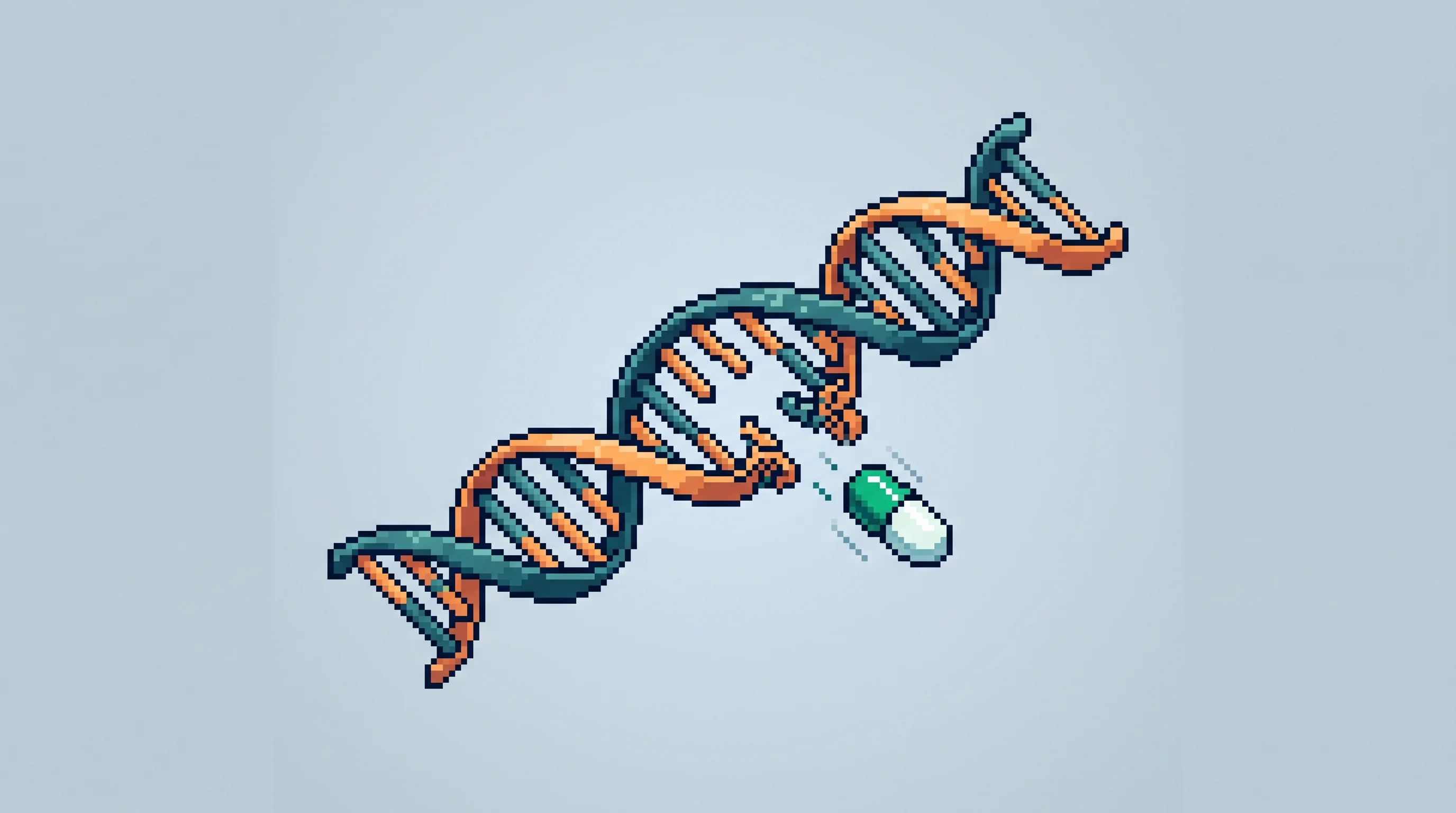
The scientific foundation for programmable DNA drugs has been taking shape quietly in academic labs. Earlier this year, Nature Biotechnology published work demonstrating DNA–drug conjugates that use hybridization chain reactions to amplify signals and release cytotoxic payloads only when multiple biomarkers are present—an AND-gate architecture, borrowed from computer science and embedded in biology. The study used affibodies and aptamers to recognize surface markers like EGFR and PD-L1, showing selective killing in mixed cell populations.
A month later, Signal Transduction and Targeted Therapy reported intracellular DNA tetrahedron processors capable of three-input logic computation for precision theranostics. In spring, Nature demonstrated RNA-triggered cell killing using CRISPR-like effectors in yeast and human cells—programmable elimination based on transcript recognition.
None of these are approved therapies. All are preclinical, some exceedingly early. But the trajectory is clear enough: nucleic acids are becoming programmable executors, not just informational molecules. Nature Reviews Bioengineering summarized the shift in a recent highlight, noting that DNA logic gates are now directing selective drug delivery with dual-biomarker engagement. "Programmable," in other words, is no longer purely aspirational. It's engineering.
What FinalDose Is Actually Claiming
FinalDose's pitch is that it can leapfrog this incremental progress entirely. According to the company's Y Combinator profile, the platform is "the first programmable drug" that can "insert any diseased genetic code" and "search and destroy upon DNA recognition." The mechanism, as described in third-party briefings, involves sensing DNA mutations directly—not RNA—with AND-gated safety locks and what the company calls a "non-native cytotoxic pathway" to sidestep resistance.
Liu, who holds an Oxford PhD in oncology and previously co-founded Vivid Dx (a sepsis diagnostics company), leads a team that includes Li-Yao Huang, a biochemist with expertise in CRISPR screening and BRCA1/PARP resistance mechanisms, and Steven Lin, a computational biologist. The company's tagline—"DNA gives us the address"—suggests sequence-level precision. On LinkedIn, FinalDose has floated speculative coverage ceilings of "90–95%" if the technology truly reads the genome as claimed.
The gaps, though, are striking.
No peer-reviewed publications tie FinalDose's constructs to experimental validation. No funding round has been publicly disclosed beyond YC's standard check. The company website offers more aspiration than evidence. The "80% of targets" framing appears to map onto the well-known statistic about undruggable proteins—not evidence that this particular platform can systematically and safely access that space.
Industry veterans know the difference between a compelling pitch and a validated therapeutic. FinalDose's narrative is decidedly the former, awaiting proof of the latter.
A Very Crowded Field

FinalDose is hardly alone in chasing programmable precision. Senti Biosciences, a publicly traded company, has presented logic-gated gene circuit work at recent oncology conferences, highlighting its SENTI-202 candidate in AML and MDS. Senti's approach embeds Boolean logic into cell therapies—sensing tumor antigens and suppressing activity in healthy tissue. The company has signaled movement toward pivotal studies in investor communications.
Strand Therapeutics, meanwhile, is pursuing programmable mRNA circuits that encode in vivo CAR-T logic. The company has said its STX-003 candidate would enter the clinic, with preclinical data presented at gene therapy meetings. Strand's pitch mirrors FinalDose's in one key respect: collapse the R&D cycle by reprogramming the payload without rebuilding the delivery chassis.
Then there are the PROTACs. Arvinas, C4 Therapeutics, Kymera Therapeutics—all advancing protein degradation platforms with oncology pipelines. Arvinas has presented pan-KRAS PROTAC data at major conferences. These companies are targeting historically undruggable proteins by hijacking the cell's own ubiquitin-proteasome machinery. No DNA reading required, but a proven path to clinical trials.
Radiopharmaceuticals add yet another layer of competition. Bristol Myers Squibb acquired RayzeBio for $4.1 billion in early 2024. AstraZeneca closed its Fusion Pharmaceuticals deal mid-2024. Eli Lilly bought POINT Biopharma in late 2023. McKinsey and IQVIA have both flagged radiopharmaceuticals as a maturing pillar for precision oncology.
Every modality is competing for the same capital, the same patient populations, the same slice of a market projected to reach $441 billion by 2029. The window for "first mover advantage" may already be closing.
The Devil in the Delivery
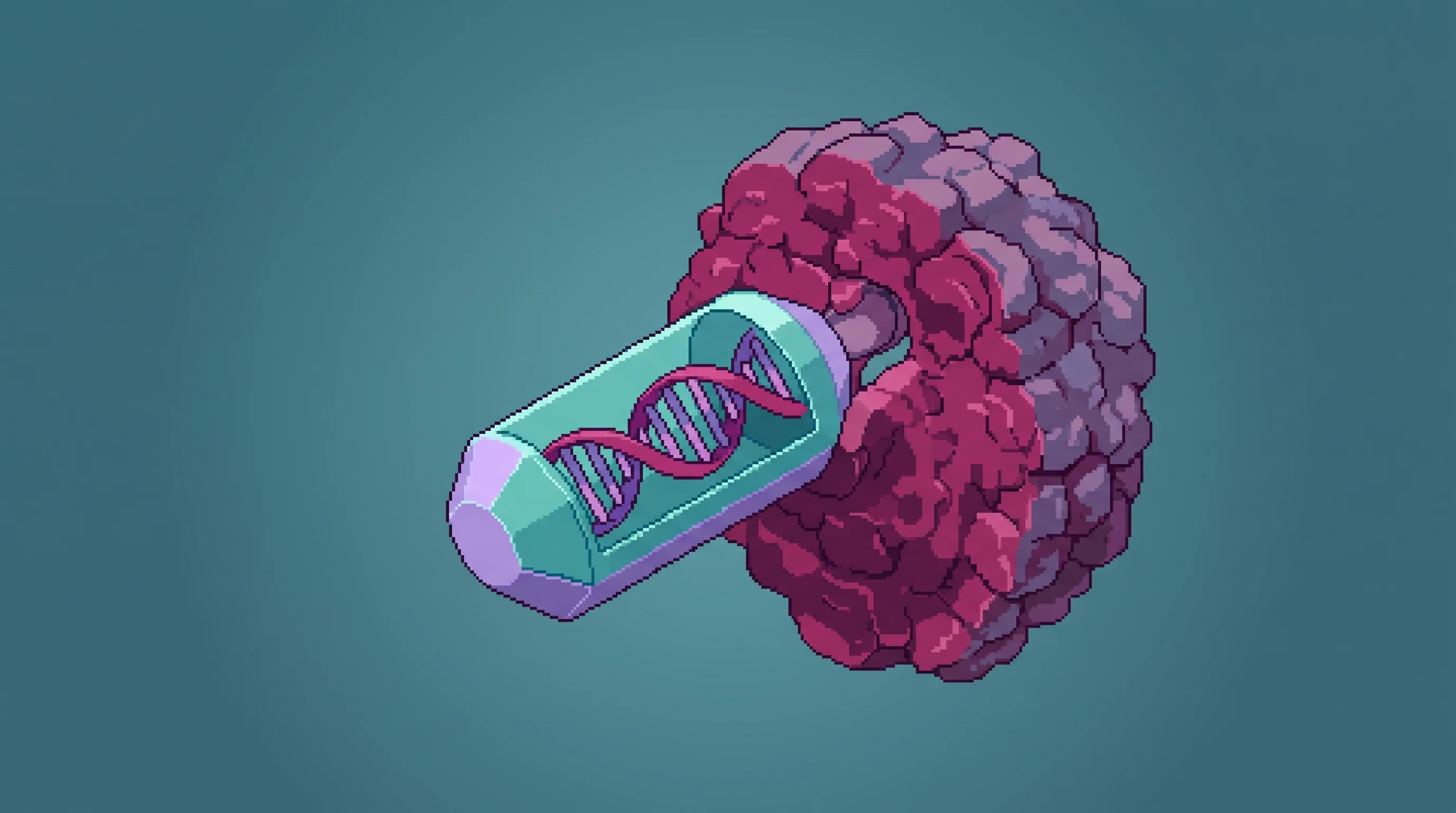
The translational hurdles for DNA logic-gated therapeutics are substantial. FinalDose has yet to demonstrate publicly how—or if—it has overcome them.
Delivering DNA constructs to solid tumors in vivo remains formidable. Endosomal escape, immunogenicity of synthetic DNA, the risk of off-target activation in heterogeneous tumor microenvironments—these are well-documented obstacles, not speculative concerns. The FDA issued guidance on oligonucleotide therapeutics in mid-2024, noting around 17 approved RNA-based drugs to date. But that guidance addresses antisense oligonucleotides, siRNAs, and similar modalities. Not DNA-triggered cytotoxic logic gates.
There is no regulatory roadmap yet for what FinalDose proposes. How would such a therapeutic be classified? What preclinical packages would satisfy safety thresholds for a molecule that "reads" genomic DNA and executes cell death? These aren't rhetorical questions. They're practical barriers that typically take years to navigate.
Aptamer-drug conjugates, which underpin some of the recent DNA logic work published in Nature Biotechnology, have struggled in clinical translation. A review in the European Journal of Pharmaceutics and Biopharmaceutics noted earlier this year that despite preclinical promise, clinical progress in oncology remains limited. No aptamer-based cancer drug has been approved. Not one.
FinalDose's assertion that it can reprogram its platform for any target by swapping in new "guides" echoes the language of CRISPR. But gene editing and sequence-activated therapeutics are not the same thing. CRISPR edits DNA; FinalDose claims to read it and trigger death. The mechanistic details—what exactly happens upon DNA recognition, how specificity is ensured, what the "non-native kill pathway" entails—remain undisclosed.
What Happens Next
The oncology landscape right now is defined by parallel innovation across modalities. Oligonucleotide therapeutics are projected to grow from roughly $7 billion in recent years toward nearly $30 billion by the early 2030s, according to market research. Gene therapy markets are expanding. R&D trial activity is accelerating in mid and late-stage development.
Regulatory frameworks are tightening, too. The BIOSECURE Act, enacted in late 2025, adds procurement restrictions on certain biotech suppliers. The White House Nucleic Acid Synthesis Screening Framework, which took effect in late 2026, imposes new diligence on DNA and RNA synthesis orders—a move that could complicate FinalDose's supply chain if the platform scales.
FinalDose's timing is opportune in one sense: the field is ready to believe that DNA-based logic could work. Academic proof-of-concept exists. Capital is flowing. The "undruggable" narrative has never carried more urgency, or attracted more attention.
But belief and execution are different animals entirely.
The company's bold claims—80% coverage, programmable simplicity, collapsed development timelines—demand rigorous validation. Investors and pharma executives evaluating this space will want to see in vivo efficacy data. Safety profiles in animals. Evidence that the platform can navigate the immune system, the tumor microenvironment, and the gauntlet of clinical translation. A compelling slide deck is one thing. A drug that works in patients is another.
The race to program DNA drugs is real enough. Whether FinalDose is leading it, or simply making noise at the starting line, remains very much an open question.


