

Not many drug developers can claim they're taking therapeutic cues from elephants. Peel Therapeutics, which can, has quietly closed the first piece of its Series A financing round, according to a disclosure from Altitude Lab, the Salt Lake City incubator that helped launch the company.
The size of the round? Undisclosed. The investors? Also undisclosed. But the funding lands at a moment when Peel's lead cancer drug has wrapped Phase 1 testing and is enrolling pediatric patients—a notoriously challenging population to reach in oncology trials.
What sets Peel apart, if its scientific premise holds, is where it looks for drug ideas. The company mines evolutionary biology for cancer therapies, drawing on millions of years of natural selection. Elephant tumor suppressor genes. Toxins from Chinese trees. Even honeybee venom peptides. It's an eclectic portfolio, to say the least.
The Seed Backstory
Before this Series A tranche, Peel had pulled together a $36 million seed round—pieced out over time, including a $9 million SAFE note in early 2023. The company also secured over $3 million in non-dilutive grants from NIH's SBIR and STTR programs, the kind of federal backing that buys runway without surrendering equity.
That 2023 fundraise brought notable names to the board. Ryan Watts, who leads Denali Therapeutics, joined. So did Carin Canale-Theakston, CEO of Evoke Canale. Both have track records in neuroscience and rare disease, though Peel's focus is squarely oncology.
The company itself straddles two geographies: Salt Lake City and Haifa, Israel. CEO Joshua Schiffman splits time as a pediatric hematologist-oncologist at Huntsman Cancer Institute and the University of Utah. Co-founder Avi Schroeder runs the Laboratory for Targeted Drug Delivery at Israel's Technion. It's a binational setup that reflects the founders' research roots.
A Tree, an Elephant, and a Topoisomerase Inhibitor
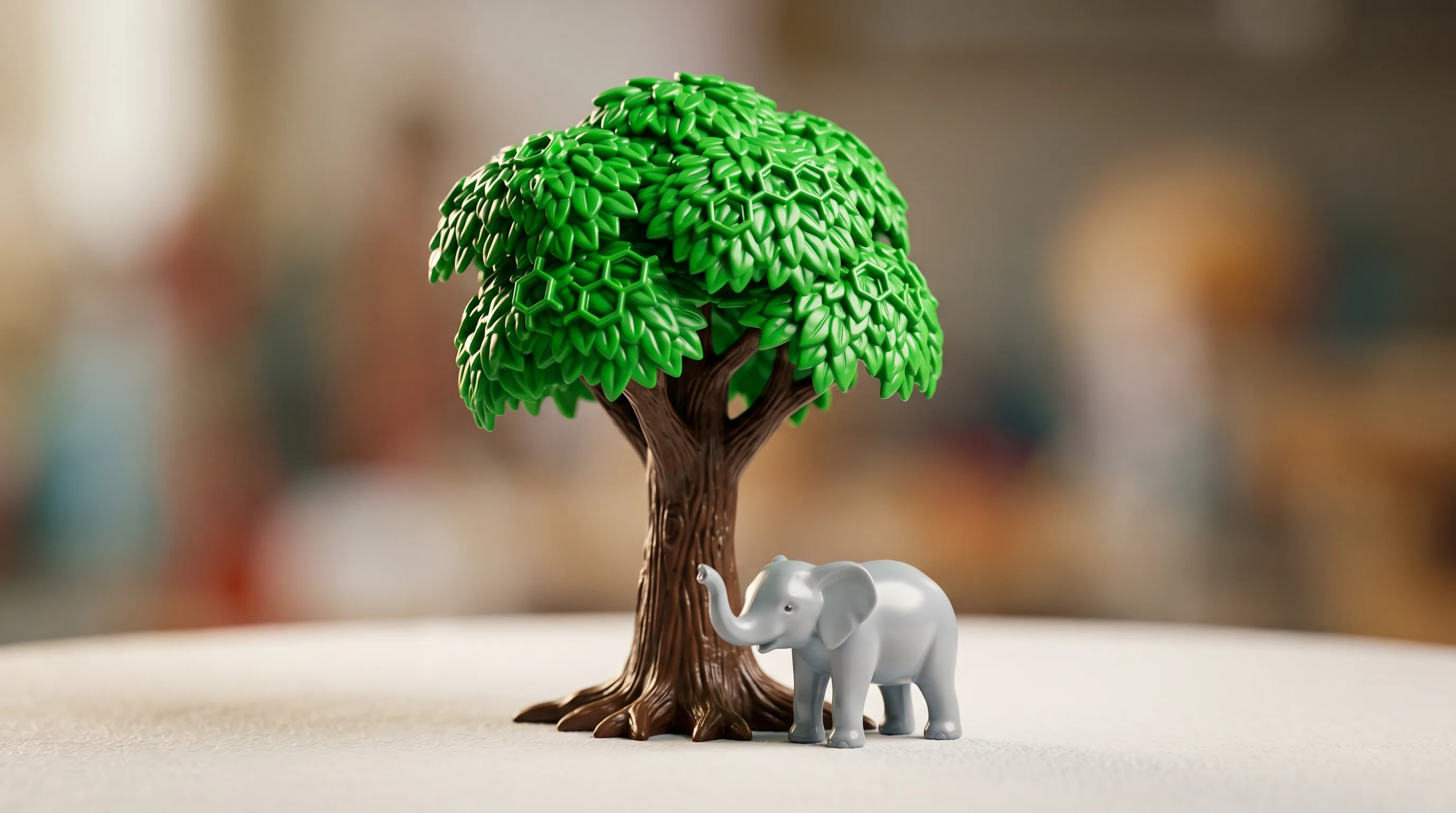
Peel's flagship program, PEEL-224, originates from camptothecin—a cytotoxic molecule scraped from the bark of Camptotheca acuminata. The Chinese "Happy Tree," as it's sometimes called, has been a source of chemotherapy compounds for decades. Peel's twist: engineering the molecule to sidestep resistance mechanisms and dial down toxicity. The result is a topoisomerase I inhibitor now being tested in humans.
Then there's EP53, the elephant-inspired candidate. Schiffman co-authored a 2015 paper in JAMA showing that elephants carry multiple copies of the TP53 gene, a critical tumor suppressor often dubbed the "guardian of the genome." The hypothesis: those extra copies might explain why elephants rarely develop cancer despite their massive size and long lifespans. Peel is developing lipid nanoparticles to deliver elephant-derived p53 variants, though that program hasn't reached the clinic yet.
Rounding out the pipeline: PEEL-388, a neuroendocrine tumor-targeted derivative of camptothecin, and an integrin-targeted version of melittin, a peptide found in honeybee venom. Whether these programs advance depends, in part, on what this new capital enables.
Moving Into Pediatric Trials
PEEL-224 wrapped its first-in-human Phase 1 dose-escalation study in advanced solid tumors, a trial that launched in 2022. Now the company has opened a Phase 1/2 combination trial targeting adolescents and young adults with relapsed or refractory sarcomas—cancers that have already beaten back standard treatment. The regimen pairs PEEL-224 with vincristine and temozolomide.
Clinical trial registries list the study under NCT06709495, with a separate cohort tracking pediatric patients. An abstract presented at an AACR meeting outlined the trial design, naming particularly aggressive cancers like desmoplastic small round cell tumors and certain Ewing sarcoma variants.
Pediatric oncology trials are notoriously difficult to conduct. Small patient populations. Ethical complexities. Parents understandably reluctant to enroll their children in experimental protocols. That Peel has advanced this far suggests some level of institutional confidence, or perhaps urgency around unmet need.
What the Money Buys
Peel hasn't said publicly how it plans to spend the Series A proceeds. The 2023 seed round was earmarked for clinical and preclinical advancement, so it's reasonable to assume this capital follows a similar script: fund ongoing trials, push preclinical assets forward, maybe hire a few more people.
The biotech funding environment has been unpredictable lately, though oncology continues to attract capital. Comparables are hard to draw—Series A rounds in the space have ranged widely, from mid-eight figures to well over $100 million, depending on the platform's maturity and investor appetite. Peel's decision not to disclose the tranche size could signal a staged close, where additional capital follows milestones, or simply reflect investor confidentiality preferences. In competitive therapeutic areas, silence sometimes serves strategy.
For now, the company appears to be betting that nature—refined over evolutionary timescales—holds answers that traditional medicinal chemistry might miss. Whether that gamble pays off in the clinic remains an open question. But with fresh capital in hand and patients enrolling, Peel has bought itself time to find out.


