A small Amsterdam company is betting it can restore sight to the blind by going deeper into the brain than anyone else has tried.
Phosphoenix said September 16 it closed a €1.3 million bridge round from TTT Medtech Fund, FIRST Fund, Innovatiefonds Noord-Holland and new investor ROM InWest. The startup is developing an implant that bypasses damaged eyes or optic nerves entirely, instead stimulating a thalamic relay station called the lateral geniculate nucleus, a waystation in the brain's vision pathway that most researchers have simply routed around.
The company wouldn't disclose its valuation. It had raised an undisclosed pre-seed round back in September 2022 from the same three existing investors, though third-party trackers such as Fusion-42 and Signalbase later estimated that round at roughly $1.4–$1.5 million. Phosphoenix never confirmed the figure.
Founded in 2019 as a spin-off from the Netherlands Institute for Neuroscience, the company traces its origins to work by Prof. Pieter Roelfsema, the institute's director, alongside Prof. Xing Chen and Dr. Bert Monna. Hans Brons now runs the operation as CEO, with Monna serving as CTO.
A different target
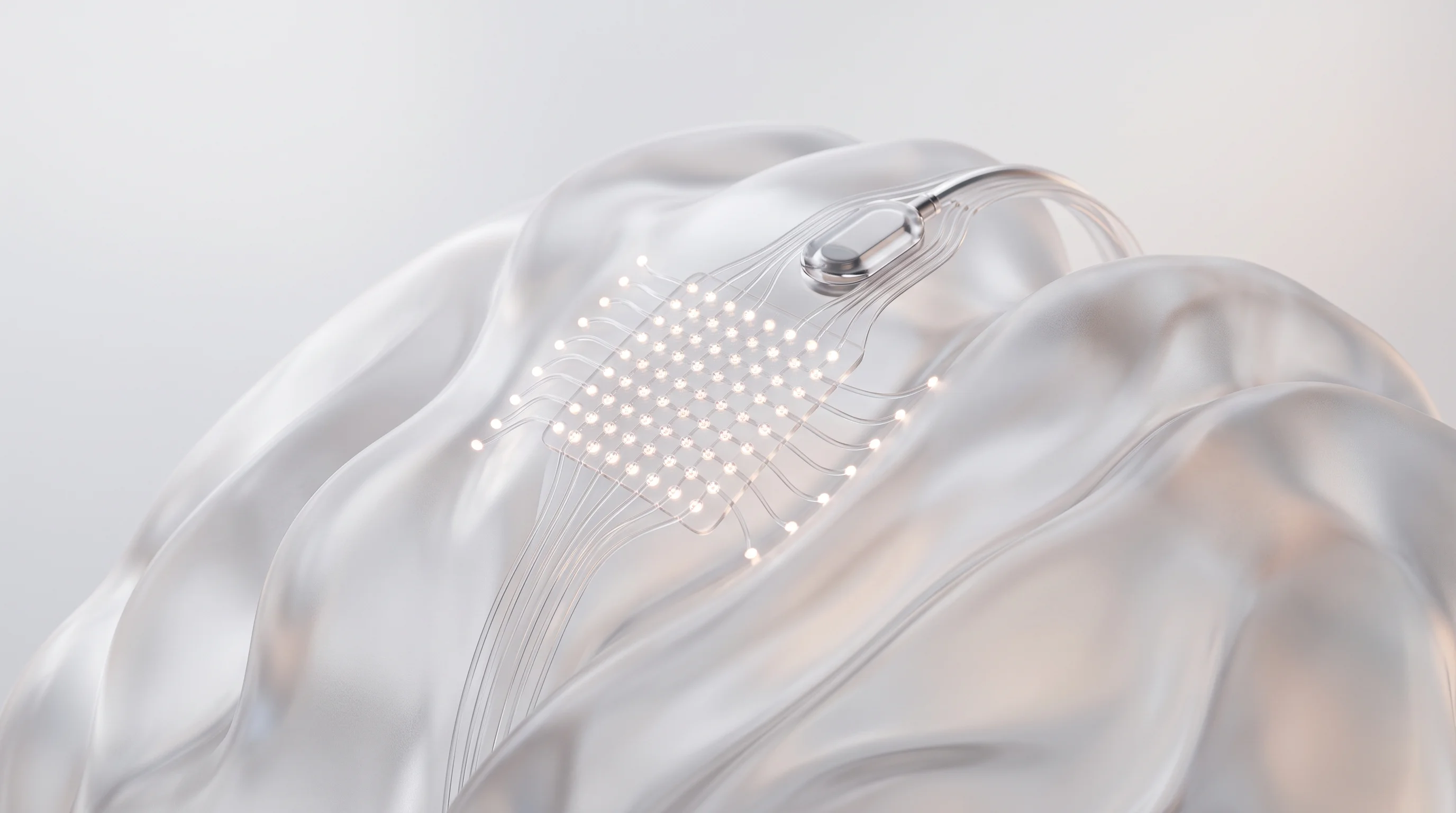
The device, called the Fountain Probe, packs more than 1,000 microelectrodes into a form factor designed to reach the LGN. A camera captures the visual field; an AI system translates those images into electrical stimulation patterns that, when delivered through the implant, generate visual perceptions called phosphenes. Two patent filings in the Netherlands and through the World Intellectual Property Organization lay out the electrode assemblies configured for LGN insertion.
Most competitors in this space have chosen different battlegrounds. Cortigent's Orion system uses a 60-electrode array placed directly on the visual cortex. Illinois Tech's Intracortical Visual Prosthesis has been working on cortical implants as well. Pixium Vision targets the retina itself with a subretinal photovoltaic implant for age-related macular degeneration.
Phosphoenix's approach builds on a December 2020 paper in Science, co-authored by Chen and Roelfsema, which showed that high-channel-count cortical stimulation allowed monkeys to perceive shapes. The thalamic approach they're pursuing now represents a pivot from that earlier cortical work.
Clinical plans taking shape
The fresh capital will go toward preparing for a first-in-human trial that the company plans to run in 2027, working with Amsterdam UMC. It will also fund continued development of the neurostimulation system itself, according to ROM InWest's announcement. A larger Series A round of approximately €20 million is in the works to bankroll the full clinical program, though timing on that raise remains unclear.
"This financing represents an important step towards bringing our technology into the clinic," CEO Brons said in a September statement.

The company has also pulled in non-dilutive funding. A €2.5 million grant from the European Innovation Council was announced on January 15, 2025 for a project dubbed SIGHTED, which pairs Phosphoenix with Institut de la Vision at Sorbonne University. Separately, co-founder Chen secured a $1.5 million NIH Director's New Innovator Award on October 9, 2024 for her academic lab, spread over five years.
Sara Schaafsma, senior investment manager for life sciences and health at ROM InWest, called Phosphoenix "a potentially life-changing technology for people with severe blindness" in the regional development agency's announcement. Wim Smit, representing the existing backers, described the startup as "a front-runner in implantable neurotechnology for vision."
The company's LinkedIn profile lists between 2 and 10 employees, a headcount that suggests Phosphoenix is still in the early stages of building out its team. Whether that's enough firepower to navigate the regulatory gauntlet ahead remains an open question.