

The shares opened at ₹145 on November 18, 2025—a 33% pop from the ₹109 issue price—and for once, the narrative around Indian edtech wasn't about implosion. Physics Wallah, the test-prep startup built on YouTube videos and Hindi-language physics lectures, had just completed a ₹3,480 crore public offering on the BSE and NSE. Not a rescue round. Not a down-round. An actual listing, with actual demand.
Timing matters in these stories. Prosus had written off its entire stake in BYJU'S mere months earlier. The fallen giant, once commanding a $22 billion valuation during the pandemic's frenzied peak, now faced insolvency proceedings. Unacademy, another former darling, was announcing fresh layoffs. Against that wreckage, Physics Wallah's debut felt almost provocative—a pointed reminder that someone, somewhere, had figured out how to build an edtech company that investors still wanted to own.
The question hanging over the listing: What exactly did Alakh Pandey and Prateek Maheshwari understand that the rest of the sector missed?
Following the Money, Not the Hype
Start with the financials, because they tell a story the sector hasn't heard in years. Operating revenue for FY25 hit ₹2,886.6 crore, up 49% from the prior year. Net loss? Down to ₹243.3 crore from ₹1,131 crore in FY24—a 78.5% improvement that suggests something more than accounting gymnastics. The company turned EBITDA positive at roughly ₹193 crore while holding total expenses essentially flat.
The anchor round, which closed November 10-11, pulled in ₹1,562.85 crore from 57 investors. Domestic mutual funds grabbed about 55% of the allocation, with Capital Group, Fidelity, Franklin Templeton, and Goldman Sachs rounding out the roster. By the time retail bidding closed, the issue had subscribed 1.81 times—solid, if not spectacular.
These numbers lack the breathless hyperbole that defined edtech's boom years. Physics Wallah served 4.46 million paid users in FY25, each paying an average of ₹3,682.79. The revenue split—48.6% online, 46.8% offline—suggests a company that's genuinely bridging channels rather than lurching between them in panic.
It's the kind of balance sheet you get when you start with constraints instead of a blank check.
The YouTube Teacher Who Became a Unicorn
Pandey's origin story has circulated widely enough to approach cliché, but the details matter because the business model emerged directly from them. He started teaching physics in Kanpur after dropping out of engineering in his third year at HBTI. Somewhere between 2014 and 2016—accounts diverge slightly—he launched a YouTube channel called Physics Wallah, teaching primarily in Hindi to students prepping for IIT-JEE and NEET entrance exams.
The channel grew. Not overnight, not virally, but persistently. By 2020, when Pandey and cofounder Maheshwari formalized the company and launched the app, they already commanded a massive organic funnel. That YouTube library—now sprawled across 207 channels with 98.8 million subscribers as of June 2025—became the company's customer acquisition engine, the kind venture-backed competitors spent fortunes trying to replicate.
Where rivals burned roughly 18% of revenue on marketing (per Redseer data cited in industry coverage), Physics Wallah spent closer to 10% in FY24. The unicorn valuation arrived in June 2022 with a $100 million Series A from WestBridge Capital and GSV Ventures at $1.1 billion. A $210 million Series B from Hornbill Capital followed in September 2024, pushing valuation to $2.8 billion. Then the IPO filing in September 2025, listing two months later.
The capital raises were almost quaint by edtech standards. Pandey and Maheshwari reached unicorn status on $100 million, then waited two years before taking more money.
Betting on Offline—Yes, Really
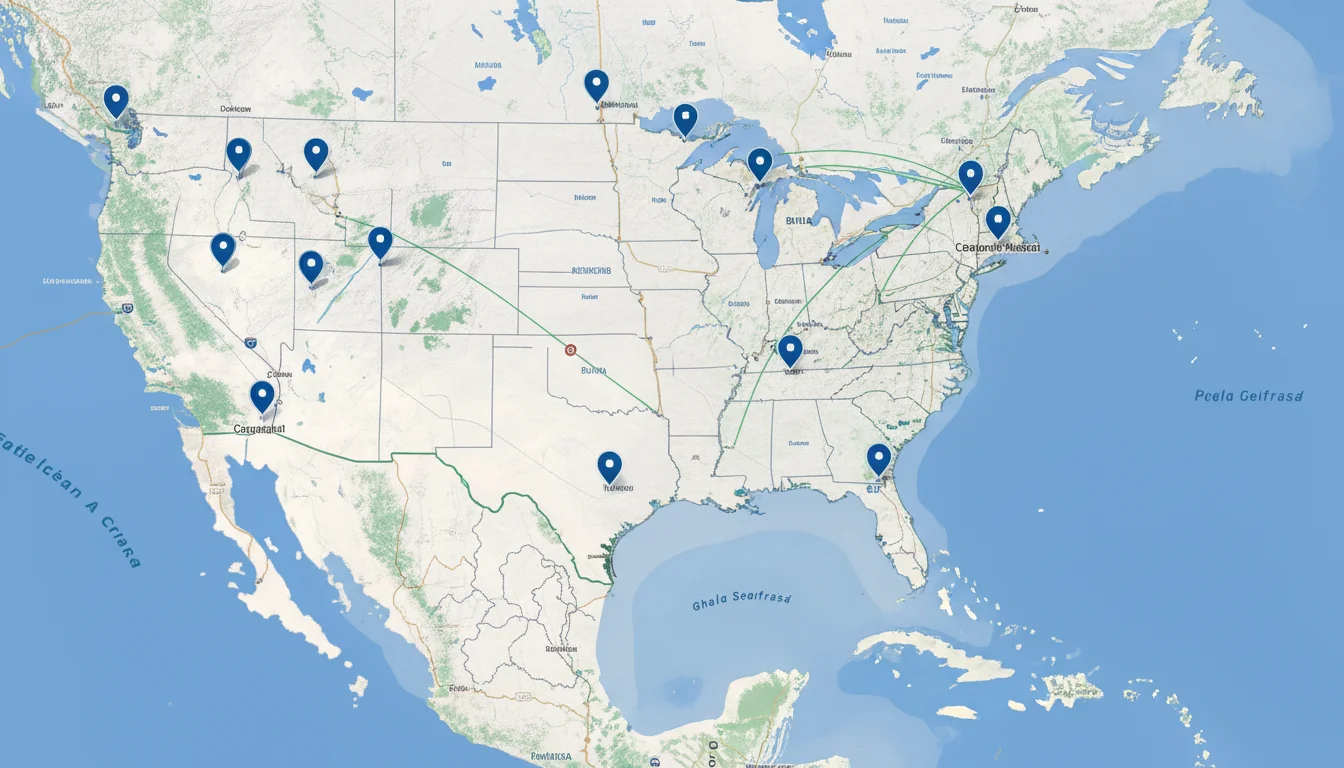
Perhaps the most counterintuitive element of Physics Wallah's playbook: aggressive offline expansion. The company operated 198 centers across 109 cities as of March 31, 2025. By June 30, that figure jumped to 303 centers across 152 cities, including locations in the Middle East through its Knowledge Planet acquisition.
These aren't your father's coaching centers. PW Vidyapeeth runs full offline operations, while PW Pathshala deploys a "two-teacher" hybrid model—one instructor physically present, another teaching remotely via screens. Some centers operate on a franchise-like partner model, reducing Physics Wallah's direct capital exposure. Offline average revenue per user hit ₹40,405 in FY25, more than ten times the online figure.
Of the ₹3,100 crore fresh issue, the company earmarked ₹460.5 crore for fit-outs of new offline and hybrid centers, with another ₹548.3 crore allocated to lease payments on existing locations. Marketing took ₹710 crore—a signal that even with low customer acquisition costs, the company intends to spend for growth. Server and cloud infrastructure consumed ₹200.1 crore.
In an interview ahead of the listing, Maheshwari described Physics Wallah as "the good boy in a tough neighbourhood." He pointed to AI resolving 80-85% of student doubts and emphasized that the company remained "bullish on online" even while scaling offline. The expansion targets read like a deliberate tier-2 and tier-3 roadmap: Muzaffarpur, Dhanbad, Akola, Latur, Rajkot, Ujjain, Bathinda, Jorhat, Chennai. Not Mumbai or Bangalore. Not where everyone else goes first.
The Stumbles Along the Way
No path to IPO runs entirely smooth, and Physics Wallah's had its share of turbulence. In 2023, a group of former teachers went public with allegations about internal issues and claimed they'd been offered bribes from a rival firm, sparking a viral feud that the company dismissed as distraction. That November, Physics Wallah laid off between 70 and 120 employees—less than 1% of staff—citing performance issues, though it simultaneously announced plans to hire 1,000 more within six months.
The PW Institute of Innovation, launched with some fanfare to offer four-year programs in computer science and AI, drew scrutiny over its degree structure and ₹15 lakh fee levels. The company later formalized a B.Tech partnership with Medhavi Skills University to clarify the credential path.
FY24's ₹1,131 crore loss spooked some observers, though much of it—₹756 crore—came from non-cash fair-value adjustments on compulsorily convertible preferred shares. The FY25 turnaround, with expenses holding flat while revenue surged, suggested something more substantive than financial engineering. Operational discipline, perhaps. Or simply the benefits of not lighting money on fire for growth at any cost.
What the Sector Learns, If It's Listening
Physics Wallah's listing doesn't rehabilitate edtech as a sector. It validates a specific approach: affordable pricing, organic top-of-funnel growth, hybrid delivery, and relentless category expansion. The company now covers not just JEE and NEET but also UPSC civil service exams, defence tests, chartered accountancy prep, GATE, and various government job exams. It runs PW Skills for professional upskilling (integrating its iNeuron acquisition) and is pushing into international markets via the UAE.
The company's 2.7 million daily active users and 64.5 million cumulative app downloads suggest genuine engagement, not just vanity metrics inflated by promotional spends. The headcount of roughly 15,775 employees in FY25, with ₹1,401 crore in employee benefits expense, indicates scale—but also cost discipline relative to revenue.
For founders watching the listing, the lesson might be less about replicating Physics Wallah's exact moves and more about unit economics. Pandey and Maheshwari didn't raise massive war chests to blitz the market. They priced courses at roughly ₹4,000-₹5,000 when competitors charged multiples of that. They built content once and distributed it across channels, rather than customizing expensively for each segment.
They also, crucially, didn't seem to believe their own hype during the boom years.
The Test Ahead

Now comes the harder part. Physics Wallah must prove that ₹243 crore in losses can actually reach zero. That offline expansion won't crater margins as competition intensifies and lease costs climb. That the YouTube funnel, built patiently over years, can keep converting students at scale even as the brand matures and the founder's personal narrative becomes less central.
The edtech sector, bloodied and skeptical after watching billions evaporate, will be watching closely. Perhaps learning something about what profitability requires beyond hockey-stick projections and charismatic pitches.
Because Physics Wallah's story isn't about disruption or moonshots. It's about something considerably less glamorous: building a business that works. In 2025, for Indian edtech, that alone qualifies as remarkable.


