

Squall Tan doesn't hedge when asked about his ambitions for FeedMe. "We want to become the Toast of APAC," the CEO says, invoking the American restaurant tech platform that went public in 2021 and now processes tens of billions in payments annually.
It's a bold reference point for a Malaysia-based startup, but perhaps not an unreasonable one. On November 18, FeedMe closed a $5 million Series A led by Singapore's Integra Partners, with participation from returning investor Cento Ventures. The round gives the seven-year-old company fresh ammunition to pursue what it sees as a massive, under-digitized opportunity: bringing integrated restaurant technology to Southeast Asia's fragmented food service sector.
The capital will fund a push into Thailand, expand FeedMe's AI engineering capacity, and—perhaps most tellingly—launch embedded financial services by February 2026. That last piece signals the company's intention to move beyond software subscriptions into payments processing and merchant lending, shadowing Toast's playbook of owning the full transaction stack.
A Market Still Running on Paper
FeedMe already serves 11,000 merchants across Malaysia, Singapore, and Indonesia from offices in Johor Bahru, Petaling Jaya, and Singapore. Its customer list includes regional chains like ZUS Coffee, the fast-expanding Malaysian coffee brand, along with Christine's Bakery, Salad Atelier, and kopitiam operator Hock Kee. TechNode Global has also reported that Din Tai Fung uses the platform.
But Thailand represents the real prize. Tan estimates the country has roughly 400,000 food and beverage outlets, about 30 percent of which still operate without any point-of-sale system at all. Many others, he told The Business Times, rely on legacy POS terminals that lack omnichannel capabilities—no QR ordering, no unified delivery management, no e-invoicing infrastructure.
That last point matters more than it might sound. Malaysia's phased e-invoicing mandate, rolling out through July 2026, is forcing restaurants to upgrade or replace non-compliant systems. FeedMe's e-invoice module positions it to capture operators scrambling to meet regulatory deadlines. It's the kind of tailwind that can compress years of sales cycles into months.
More Than a Cash Register
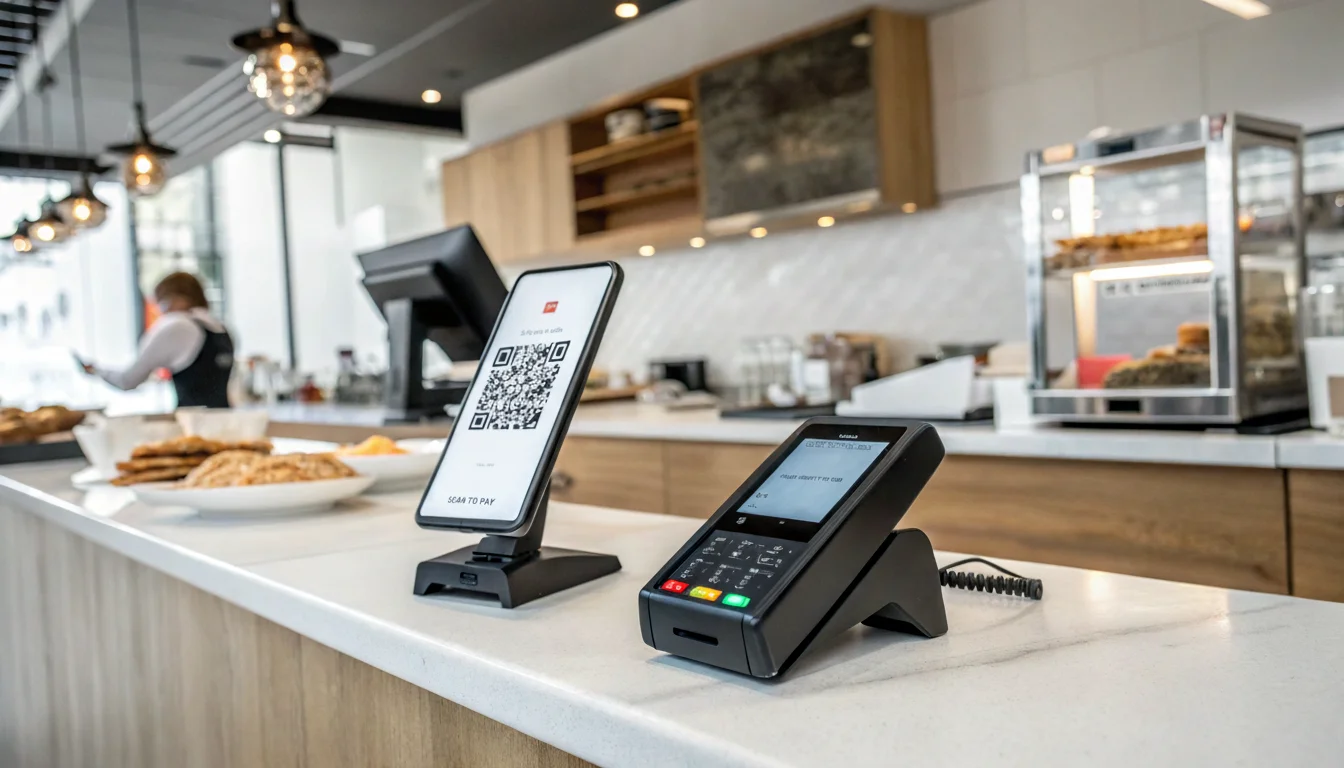
FeedMe describes itself not as a POS vendor but as a full restaurant operating system. The platform bundles point-of-sale terminals, QR table ordering, kitchen display systems, delivery aggregation (foodpanda, GrabFood, ShopeeFood), inventory tracking, CRM, accounting, and compliance tools into a single subscription. Pricing starts at RM39 ($8.70) per month for a basic package and scales to RM129 for the Premium tier, which adds delivery integrations and kitchen display screens.
Layered on top is AI-REMY, an AI assistant designed to handle upselling prompts, forecast demand, and optimize inventory levels. Google selected FeedMe for its inaugural AI Academy APAC cohort in October 2024. The roadmap includes what Tan calls an "AI consultant" feature—algorithmic recommendations for menu mix and pricing decisions.
It's slick positioning, though the proof will be in execution. Plenty of restaurant tech startups promise unified platforms; fewer deliver meaningful AI functionality that operators actually use. FeedMe's investors seem convinced. Jennifer Ho of Integra Partners and Boon Ping Chua of Cento Ventures both cited the company's product velocity and unified architecture as reasons for backing the round.
Since 2021, FeedMe has posted more than 10x revenue growth—a figure the company shared but declined to quantify in absolute terms.
The Embedded Finance Gambit

The February 2026 launch of embedded financial services—payments processing and merchant lending—could prove decisive. Small and mid-sized restaurants often struggle to access working capital, particularly in markets like Indonesia and Thailand where banking penetration lags. If FeedMe can offer both the software to run a restaurant and the capital to stock it, the platform becomes stickier, the switching costs higher.
Cento Ventures' investment thesis, according to Chua, hinges partly on that breadth: FeedMe isn't just selling software. It's positioning itself to own the payments layer and the capital layer, too.
That puts the company in direct competition with StoreHub, which claims 18,000 merchants across the region, along with Eats365, Slurp! (by Silentmode), and regional players like Restroworks. None have quite replicated Toast's integrated model in APAC, though several are trying.
Origins and Timing
Tan and CTO Lo King Wei founded FeedMe in 2018, launching a QR-enabled POS in October 2019. The timing turned out to be fortunate—or prescient, depending on how generous you're feeling. When COVID-19 hit months later, contactless ordering went from nice-to-have to existential necessity practically overnight.
In September 2021, the company acquired the Malaysia operations of Keruyun, a China-based restaurant tech provider, though details of that transaction remain murky. FeedMe also secured seed funding from BAce Capital in 2024, according to the company, though neither deal appears in public filings.
With 11,000 merchants, a fresh $5 million, and ambitions that stretch well beyond Kuala Lumpur, FeedMe is betting it can replicate its Malaysia success across a fragmented Southeast Asian market. One QR code at a time. One AI upsell at a time. One working-capital loan at a time.
Whether that's enough to become "the Toast of APAC" remains to be seen. But the company is making the right moves—and in a region where most restaurants still reconcile sales on paper, the bar for disruption isn't exactly sky-high.


