

Fifteen years. That's how long Rent the Runway has been trying to convince investors—and itself—that you can build a profitable business around shipping cocktail dresses back and forth across America. The company once fetched a valuation north of $1.7 billion. Today it's sitting on roughly $340 million in debt, scrambling to slash that figure to $120 million by year's end.
The recapitalization, announced mid-2025, is dramatic even by the standards of troubled tech darlings. But it's also clarifying. Because the question at this point isn't whether Rent the Runway survives its latest restructuring. The question is whether standalone fashion rental—the kind that requires buying inventory, warehousing it, cleaning it, shipping it twice per transaction—can ever work without a retail parent to absorb the costs.
The industry's graveyard suggests it can't.
Round Trip, Every Time
Here's what happens every time someone rents a dress: ship it out, wait, get it back, inspect it for damage, spot-clean or dry-clean it, photograph it again if needed, fold it, restock it. Then repeat. At Rent the Runway, these fulfillment costs—shipping both ways, cleaning, repairs, processing—have consumed between 26 and 29 percent of revenue every quarter. In the fourth quarter of fiscal 2024, the figure was 26.4 percent. Third quarter? 28.2 percent. By the first quarter of fiscal 2025, it crept to roughly 29.3 percent.
Traditional e-commerce, by comparison, operates with fulfillment costs in the high single digits. One shipment, one direction. Done.
The two-way logistics model doesn't just double the work. It multiplies the fragility. In September 2019, Rent the Runway attempted a warehouse management system upgrade. The rollout went sideways spectacularly. For weeks, the company couldn't fulfill orders reliably. CEO Jenn Hyman had to pause new subscriptions and orders until mid-October, issuing refunds and credits to livid customers. The chief supply officer left shortly after.
This wasn't a hiccup. It was a glimpse of the core constraint. When the system breaks in rental, it breaks everywhere at once.
China's YCloset, backed by Alibaba, shut down in August 2021 after five years of trying. High logistics and cleaning costs, the company said. Couldn't make the math work. In the UK, Onloan paused operations in February 2022, citing stock availability problems and fundraising difficulties made worse by tax rules that treated leasing unfavorably. The operational burden, it turns out, is unforgiving—even when you have deep-pocketed backers.
A Long List of the Dead
Le Tote bought Lord & Taylor in 2019 for $100 million, a bold bet on fusing rental with a legacy department store. Less than a year later—August 2, 2020—both filed for Chapter 11 bankruptcy. Lord & Taylor liquidated its stores. By spring 2024, Le Tote's website went dark following a liquidity crisis tied to ownership disputes and loan defaults. COVID killed occasion-driven demand overnight, but the complexity of running two incompatible models is what finished them off.
Armarium, a luxury rental platform, ceased operations in March 2020 after failing to find a buyer. Europe's Chic by Choice wound down by 2019, undercapitalized and unable to fund the international expansion the model demanded. Even CaaStle—a white-label "rental-as-a-service" provider that powered rental programs for Ann Taylor, New York & Company, and other brands—faced allegations in 2025 of massive financial misrepresentation, triggering a liquidity crisis and executive exits.
The pattern repeats: capital intensity, operational fragility, demand that swings wildly. Rent the Runway's active subscriber count collapsed from roughly 133,000 in 2019 to just 55,000 during the pandemic. The company shuttered all five physical stores permanently in August 2020, pivoting to a digital-first model with drop-boxes. Subscribers have since climbed back to around 146,000 to 147,000 by fiscal 2025. But revenue in the first quarter of that year was $69.6 million—down 7.2 percent year-over-year. Growth, for now, remains elusive.
The Exception That Proves the Rule
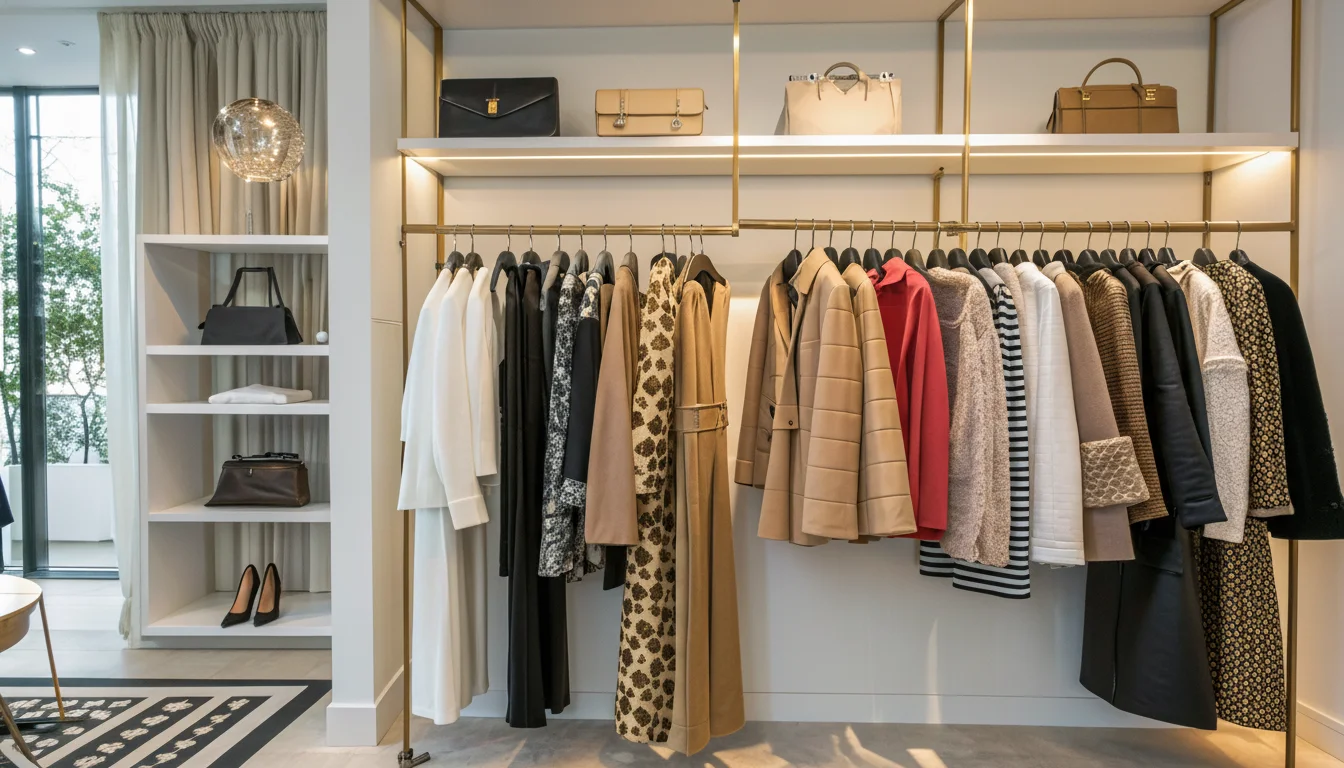
One rental service is profitable: Nuuly, owned by Urban Outfitters.
In its fiscal third quarter of 2023, Nuuly posted operating income of $300,000 on $65.5 million in revenue—an 86 percent jump from the year-ago quarter, when it generated $35.3 million in revenue and lost $3 million. By fiscal 2025, Nuuly reported full-year profitability with active subscribers climbing above 244,000.
The secret? Nuuly operates inside Urban Outfitters' existing retail infrastructure. It shares distribution centers. Merchandising teams. Buying power. Customer acquisition channels built over decades. The rental service doesn't bear the full cost of constructing a logistics network from scratch, amortizing fixed costs across a subscriber base that might never hit critical mass.
Rent the Runway has spent years trying to offload inventory risk. By fiscal 2024, roughly 70 percent of its products came through "Share by RTR" and exclusive designs—arrangements where brands share revenue instead of forcing RTR to buy and depreciate inventory outright. The shift reduces capital expenditure and the risk of being stuck with last season's trends. But it doesn't eliminate the fulfillment burden. Every item still requires cleaning, handling, and round-trip shipping, whether Rent the Runway owns it or not.
Fragility at Scale
Operational risk in rental concentrates in ways traditional retail avoids. The September 2019 software failure was instructive. What the company described as a "significant software transformation" turned into a two-week nightmare that required pausing all new business. Delays cascaded. Customer trust evaporated. The incident cost momentum heading into the holiday quarter—arguably the worst possible timing.
Fashion rental faces another fragility: its value proposition collapses when events disappear. COVID eliminated weddings, conferences, office culture. The market for renting a cocktail dress or a blazer for a work presentation vanished overnight. Rent the Runway laid off roughly 24 percent of its corporate staff in 2022 as part of broader cost-cutting. Even now, as management insists—during the fiscal 2024 earnings call—that they've "proven that we can operate a sustainable, nearly break-even business," the path forward looks narrow. Very narrow.
Then there's size and fit. If a subscriber can't reliably get the item they want in the size they need, the value proposition crumbles entirely. Rent the Runway has introduced "back-in-stock" notifications and risk-free replacement promises to mitigate churn. The company's fiscal 2025 strategy includes roughly doubling new inventory flow. But maintaining a trend-right, size-complete, durable assortment at scale demands either massive capital outlays or revenue-share partnerships that compress margins further.
Perhaps more than the founders expected.
The Sustainability Story Gets Complicated
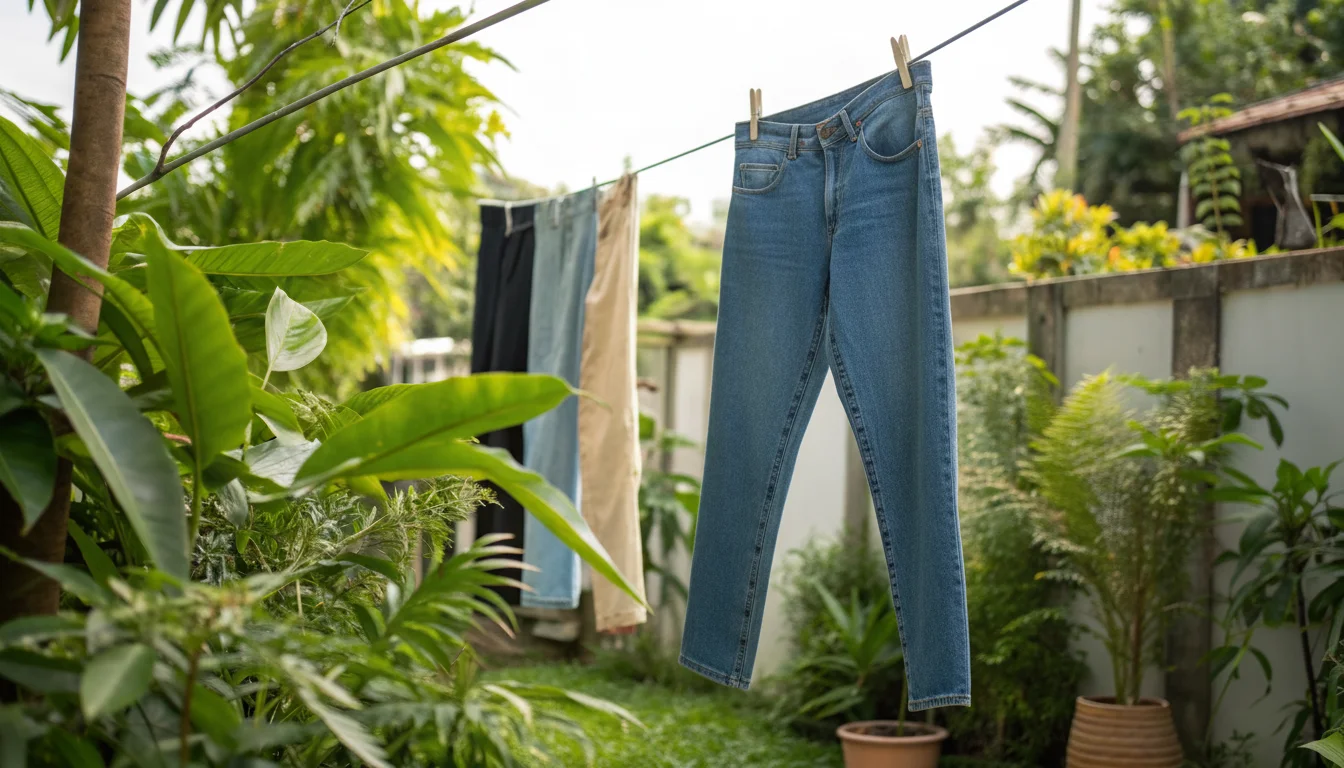
Fashion rental has long positioned itself as a circular, sustainable alternative to fast fashion. The environmental story is muddier than the marketing suggests.
A 2021 study published in Environmental Research Letters by Finland's LUT University analyzed the life cycle of a pair of jeans. The finding: rental could carry a higher climate impact than ownership, depending on assumptions about transportation distances and dry cleaning frequency. If logistics dominate the usage phase and packaging isn't minimized, the environmental benefit evaporates—or reverses.
Industry players have pushed back, noting that some rental services use wet cleaning or less toxic processes, and that high utilization rates can reduce the overall production footprint. The debate hinges on assumptions. What's clear is that the sustainability narrative—while genuine for some operators—doesn't resolve the unit economics. Good intentions don't pay the dry cleaning bills.
Peer-to-peer rental platforms like By Rotation have tried sidestepping the inventory and fulfillment burden by letting users list and lend their own items. By Rotation launched in the UK in 2019 and reported 330,000 registered users and 68,000 listings by 2025. The company raised a $2.9 million seed round in March and launched in the U.S. in May. Scaling in a geographically sprawling market like the United States, though, remains a formidable hurdle.
Breathing Room Isn't a Business Model

Rent the Runway's announced recapitalization—cutting debt from roughly $340 million to approximately $120 million and extending maturity to 2029—would, if completed by the targeted December 31, 2025, deadline, give the company breathing room.
But breathing room isn't profitability. The company's gross margin in the first quarter of fiscal 2025 came in at 31.5 percent, with adjusted EBITDA at negative $1.3 million. Management has emphasized the largest inventory acquisition plan in fiscal 2025, onboarding enhancements, stylist support, better back-in-stock visibility. Rent the Runway also monetizes end-of-life inventory through resale partnerships with Amazon and Saks OFF 5TH, creating additional revenue streams and customer acquisition channels.
Still, the fundamental tension remains. High logistics costs. Capital-intensive inventory. Operational complexity that scales badly. Demand volatility. The startups that have survived either sit inside a larger retail parent (Nuuly) or are attempting radical restructurings under the weight of debt (Rent the Runway). Those that couldn't raise enough capital, couldn't scale fast enough, or couldn't survive a macro shock—YCloset, Le Tote, Armarium, Onloan, Chic by Choice—are gone.
Fifteen Years Later
Rent the Runway has outlasted most of its competitors. That's not nothing. The company has proven something—tenacity, perhaps, or simply that there's a market for renting clothes if you can convince enough people to try it. But tenacity and market demand aren't the same as unit economics that close.
Whether Rent the Runway can prove the standalone model works at scale, or whether it simply proves that retail-embedded rental is the only viable path, will define the next chapter. Fifteen years in, the industry is still searching for an answer. The dry cleaning bills keep coming either way.


