

Tel Aviv-based Remondo emerges with a bold claim: sub-30-centimeter space imagery at one-hundredth the traditional cost
The conference room in London wasn't particularly grand. But on February 23, at the DGI gathering tucked into the city's financial district, an Israeli startup unveiled technology it believes could upend the economics of watching Earth from orbit.
Remondo, emerging from stealth with $20 million in seed funding, is making a pitch that's equal parts audacious and practical. The company says it can deliver satellite imagery sharp enough to identify individual people—resolution under 30 centimeters—at costs so low that persistent surveillance from space might finally make financial sense.
Whether that's marketing speak or genuine breakthrough remains to be seen. The seed round, which actually closed in June 2025, was led by 10D VC and drew in Ace Capital Partners, 2i Ventures, Chartered Group, Starburst Ventures, and VentureIsrael, along with several Israeli government grants. Not exactly a Series B mega-round, but substantial for a company that hasn't yet put hardware into orbit.
Mirrors and Math
At the heart of Remondo's bet is something called the Partial Aperture Imaging System. Instead of the enormous single mirrors that traditional reconnaissance satellites depend on—think glass discs the size of dining tables—PAIS uses a ring of smaller mirrors paired with a light modulator and computational imaging algorithms. The software stitches together what the hardware captures, digitally synthesizing high-resolution images.
"Two-to-three times cheaper than full aperture alternatives," CEO Ido Priel told Payload. He's aiming for the kind of cost structure that changes decision-making. Build, launch, and operate a satellite for $2 million or less.
To put that in perspective: ImageSat International's EROS C3, which launched in December 2022 with 30-centimeter resolution, carried a price tag around $186 million. Remondo's target would be roughly one-hundredth of that. Maybe less.
"PAIS architecture changes the unit economics to make persistent ISR from space a reality," said Amikam Norkin, managing partner at Ace Capital Partners. Norkin commanded the Israeli Air Force before transitioning to venture capital—a pedigree that carries weight in defense circles. ISR, for the uninitiated, stands for intelligence, surveillance, and reconnaissance. The phrase is shorthand for knowing what's happening, when and where.
The Hard Part: Proving It Works
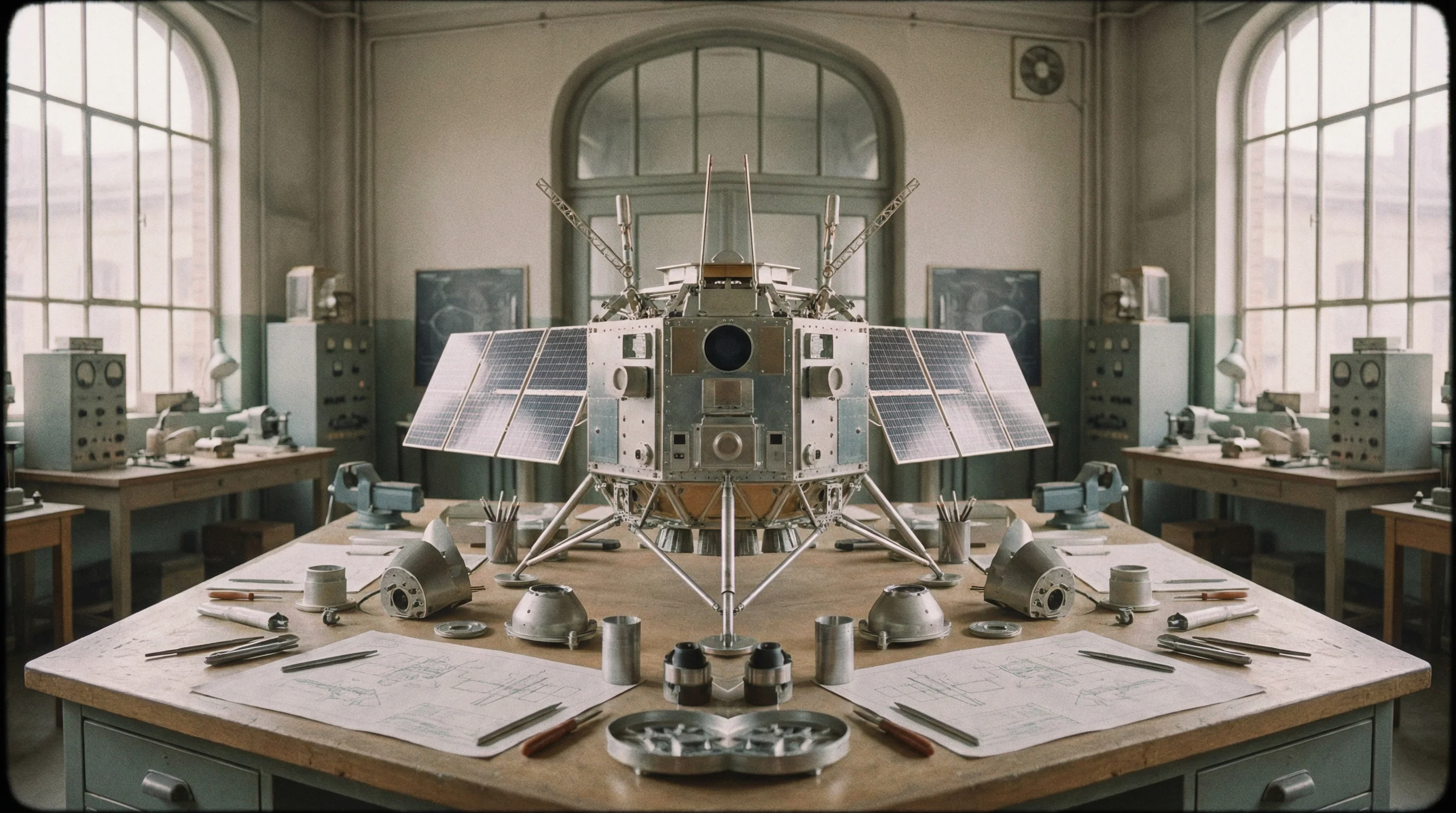
Here's where optimism meets physics. Remondo has lab-tested its technology. It has not, however, flown anything in space. That's a gap the seed funding is meant to close.
The company plans its first orbital mission for mid-2027, with a second demonstration satellite later that year. If those work—and that's a meaningful "if"—the roadmap calls for a constellation of roughly 32 microsatellites capable of revisiting the same spot on Earth in under an hour. The applications are straightforward: border security, maritime monitoring, infrastructure oversight. Remondo is pitching both sovereign ownership models, where governments control tasking and data custody outright, and commercial data-as-a-service arrangements.
Pat Antkowiak, who spent years as Northrop Grumman's CTO before joining Remondo as an advisor, endorsed the economics in company materials. That's worth noting, though advisors are paid to be enthusiastic.
A Crowded Sky

Remondo isn't the only company chasing cheap, high-resolution imagery. Not by a long shot.
BlackSky launched its Gen-3 satellites in February 2025 with 35-centimeter resolution—slightly less sharp, but already operational. Albedo, a U.S. startup that raised $35 million in January 2024, is targeting 10-centimeter resolution from very low Earth orbit. That would be genuinely remarkable. Albedo has since picked up $12 million in STRATFI funding and landed an NRO Stage 2 contract, suggesting the U.S. intelligence community is watching closely.
Founded in March 2022, Remondo secured Israeli Innovation Authority grants in 2023 and 2025 before raising venture capital. Co-founder and CTO Oren Berger has been hiring electro-optical engineers and physics developers—the kind of talent that doesn't come cheap, even in Tel Aviv. The company also incorporated a U.S. affiliate, Remondous, Inc., in Florida last October. That move signals ambitions beyond Israeli defense contracts, possibly eyeing Pentagon dollars or commercial customers in the U.S.
The Bigger Question

What Remondo is really betting on is this: that the gap between what satellite imagery costs today and what customers would pay if it were cheaper is enormous. Persistent monitoring—knowing what's happening everywhere, all the time—has historically been reserved for superpowers with deep pockets. If Remondo can collapse the cost curve the way it claims, that changes.
Maybe. The company still has to prove its satellites work. The optics have to perform. The algorithms have to deliver. And the constellation economics—32 satellites is a lot to build, launch, and maintain—have to hold up under real-world conditions.
But if they do? The market for eyes in the sky could look very different by the end of the decade.


