

Dr. Yandong Guo has a phrase for what's happening in robotics right now: the shift "from can-run/can-jump to can-work." It's an awkward formulation—the kind of thing that sounds better in Mandarin, probably—but it captures something essential about the moment his two-year-old company finds itself in.
AI² Robotics, operating out of Shenzhen with backing that just crossed RMB 1 billion in a February 2026 B-round, is making a counterintuitive wager. The startup believes its proprietary embodied foundation models can outmaneuver Tesla, a constellation of well-funded American competitors, and China's own manufacturing giants in the race to put humanoid robots into semiconductor fabs, biotech clean rooms, and automotive assembly lines. The company's valuation now exceeds RMB 10 billion. Its AlphaBot 2 humanoid is already logging hours in environments where a misplaced movement means contaminated wafers or ruined experiments.
This isn't about demonstration videos anymore. The question now is whether end-to-end vision-language-action models—systems that map what a robot sees and hears directly into physical movement—can crack the brutal economics of industrial automation. And who gets there first.
When the Inflection Happens
The numbers tell competing stories. Global industrial robot installations hit 542,000 units in 2024, according to the International Federation of Robotics. Asia accounted for 74% of new deployments, with China alone representing 54% of the worldwide total. The operational stock globally: roughly 4.66 million units.
Traditional industrial robots, though, aren't humanoid. And humanoids aren't yet traditional.
Goldman Sachs has the humanoid market at approximately $38 billion by 2035, with projected shipments of 1.4 million units. Their optimistic scenario pushes as high as $154 billion. Morgan Stanley went considerably further last May, forecasting a $5 trillion market by 2050 with up to 1 billion units deployed. UBS estimates 2 million humanoids within a decade, 300 million by midcentury.
The wide variance in these forecasts reflects genuine uncertainty about unit economics and adoption curves, not disagreement about market potential. Everyone believes the market exists. No one quite knows when it arrives.
What's shifted in the past 18 months is the technology enabling it. Vision-language-action models—VLAs that convert visual inputs and natural language instructions directly into robotic actions—have matured from research curiosities into deployable systems, at least in theory. Google DeepMind's RT-2, demonstrated in 2023, showed that VLAs trained on web data plus robot trajectory logs could boost zero-shot task success from 32% to 62%. Stanford's OpenVLA and Physical Intelligence's pi0 series have since established baselines. NVIDIA's Isaac GR00T foundation model family, released in phases through 2025 and into this year, brought open, customizable models with dual System 1/System 2 architectures—fast reflexes paired with deliberative reasoning—to the broader robotics ecosystem.
That ecosystem approach matters more than it might seem. When NVIDIA's Jensen Huang declared "the age of generalist robotics is here" at GTC 2025, he wasn't just announcing GR00T N1. He was announcing a platform: simulation frameworks (Isaac Sim, Isaac Lab, Cosmos, the Newton physics engine), pre-trained weights available on Hugging Face, and a partner network spanning Boston Dynamics, Agility, Sanctuary AI, 1X Technologies, and dozens more.
It's the Android strategy applied to robots. Whether it works the same way is another question entirely.
The Data Advantage—And the Questions Around It
The shift toward end-to-end VLAs is being accelerated by three converging forces: data availability, compute scale, and labor economics. China's structural advantage in the first two categories is real, if contested.
Manufacturing density creates scenario diversity. That's AI² Robotics' bet, anyway. Dr. Guo emphasizes "data closed-loop + scenario compounding" in the company's strategy—a phrase that means, more or less, running pilots simultaneously across multiple industries to teach the models faster. The company operates trials in semiconductor fabs (via Zhejiang Jingneng Microelectronics, part of Geely Tech Group), biotech facilities (a partnership with Bloomage for sterile filling and visual inspection), and automotive assembly lines. Dr. Guo argues this multi-vertical approach accelerates model generalization faster than single-domain deployments, which makes intuitive sense. Whether it actually works at scale is unproven.
China's domestic robot installations outpaced the U.S. by approximately 10 to 1 in 2024. Chinese manufacturers now hold over 57% of their home market share. That's a lot of potential training data.
On the compute side, AI² Robotics reports operating a thousand-GPU training cluster for its GOVLA foundation model—Global & Omni-body VLA, in company parlance. The firm claims its open-sourced FiS-VLA variant "outperformed π0 by 30%" and received endorsement from Meta's Yann LeCun. Independent benchmarks, it should be noted, remain sparse. LeCun himself has separately critiqued current LLM-style generative architectures for physical intelligence, arguing instead for predictive "world model" systems. The technical debate underscores how early-stage this field remains—everyone's still arguing about first principles.
Labor economics complete the triangle. Deloitte and the Manufacturing Institute project U.S. manufacturing will need up to 3.8 million workers by 2033, with 1.9 million roles potentially going unfilled. Humanoids don't need to match human performance to be economically viable. They need to cross a threshold where unit cost plus operational cost beats unfilled-headcount opportunity cost.
Current humanoid platforms typically run $100,000 to $200,000, according to Barron's. Unitree's experimental R1, priced at roughly $5,900, demonstrates the cost curve is moving fast. Production models like UBTECH's Walker S2 and AI²'s AlphaBot 2 remain in the six-figure range, though. The gap between experimental hardware and production-grade systems is where many robotics companies have historically foundered.
Inside AI²'s Vertical Play
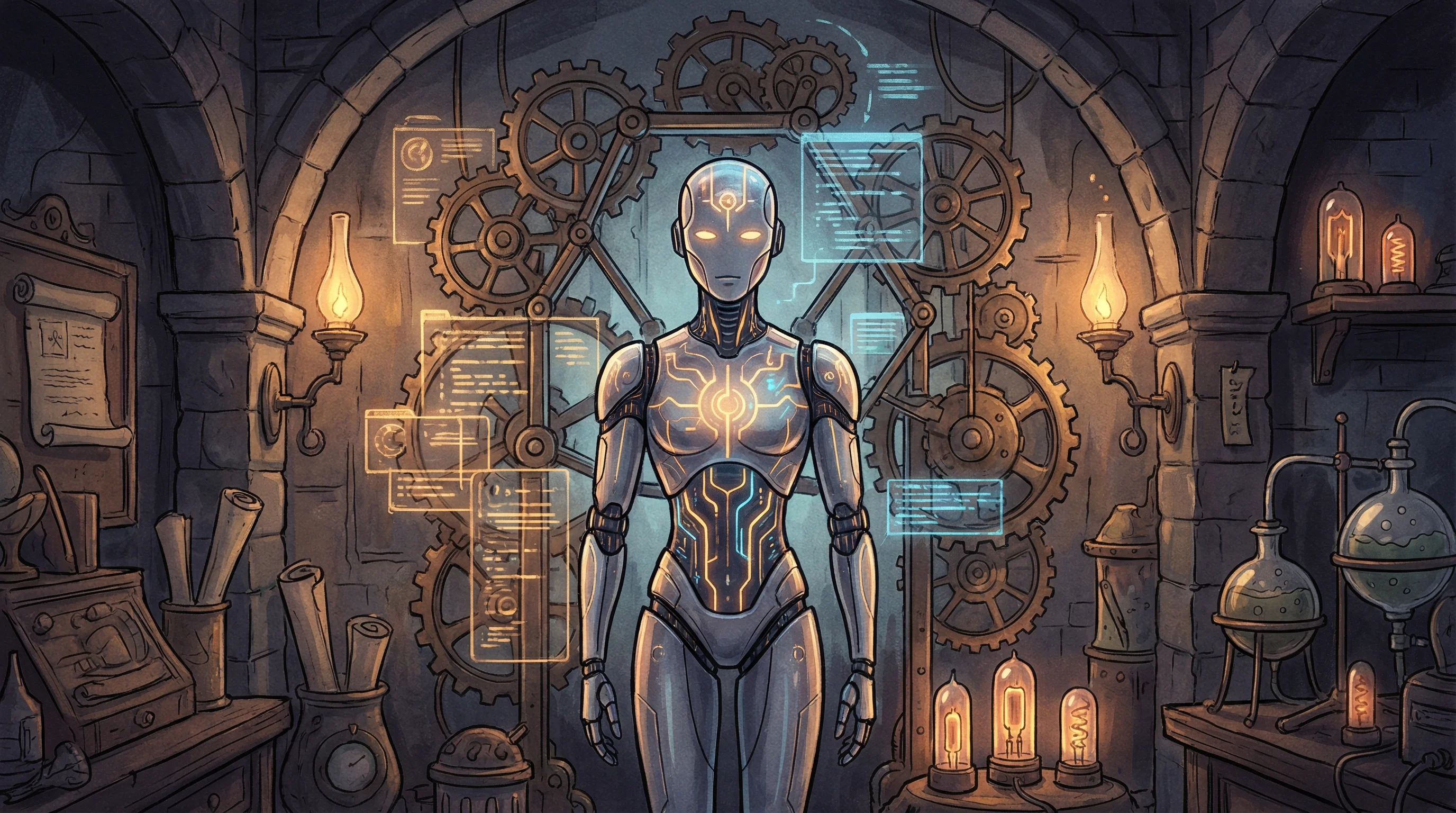
AI² Robotics' strategy centers on vertical integration and proprietary models. Founded in April 2023 by Dr. Guo—formerly Chief Scientist at XPeng and OPPO, with prior stints at Microsoft Research—the company positions itself as "AGI-Native." That means building AlphaBot humanoids around its Alpha Brain embodied foundation model rather than adapting hardware to off-the-shelf AI, which is the more common approach.
AlphaBot 2, unveiled April 17, 2025, features 34+ degrees of freedom, 360-by-360-degree sensing, a waist-leg lift enabling a 0-to-240-cm vertical workspace, 700mm single-arm reach, and 6+ hours of operation. The integrated System 1/System 2 stack mirrors NVIDIA's GR00T architecture: fast reactive control paired with slower deliberative planning. GOVLA provides full-body VLA control, theoretically allowing the robot to generalize across tasks with minimal task-specific fine-tuning.
Theoretically.
The Peking University joint lab, announced April 17, 2025, and confirmed on PKU's Computer Science site, lends academic credibility. Dr. Guo also co-authored RoboMamba, a 2024 VLA paper using state-space models, with collaborators from PKU and Berkeley. The technical pedigree matters in a field where benchmarking is still immature and many performance claims remain company-reported rather than peer-verified.
AI²'s commercial traction is real but early-stage. The semiconductor deployment with Jingneng Micro targets wafer loading, consumables replacement, and precision sorting—tasks where contamination risk and precision requirements strongly favor automation over human workers in bunny suits. Biotech work with Bloomage (sterile filling, unpacking, disinfection, visual inspection) addresses similar clean-room constraints. The company references "international automaker orders" and plans airport and community service pilots in the second half of 2025.
Revenue in 2024 reached "tens of millions RMB," per the company's January 2025 Pre-A announcement. That's meaningful proof-of-concept revenue. It's not yet scale.
Compare this trajectory to Figure AI's. Figure announced a commercial agreement with BMW in January 2024, partnered with OpenAI in March, and by 2025 was claiming long-running production shifts and efficiency gains at BMW's South Carolina plant. Figure's backing—OpenAI, Microsoft, NVIDIA, Jeff Bezos—signals serious confidence. BMW's public statements about results have varied, though, and independent verification of cycle-time improvements remains limited.
Agility Robotics' Digit has been testing with Amazon since October 2023 in logistics roles—a narrower but potentially more tractable use case than general manufacturing. UBTECH's Walker S and S2 present yet another model: massive domestic scale in China. Press releases and trade publications cite order books approaching RMB 800 million by late 2025 and targets of 5,000+ units in 2026, with deployments or pilots at BYD, Audi FAW, Geely, and Foxconn.
Yet the Financial Times reported current efficiency at 30 to 50 percent of human baseline on certain tasks. That gap is typical industry-wide. These are not human replacements yet. They're supplements in constrained environments where humans don't want to work, or can't scale fast enough.
Tesla's Optimus remains the shadow competitor everyone's tracking. Public statements indicate Gen-3 hardware arriving in 2026, expanding internal factory tasks, and the usual ambitious Elon Musk targets that may or may not materialize on schedule. Tesla's advantages—vertical integration, manufacturing scale, brand power—are formidable. Its disadvantage might be legacy: retrofitting humanoids into existing Tesla factories could prove less flexible than AI²'s greenfield approach of co-designing robots and processes with new partners from the start.
Then again, Tesla has a habit of making skeptics look foolish.
The Variables That Matter

The timeline for commercial viability clusters around a near-term inflection, at least according to the people building these things. Dr. Guo projects business-to-business scale-up within three years from 2025 and a consumer "iPhone moment" in five to seven years. NVIDIA's GR00T ecosystem and the flood of open models (OpenVLA, pi0, Octo) are compressing development cycles, or so the argument goes.
Three critical variables will determine who actually wins.
First, real-world reliability metrics—mean time between failures, uptime percentages, safety incident rates—remain largely unpublished outside company claims. ISO/TS 15066 collaborative robot standards and ISO 10218 industrial robot safety frameworks provide a baseline, but humanoids operating in close proximity to workers push these guidelines into uncharted territory. OSHA and equivalent regulators in Europe and China are still defining enforcement. The EU AI Act's general-purpose AI obligations took effect August 2, 2025, with full applicability by August 2 of this year; foundation-model-powered robots will face transparency and risk management requirements in Europe that could slow deployments considerably.
Second, the data flywheel advantage is contested. AI² emphasizes its multi-industry access to diverse operational data. NVIDIA's ecosystem approach distributes that advantage across dozens of partners. The question is whether embodied AI follows the LLM pattern—where scale and data compound into winner-take-most dynamics—or the smartphone pattern, where multiple platforms coexist. Dr. Guo's framing of China's "supply-chain and data advantages" is plausible. It's not deterministic.
Third, unit economics remain unproven at scale. Current humanoids cost roughly as much as a mid-tier luxury sedan. The path to sub-$20,000 units, which analysts cite as necessary for mass adoption, requires not just hardware cost reduction but operational costs (maintenance, downtime, software updates, safety compliance) falling below fully loaded human labor. Unitree's R1 demonstrates hardware can get cheap fast. Whether that translates to reliable production systems is another matter entirely.
China's government support—MIIT's 2023 humanoid robot innovation guidance, the 2025 formation of standardization committees for humanoids and embodied intelligence—provides tailwinds for domestic firms. But the National Development and Reform Commission issued a cautionary note about a potential "investment bubble" in January 2026, signaling concerns about overfunding and underperformance. The U.S. is circling similar policy territory, with late-2025 reporting on potential federal robotics initiatives and early-2026 talk of executive actions that may or may not materialize.
The Bet on the Table
For technology investors and enterprise executives, the opportunity probably isn't betting on a single platform. It's understanding that the shift from task-specific automation to general-purpose embodied AI is happening faster than supply chains can adapt—whether the robots themselves are ready or not.
Manufacturing leaders face a strategic choice: build internal robotics capabilities around open platforms like GR00T, or partner with integrated providers like AI² Robotics, Figure, or UBTECH who bundle hardware, software, and deployment services. There's risk in both directions. Open platforms offer flexibility but require internal expertise. Integrated providers offer turnkey solutions but potential vendor lock-in.
AI² Robotics' wager—that proprietary embodied foundation models trained on diverse real-world scenarios can generalize better than open alternatives—is bold. Maybe too bold. The company's advantage is focus and vertical integration. Its risk is that NVIDIA's ecosystem scales faster, or that Tesla's brand and manufacturing muscle simply overwhelm the field.
Dr. Guo's background spans Microsoft Research, XPeng, OPPO, and now a startup in one of China's most competitive tech hubs. That pedigree suggests he understands the game he's playing, the odds he's facing.
Whether AlphaBot 2 becomes a category leader or a footnote will hinge on execution in the next 18 months: Can AI² convert pilots into production deployments? Publish third-party-validated performance data? Scale faster than capital burns? The semiconductor and biotech verticals are smart choices—high-value, precision-critical environments where even 50% human efficiency at 24/7 uptime changes the economics fundamentally. If the GOVLA model generalizes as claimed, AI² could be the first AGI-native robotics company to prove the thesis at industrial scale.
Could be.
The race is no longer about which humanoid can do the most impressive demonstration. It's about which company can make the economics work in a factory, a lab, or a warehouse—and do it repeatably, boringly, profitably. That's the race AI² Robotics is running. And in Shenzhen, with a thousand-GPU cluster and partnerships across three verticals, they're running hard.
Whether they're running fast enough is a question for 2027.


