

Tensr, fresh from Y Combinator, has opened a factory in the Bay Area that promises same-day turnaround for everything from prototypes to production runs. The ambition: autonomous manufacturing for the robots building our future.
The 12,000-square-foot facility sits in an industrial pocket of the Bay Area, humming with surface-mount technology lines, machining cells, and additive manufacturing equipment. Since going operational this summer, Tensr has positioned itself as something unusual in the contract manufacturing world: a factory designed to move from initial order to finished robotics components in a single day, serving clients that include major U.S. robotics firms and, improbably, the International Space Station.
The startup's pitch reads like an attempt to collapse the traditional supply chain into a computational problem. Tensr describes its facility as "the physical equivalent of cloud compute" and envisions a future state where the entire operation runs autonomously. "The entire factory is a data harness we can 'backprop' learnings through," the company says in materials posted to Y Combinator's site, borrowing the language of machine learning to describe physical production.
Whether that vision materializes remains to be seen. For now, Tensr operates with a seven-person team and a client roster it won't fully disclose, though Y Combinator notes the startup is "actively manufacturing customer orders" for some of the country's largest robotics companies. Funding details include an estimated $125k amount from Y Combinator, though the company has not officially disclosed the full extent of its pre-seed round.
From Racetrack to Factory Floor
All three founders emerged from UC Berkeley's robotics program, where they built autonomous race cars capable of speeds that would unsettle most human drivers. Eric Berndt, now CEO, led machine learning efforts for the university's AI Racing Tech team. Adith Sundram, the CTO, handled controls. C.K. Wolfe, still pursuing a computer science PhD at Berkeley and conducting research at the Berkeley Artificial Intelligence Research lab, managed the team.
Their racing credentials carry weight in certain circles. At CES 2025, the team executed a 162 mph autonomous overtake to win the Indy Autonomous Challenge passing competition, according to organizers. That sort of real-time decision-making under constraint translates, the founders believe, to manufacturing optimization problems.
The leap from racing to production might seem counterintuitive, but Berndt and his co-founders see parallels. Both domains require tight feedback loops, rapid iteration, and systems that adapt without constant human oversight.
A Different Manufacturing Model
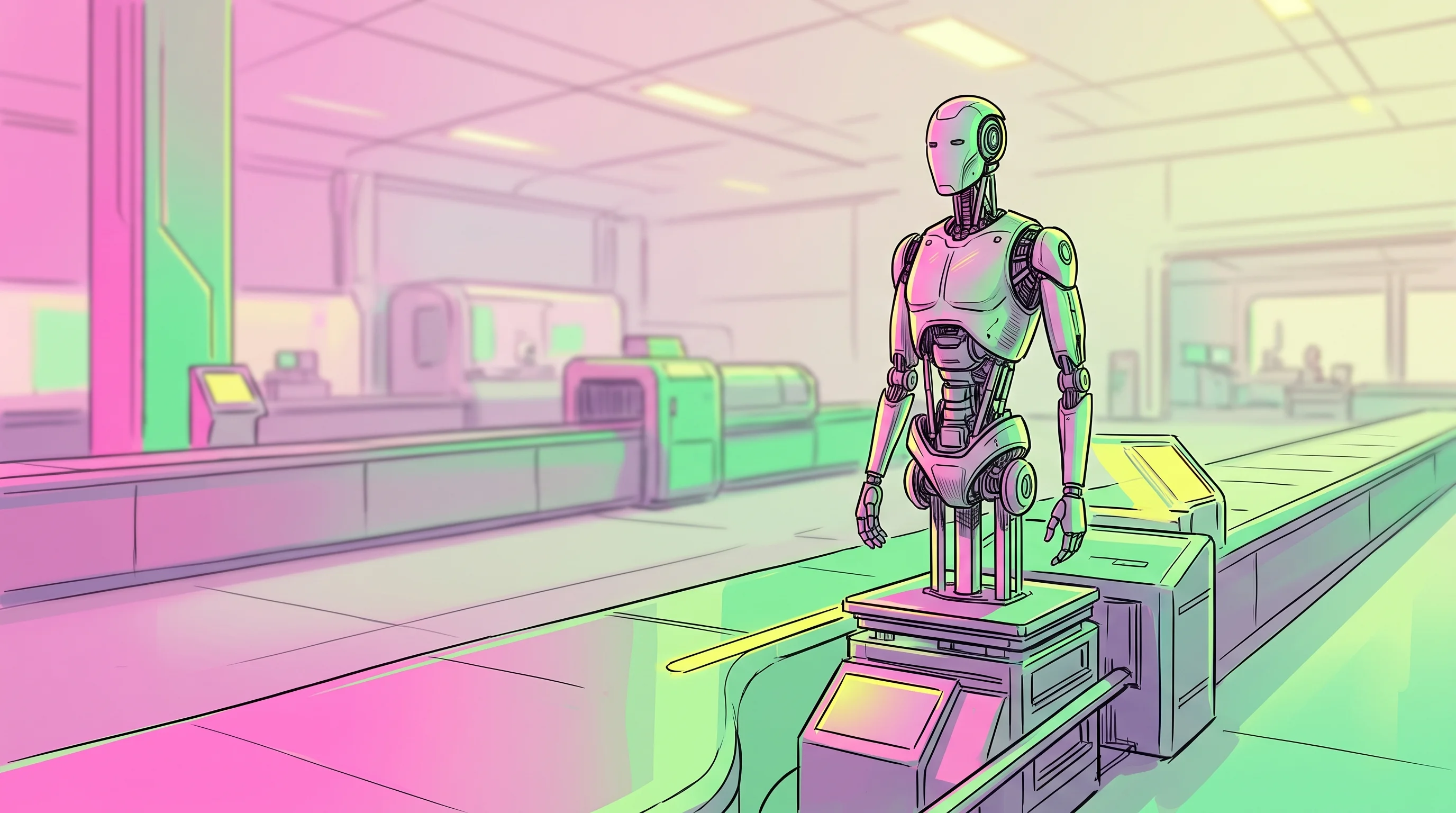
Tensr enters a landscape where humanoid robotics companies are building their own sprawling production facilities. Agility Robotics runs a 70,000-square-foot factory in Oregon with stated capacity exceeding 10,000 robots annually, and added a 60,000-square-foot R&D site in Fremont in July. Figure AI reported in April that it had reached a throughput of one robot per hour. In April, 1X Technologies began full-scale production at its Hayward, California facility, discussing targets of 10,000 units per year.
Tensr's model diverges sharply from these vertically integrated operations. Rather than manufacture a single product at volume, the startup positions itself as a flexible contract manufacturer serving multiple robotics clients. That approach puts it in loose competition with modular automation platforms like Vention, which recently announced a cloud-first system at a trade show, and with established electronics manufacturers like Jabil and Sanmina.
The company's stated goal involves autonomously handling supply chain logistics, design for manufacturing, machine retooling, robotic adaptation, inspection, packaging, and shipping within a day of receiving an order. It's an ambitious scope that touches nearly every phase of production, compressed into a timeline most manufacturers would consider impractical.
Space Ambitions
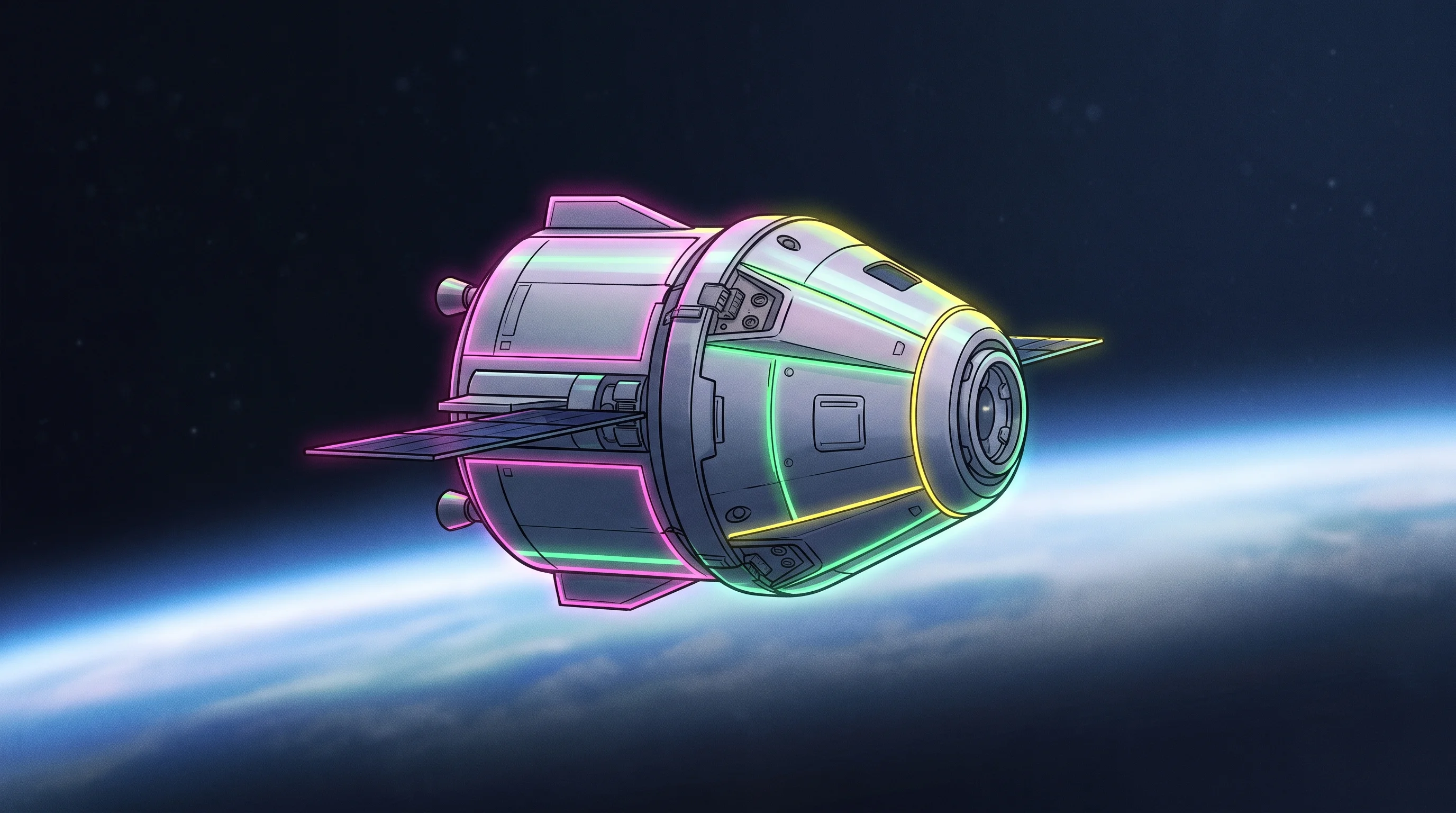
In August, the ISS National Lab selected Tensr for its Orbital Edge Accelerator, a program supporting in-space manufacturing ventures. The accelerator channels between $500,000 and $750,000 in private capital to each participant through partner networks, with a demonstration event planned for San Francisco in December.
"This year's selected companies reflect the incredible breadth of innovation," Ray Lugo, CEO of the ISS National Lab, said in an August announcement. Tensr has indicated that hardware destined for the space station is planned to launch in December 2026, though such timelines in the aerospace sector tend to shift.
The company also runs what it calls a "Made in America" program, helping firms relocate production domestically to address tariff exposure and market access concerns. A policy page updated in early September outlines the initiative, though details on participating companies remain sparse.
The Long Game
At the Actuate conference in San Francisco in August, Tensr exhibited hardware alongside other robotics startups. "Physical AI has graduated from the lab to the real world," Foxglove CEO Adrian Macneil said in a program announcement that Tensr subsequently quoted.
The company has teased a whitepaper that was scheduled for release on a Tuesday morning in late September, though whether that document materialized on schedule remains unclear. Tensr's careers page, checked in recent weeks, indicates the company is not actively hiring but continues to review applications.
For a startup pursuing what it describes as "a fully autonomous dark factory," Tensr faces the challenge every hardware company confronts: proving the concept at scale. The robotics industry has seen no shortage of ambitious manufacturing promises in recent years. Some have delivered; others have quietly recalibrated their timelines.
Tensr's bet is that speed and flexibility, not just volume, will define the next generation of robotics manufacturing. Whether customers will pay a premium for 24-hour turnaround, and whether the startup can deliver that consistently while moving toward autonomy, will determine if the Berkeley racing team's latest project reaches the finish line.


