

Jorge Heraud has a particular way of explaining what his startup does. He'll mention NASA's Curiosity rover analyzing Martian rocks, then pivot to Iowa farmland and the stubborn problem of guessing what nutrients sit six inches underground. The connection isn't obvious until you see the lasers.
TerraBlaster, the Menlo Park company Heraud co-founded, closed a $12.5 million seed round in August 2026 to scale a technology that sounds like science fiction: a farm implement that drags behind a tractor, opens shallow trenches, and fires laser pulses into the soil 20 times per second to map nutrient levels in real time. Ulu Ventures led the financing, with Khosla Ventures, Trailhead Capital, and eight other investors joining, according to law firm Fenwick & West. That brings the startup's total funding to $16.5 million since its founding.
The system relies on laser-induced breakdown spectroscopy, the same technique NASA uses on its Mars rovers to decode alien geology. TerraBlaster's Blaster 1000 travels up to six miles per hour across fields, mapping phosphorus, potassium, pH, and more than a dozen other properties across six depth layers down to about six inches. Resolution clocks in at roughly 80 feet by 80 feet, far tighter than traditional soil testing. The company employs 10 people split between California and Iowa.
Steve Reale, general partner and CFO at Ulu Ventures, joined TerraBlaster's board following the close.
The Blue River Lineage
Heraud knows precision agriculture. He co-founded Blue River Technology, which John Deere bought in 2017, then served as a vice president overseeing automation and autonomy at Deere. Dr. Matt Colgan, TerraBlaster's CTO, was an early Blue River engineer who developed the computer vision behind the See & Spray system. He holds a PhD from Stanford focused on remote sensing and machine learning for plant traits.
The third co-founder and board member, Dr. Pablo Sobron, built LIBS instruments for NASA, the Canadian Space Agency, and SETI before starting Impossible Sensing. That pedigree matters in a field where hardware credibility separates funded startups from garage projects.
"With our technology, there's no reason to suffer suboptimal yields by applying nutrients to a field based on low-resolution or old measurements," Heraud said when announcing the financing.
TerraBlaster claims its system can deliver up to $45 per acre in combined savings through cheaper lab work and yield gains as high as 20% in nutrient-starved zones. Those are marketing numbers, naturally, but they hint at why investors are paying attention. Soil variability costs farmers money. A field might have pockets of phosphorus deficiency next to zones with adequate levels, but conventional grid sampling at 2.5-acre spacing misses that nuance. Farmers either over-apply fertilizer everywhere or accept uneven yields.
Money Goes to Manufacturing
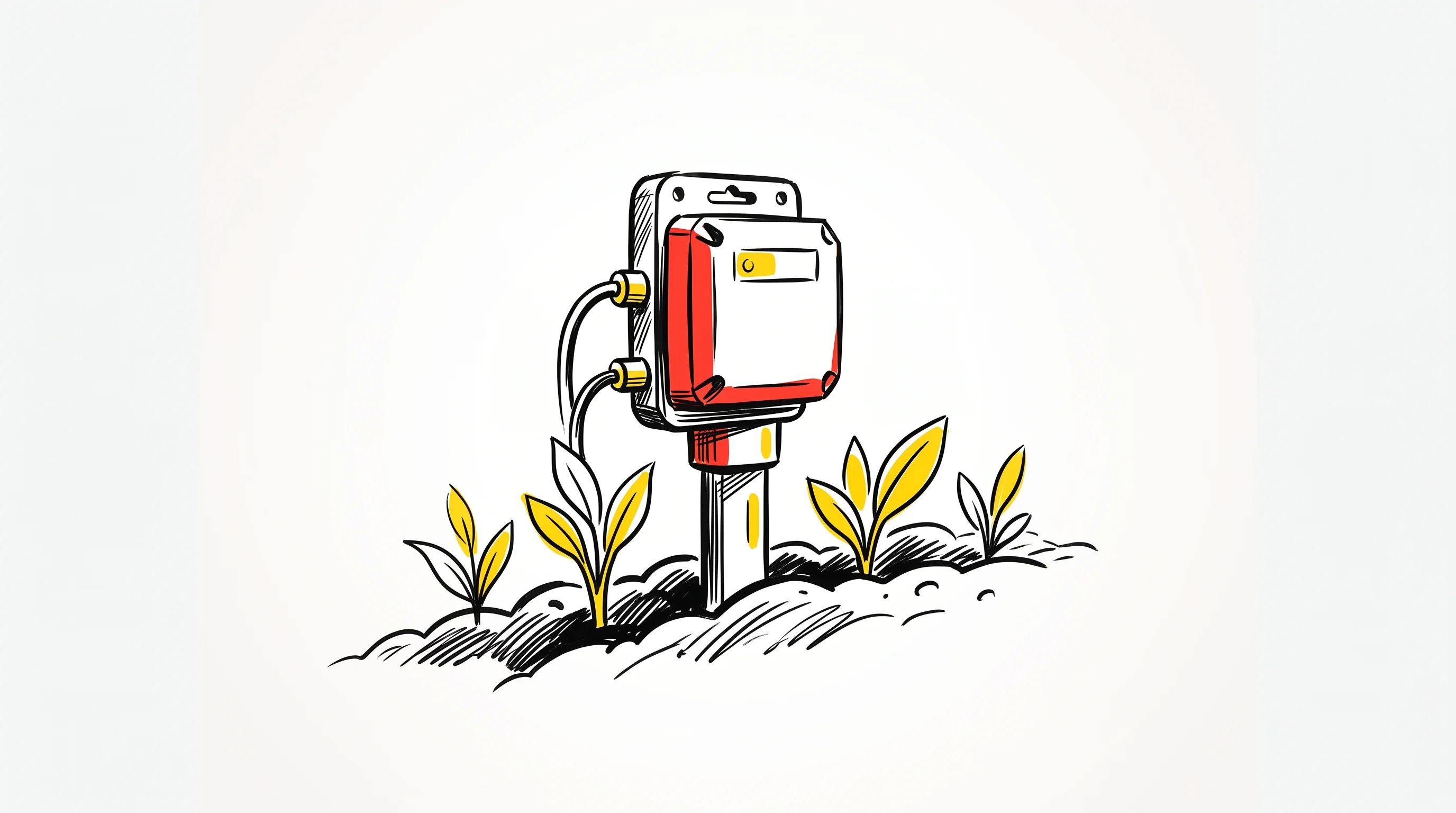
The fresh capital will fund mass production of sensor hardware, expand agronomy and data-science hiring, and accelerate field trials. TerraBlaster plans demonstrations with Midwest growers and retailers later this year, with pre-sales opening in the fall and first deliveries slated for spring next year. Commercial operations are targeted to begin sometime in the following year, though agriculture technology timelines have a way of stretching.
The Hort Innovation Venture Fund, managed by Artesian on behalf of the grower-owned research organization in Australia, invested in the round and began testing the technology down under, Fresh Plaza reported.
Crowded Precision Race
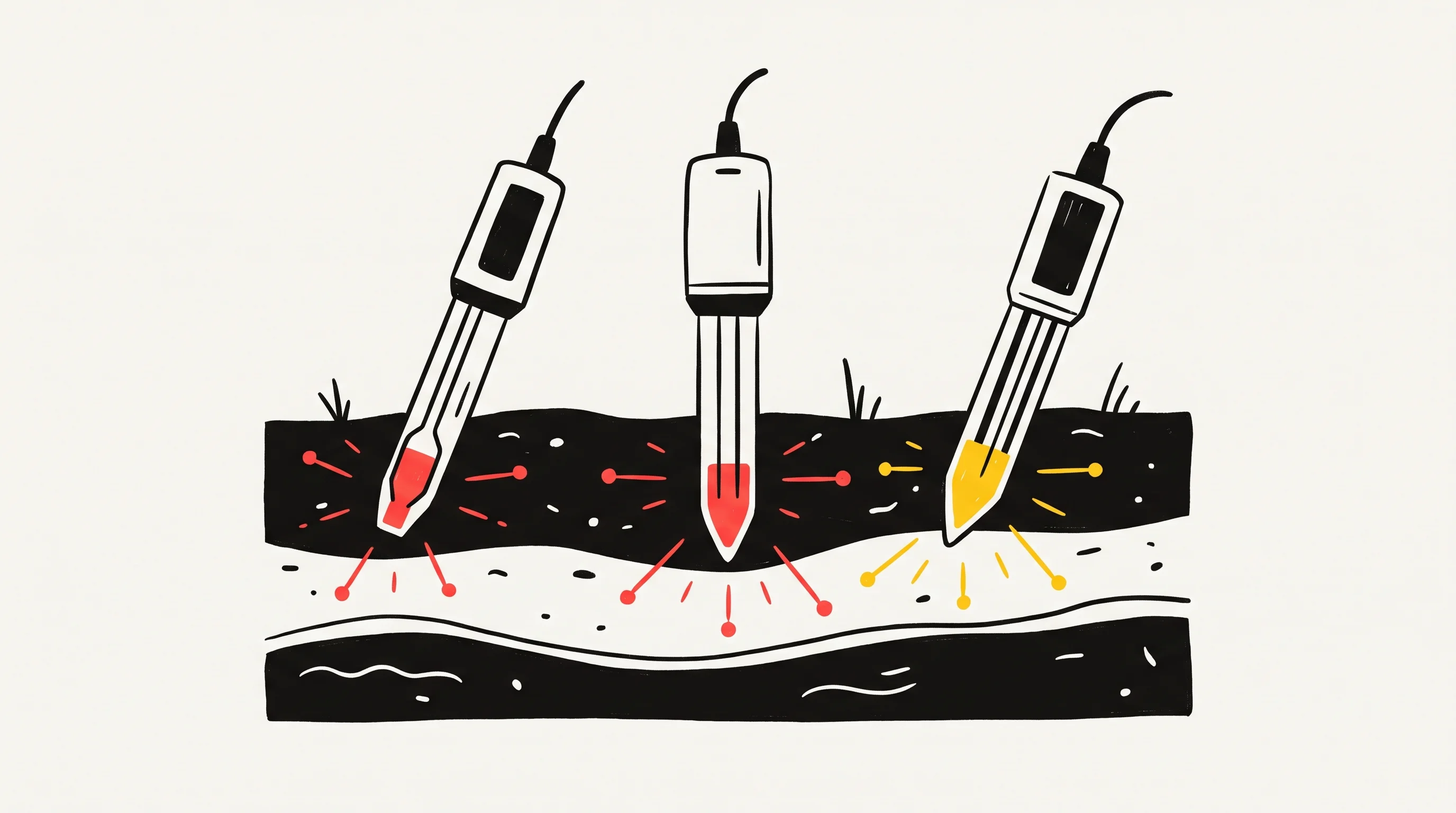
TerraBlaster isn't alone chasing high-resolution soil data. Germany's Stenon raised an €18 million Series B last summer to scale real-time nitrogen sensing, according to the company's announcements. Canada's ChrysaLabs secured an $11 million Series A in 2023 for a spectroscopy-based soil probe. SoilOptix, another Canadian outfit, offers gamma-ray sensors already in use for variable-rate fertilizer programs.
Each approach has trade-offs. Gamma-ray systems are passive and less expensive but offer coarser data. Spectroscopy probes require stopping to take readings. TerraBlaster's laser system promises speed and depth resolution, though at what upfront cost remains unclear.
"TerraBlaster's experienced team is bringing precision measurement to a massive market where better data means more productive, more sustainable harvests," Reale said.
The broader question is whether growers will pay for granular soil intelligence or stick with cheaper, rougher methods that have worked well enough for decades. Heraud is betting that tighter margins and environmental pressures will tip the scales. Maybe he's right. The lasers, at least, work.


