

For ten months, a Figure humanoid robot worked the floor at BMW's sprawling South Carolina manufacturing complex, shuttling components between stations. The numbers tell one story: nearly 90,000 parts moved, more than 30,000 vehicles touched, 1,250 operating hours logged across five-day work weeks. The robot endured ten-hour shifts, rarely faltering.
But the statistic BMW highlighted in its February 2026 assessment wasn't about endurance or precision—it was about speed of learning. Motion sequences trained in the lab transferred into stable shift operations quickly. Perhaps more quickly than anyone expected. That detail, easy to miss in the cascade of deployment figures, reveals where the real competition in robotics has moved.
It's no longer about building a better robot. It's about teaching machines to think.
Hardware Becomes a Commodity
The robotics industry is drowning in hardware announcements, each one breathlessly positioning itself as the breakthrough. China's government set a target—at least 10,000 humanoid robots in commercial deployment by the close of 2026, according to Caixin's June reporting. Lingyi iTech's Beijing factory began shipping humanoids off its new production line in April. Boston Dynamics aims to have its Atlas robot ready for factory work by 2028. Apptronik raised $520 million in February 2026 to manufacture its Apollo platform at scale.
The list sprawls on, and on.
Yet Gartner, the research firm not known for dampening Silicon Valley enthusiasm without cause, issued a stark forecast in January 2026: fewer than 100 companies would progress beyond experimental deployments. Fewer than 20 would successfully scale humanoid robots into full manufacturing and supply chain production by 2028. Why? Autonomy claims frequently don't hold up under scrutiny, teleoperation—humans controlling robots remotely—remains pervasive, and the dexterity of robotic hands still lags badly, industry observers told TechTarget in June.
The broader industrial robot market hit $16.7 billion in value last year, with factory robot demand doubling over a decade, per the International Federation of Robotics. But that growth largely reflects traditional automation: purpose-built arms executing repetitive, predictable tasks. Humanoids face something messier. They must navigate unstructured environments, manipulate unfamiliar objects, adapt to new assignments without months of reprogramming. That's a different order of challenge.
The Intelligence Thesis
"Hardware is converging; intelligence is the biggest bottleneck."
That declaration came from the founders of Intelligence Factory, a five-person startup that emerged from Y Combinator's Spring 2026 batch. Yash Sinha and Jalaj Shukla are building what they describe as "human intelligence for robots"—general-purpose manipulation intelligence trained from human demonstrations. They've developed custom gloves that record what people see, do, and feel during tasks, then retarget those movements to various robot platforms for warehouse, grocery, and data center deployments.
It's an audacious pitch from a team with minimal public footprint beyond a May launch post. But they're hardly alone in betting that the real moat in robotics will be software, not servos.
NVIDIA announced its GR00T N1.7 open vision-language-action model for humanoids at its March 2026 GTC conference, positioning it as commercially viable. Microsoft launched Rho-alpha in January, a robotics model derived from its Phi language architecture, focused on bimanual manipulation and heavy reliance on synthetic data generated in Isaac Sim. Google DeepMind paired its Gemini model with Boston Dynamics robots for factory applications, detailed in early January reports.
The pattern? Foundation models trained on massive datasets. Universal Robots partnered with Scale AI in March 2026 to launch the UR AI Trainer, an imitation-learning system designed to create large-scale industrial datasets and smooth the lab-to-factory transition via NVIDIA's Omniverse platform. 1X, the Norwegian company behind the NEO humanoid, opened what it calls a "World Model Lab" in June 2026, arguing that robots need human-like understanding of physics and causality—something, the company insists, you can't simply fine-tune your way toward.
The data race has intensified. Open X-Embodiment, a multi-institution collaboration, had assembled over 1 million robot trajectories across 22 different robot types by late 2023, establishing benchmarks for cross-platform learning. RoboCasa released more than 100,000 kitchen manipulation demonstrations for its 2024 benchmarks, expanding further through 2026. BEHAVIOR-1K cataloged 1,000 everyday activities for long-horizon task planning. Every serious player is layering proprietary data on top of these public foundations, building advantages that won't show up in torque specifications.
Deployment Reality Check
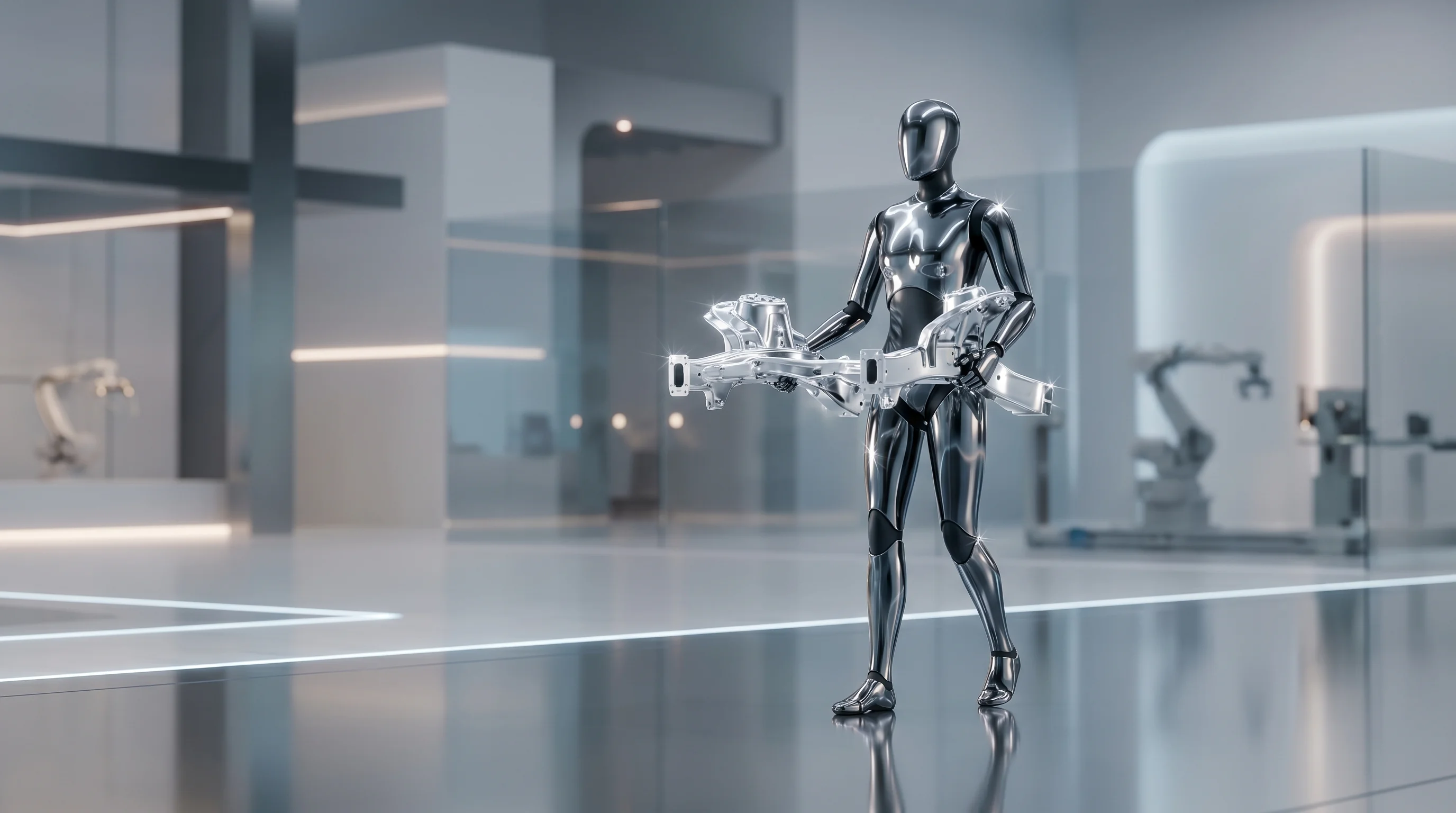
BMW's Spartanburg pilot offers perhaps the clearest view into what actually works in production environments. Over those ten months, the Figure 02 humanoid supported automotive assembly in a live plant—not a controlled demo environment. It operated in ten-hour shifts, five days weekly, moving components with repeatable precision. BMW credited standardized interfaces and simulation-trained motion sequences for the relatively smooth transition to stable operations. Now the automaker is extending the approach to its Leipzig plant in Germany, scheduled to begin this summer with Hexagon's AEON humanoid.
GXO Logistics had signed what it characterized as the first multi-year robotics-as-a-service agreement with Agility Robotics in June 2024. Specific throughput metrics remain closely guarded, though GXO's 2026 investor materials emphasized accelerated AI and automation initiatives, and industry reports circulated productivity claims about the Digit robot. Hard numbers? Sparse. Toyota Canada contracted for seven Agility Digits in February 2026—a modest order, but symbolically significant from a manufacturing giant dipping its toes into humanoid waters.
China, meanwhile, is moving with characteristic speed. TrendForce projected in April that Chinese humanoid production would surge 94% in 2026, with Unitree and AgiBot capturing substantial market share. Manufacturing capacity is coming online rapidly: Lingyi iTech's "Embodied Intelligence Super Factory" in Beijing began unit shipments in mid-April. The government's 10,000-unit target isn't marketing fluff—it's industrial policy backed by pilot programs in battery manufacturing, tablet assembly, and logistics operations.
Siemens is testing a humanoid at its Erlangen facility, integrating NVIDIA's Isaac libraries with industrial control infrastructure. DHL inked a memorandum of understanding for over 1,000 additional Boston Dynamics Stretch robots in May 2025, continuing rollouts through 2026. Amazon, interestingly, has kept its focus on purpose-built systems like the Blue Jay autonomous cart announced in February 2026, rather than diving into humanoids.
The Messy Middle Ground
Here's the uncomfortable truth: the robots work. They just don't work alone yet.
TechTarget's June 2026 analysis highlighted continued dependence on teleoperation, with dexterous manipulation and end effectors remaining stubborn constraints even as locomotion improves. Research papers published between March and May explored whole-body teleoperation frameworks and IMU-based control systems—the necessary scaffolding for robots that can't yet reliably grasp a novel object or navigate unexpected obstacles without human oversight.
This creates an awkward operational reality. Today's deployed robots are neither fully autonomous nor simple remote-controlled machines. They blend pre-trained foundation models, real-time human supervision, and imitation learning derived from thousands of hours of human demonstration data. Intelligence Factory's glove-based capture system represents one approach to scaling that knowledge transfer. NVIDIA's Isaac platform and Cosmos world model—announced in March, refined through June—represent another: massive synthetic datasets allowing robots to practice millions of scenarios in simulation before touching physical objects.
Regulatory frameworks are catching up, though not quickly. ISO 10218-1/2:2025 revised industrial robot safety standards were published in January 2025, with national adoptions rolling out through the following year. The EU's AI Act guidelines, still in draft as of May 2026, attempt to clarify when AI qualifies as "high-risk"—including AI functioning as a safety component in robotics. Companies deploying humanoids must thread an increasingly complex needle: sophisticated enough to justify costs, safe enough for human collaboration, transparent enough to satisfy emerging regulatory requirements.
Divergent Futures
The 2026-to-2028 window will separate serious commercial deployments from expensive technology demonstrations. Gartner's forecast of fewer than 20 companies achieving production-scale humanoid deployment by 2028 reflects a sobering reality: the distance between a successful pilot and a factory floor filled with robots is measured in uptime, cost per task, and integration with existing enterprise systems. Warehouse management systems, manufacturing execution systems, safety programmable logic controllers—robots must speak the language of manufacturing IT infrastructure, not merely learn to pick up a box.
Beyond 2028? Forecasts diverge wildly. Goldman Sachs called for a $38 billion humanoid market by 2035 in a February 2024 report, revising upward from an earlier $6 billion estimate. Morgan Stanley went considerably bigger, projecting a $5 trillion robotics economy and over 1 billion humanoids by 2050, with China commanding volume leadership. Yano Research estimated 7.18 million humanoid units shipped by 2035, representing an 83.5% compound annual growth rate from 2025—driven by robotics-as-a-service business models that lower upfront capital barriers. Grand View Research, Barclays, and others have offered their own projections, all trending sharply upward even if the specific numbers vary considerably.
The intelligence layer will determine who captures that value, assuming any of these forecasts prove accurate. Hardware manufacturers will compete on cost and reliability—table stakes in any manufacturing category. But the real competitive moats are being dug in training data, foundation models, simulation-to-reality transfer pipelines, and enterprise integration capabilities.
Companies like Intelligence Factory, with scarcely any public presence beyond a Y Combinator launch post and a five-person team, are wagering they can build that intelligence stack faster than hardware giants can acquire it. Whether they succeed depends on execution, certainly, but the underlying thesis appears sound: the bottleneck has shifted from motors to minds.
China's policy-driven acceleration could fundamentally reshape competitive dynamics. If Chinese manufacturers hit or exceed the 10,000-unit deployment target by year-end, they'll generate operational data at a scale no Western company can match in the near term. That data feeds more capable models. Better models enable more sophisticated robots. More capable robots unlock additional use cases, driving further deployment. The flywheel effect becomes self-reinforcing.
What Technical Leaders Should Watch

For executives evaluating humanoid platforms today, the salient question isn't which robot boasts superior specifications. It's which system can learn fastest, adapt to your specific operational environment with minimal retraining, integrate seamlessly with existing workflows, and meet safety certification requirements.
That's fundamentally an intelligence problem, not a hardware problem. The robots will continue improving at walking, grasping, maintaining balance. But the winners—if there are winners in a market this nascent—will be the companies that can teach machines what to do when they arrive on the factory floor. Not just how to move, but how to think.
The hardware is converging. The real race, the one that will determine which companies and which countries dominate the next era of automation, is happening in training labs and simulation environments, in dataset pipelines and foundation models. Perhaps it always was.


