

For seven years, Alex Kendall's pitch to investors sounded almost quaint in its ambition: build an artificial intelligence that could learn to drive anywhere, without the digital crutches—high-definition maps, geofenced zones, armies of remote operators—that prop up nearly every other autonomous vehicle program.
Now, the automakers are listening.
Wayve, the London-based startup that Kendall co-founded in 2017, announced Monday it has closed $1.2 billion in Series D funding at an $8.6 billion valuation. The round itself is notable for its size—among the largest in autonomous driving this year—but the participant list tells a more interesting story. Mercedes-Benz, Nissan, and Stellantis have all taken direct equity stakes, the first time traditional carmakers have invested in Wayve since its inception.
That's a sharp departure from the startup's earlier fundraising rounds, which drew heavily from venture capital and Big Tech. Eclipse, Balderton Capital, and SoftBank Vision Fund 2 led the new round, with Microsoft, NVIDIA, and Uber also participating. The roster of new institutional backers reads like a global investor roll call: Ontario Teachers' Pension Plan, Baillie Gifford, the British Business Bank (which committed £25 million), Icehouse Ventures, and Schroders Capital.
Then there's Uber. The ride-hailing giant is providing an additional $300 million in what the companies describe as "milestone-based capital"—essentially performance payments tied to how quickly Wayve can launch robotaxi fleets. That brings the total haul, depending on execution, to $1.5 billion.
When Detroit (and Stuttgart, and Yokohama) Comes Calling
Automakers taking stakes in autonomous driving startups is hardly unprecedented. GM famously acquired Cruise for north of $1 billion. Ford burned through more than $2.7 billion on Argo AI before shutting it down in 2022. Volkswagen and Hyundai poured billions into Aurora.
What makes Wayve different—or at least what the company claims makes it different—is the product architecture. Unlike Waymo, which painstakingly maps cities block by block, or Cruise, which operated within tightly controlled zones before its program imploded last year, Wayve has built what it calls an "AI Driver" that doesn't rely on pre-mapped routes. The system is designed to generalize: drop it in a new city, and theoretically, it learns.
"This positions Wayve to build the autonomy layer that will power any vehicle, anywhere," Kendall said in a statement accompanying the funding announcement. The company says it's already demonstrated what it calls "zero-shot operation"—industry jargon for driving in places the system has never seen before—across more than 500 cities in Europe, North America, and Japan over the past year.
Zero-shot. No prior training runs. Just… drive.
Whether that claim holds up under real-world scrutiny remains to be seen. But it's catnip for automakers who've spent the better part of a decade watching Silicon Valley startups gobble up funding and mindshare while producing precious few commercially viable products. The appeal of a plug-and-play autonomy solution—one that doesn't require building a new digital infrastructure in every market—is obvious.
Ivan Espinosa, Nissan's CEO, framed the investment as an extension of an existing partnership. Wayve will integrate its technology into Nissan's next-generation ProPILOT system, with a target launch in fiscal year 2027. Antonio Filosa, representing Stellantis, pointed to Wayve's "embodied AI" as a natural fit for the sprawling automotive conglomerate's "platform-driven strategy and safety-first vehicle intelligence roadmap." (Corporate-speak, yes, but revealing in its emphasis on platforms—a hint that Stellantis sees Wayve as potentially deployable across its 14 brands.)
Mercedes-Benz, characteristically, said less. But its presence in the round speaks volumes. The German luxury giant has been among the most aggressive traditional automakers in pursuing advanced driver-assistance technology, having already launched Level 3 autonomy—the first system that legally allows drivers to take their hands off the wheel in certain conditions—in select markets.
Uber's Robotaxi Gambit
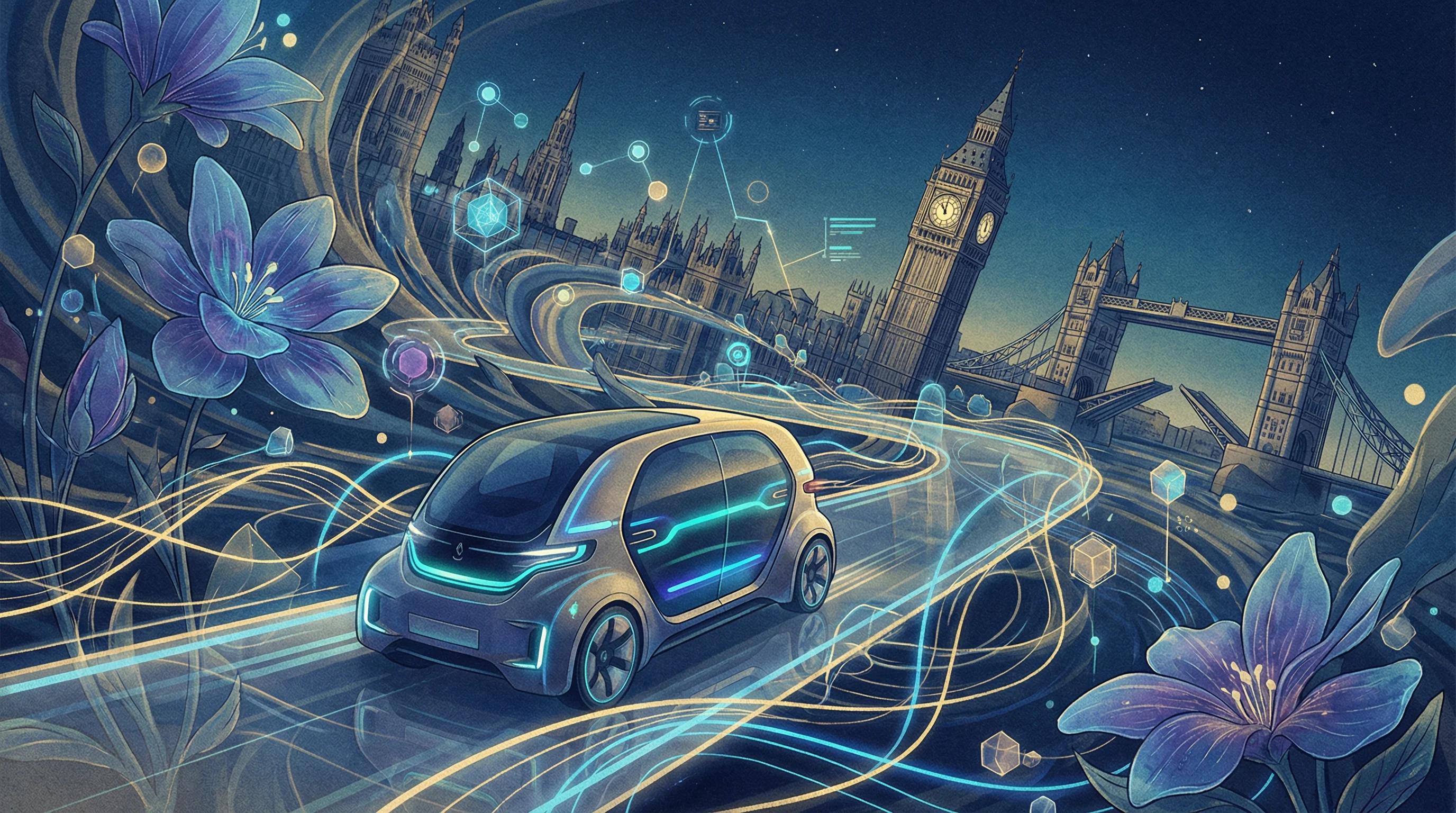
Wayve's partnership with Uber is perhaps the most tangible near-term outcome of the funding round. The two companies plan to launch commercial robotaxi trials in London later this year, a move timed to coincide with the UK's Automated Vehicles Act, which took effect in May 2024 and clears the regulatory path for driverless passenger services starting in 2026.
London, then beyond.
"We plan to deploy Wayve with Uber in 10+ markets globally," Uber CEO Dara Khosrowshahi said. The structure of the deal is telling: Uber will own and operate the fleets, while Wayve supplies the Level 4 autonomy software. It's a division of labor that mirrors Waymo's approach with its robotaxi partners, though Waymo has been slower to expand internationally.
Which brings us to the competitive landscape. Waymo is also eyeing London for its first deployment outside the United States, setting up a potential head-to-head showdown. Waymo, of course, has been at this longer—17 years if you count its origins as Google's self-driving car project—and has raised roughly $16 billion to date. It added four U.S. cities to its service map in February and is reportedly targeting one million weekly rides by the end of this year.
Zoox, Amazon's autonomous vehicle subsidiary, launched public robotaxi service in Las Vegas late last year. And then there's the cautionary tale: GM's Cruise, which effectively shut down its robotaxi operations following a series of high-profile incidents in San Francisco, including a pedestrian being dragged beneath one of its vehicles. Cruise had raised billions and was once valued at $30 billion. Now it's a skeleton crew focused on development, not deployment.
The milestone-based structure of Uber's $300 million commitment suggests the ride-hailing company learned something from watching others stumble. Show us it works in London. Then we'll talk about Paris, Tokyo, São Paulo.
The Technology (and the Questions)
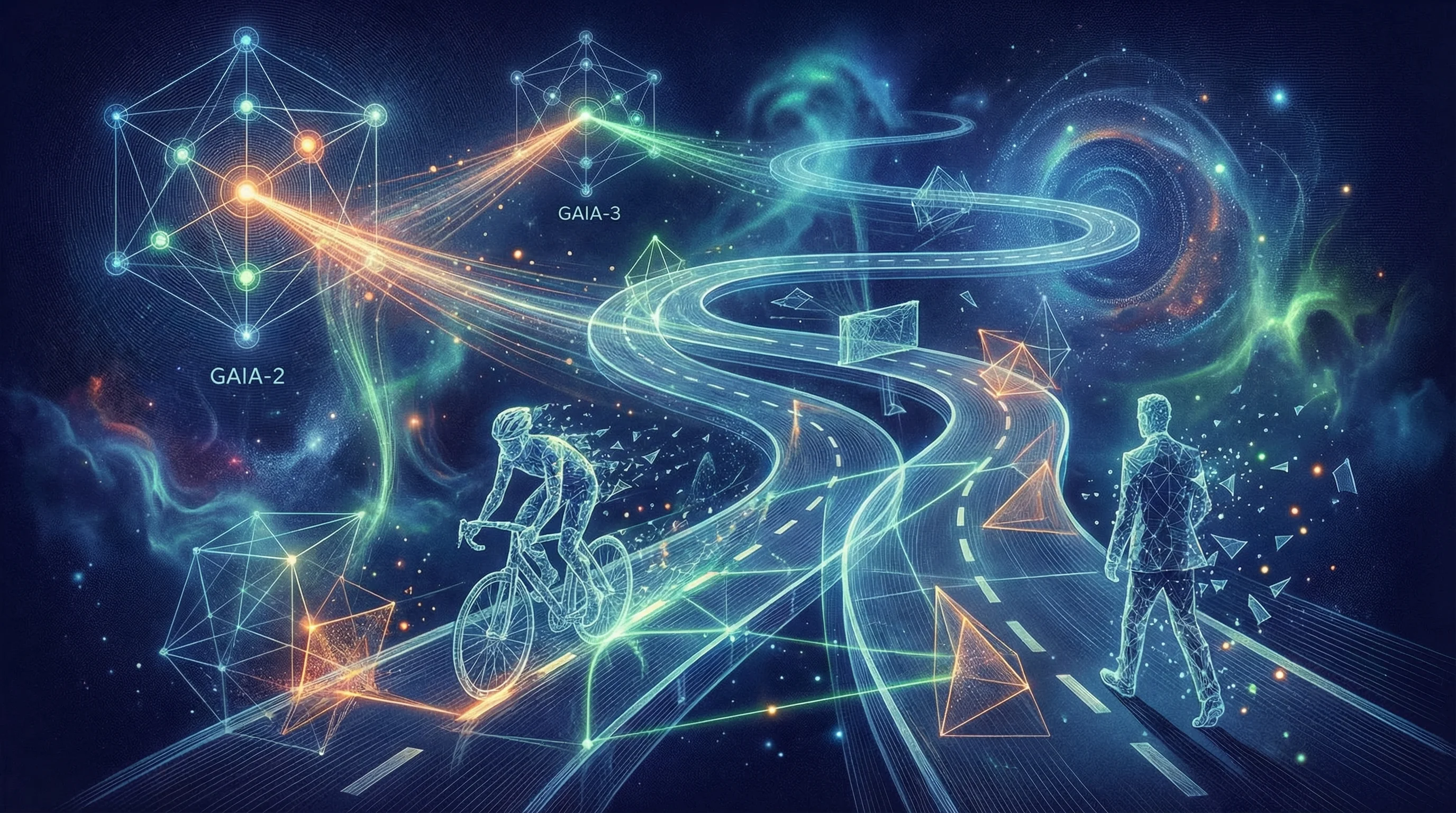
Wayve's core technology revolves around what the company describes as "generative AI models"—specifically, systems called GAIA-2 and GAIA-3. These models create synthetic driving scenarios to stress-test the AI's decision-making across edge cases: a child darting into the street, a cyclist swerving unexpectedly, a construction zone that wasn't there yesterday.
The training runs on Microsoft Azure, which has the computational horsepower to handle the massive datasets involved. (Microsoft is also an investor, which helps.) Unlike Waymo's approach, which relies heavily on LiDAR sensors and centimeter-accurate maps, Wayve's system is designed to work with camera-based perception and onboard compute. The pitch: lower hardware costs, faster deployment, broader applicability.
It sounds great on paper. The challenge, as with all autonomy claims, is reality. Driving is a probabilistic nightmare—an endless stream of novel situations where the margin for error is, quite literally, life and death. Wayve says it's been testing across multiple continents, and the company now employs more than 1,000 people across offices in London, Silicon Valley, Vancouver, Stuttgart, Yokohama, and Herzliya. It opened test and development hubs in Germany and Japan last year to accelerate what it calls "regional learning."
Still, questions linger. How does the system perform in truly adverse conditions—heavy rain, snow, dense fog? What's the intervention rate during testing? How does it handle the chaotic driving cultures of, say, Rome or Mumbai, where traffic rules are more like suggestions? Wayve hasn't released detailed safety data, which is standard practice in an industry that tends to guard such metrics closely.
Latham & Watkins advised Wayve on the transaction. Weil advised lead investor Balderton Capital.
What Comes Next (If Everything Goes Right)
Robotaxis are the headline, but they're not the whole story.
Starting in 2027, Wayve will begin rolling out supervised Level 2+ autonomy in consumer vehicles through its partnership with Nissan. The company signed definitive agreements with the Japanese automaker in December for integration with the next-generation ProPILOT system in Japan-market production vehicles. That's a different beast entirely—highway lane-keeping and adaptive cruise control, not driverless urban navigation—but it's also a revenue stream that doesn't depend on robotaxi regulations or fleet economics.
The broader thesis here is scalability. Wayve is betting that its generalist AI platform—one that can theoretically work with any automaker and any robotaxi operator—offers a faster path to commercialization than the city-by-city, partner-by-partner slog that has defined the industry for the past decade. It's an appealing narrative, especially for investors who've watched billions evaporate in the autonomous vehicle space with relatively little to show for it.
Whether that thesis holds depends entirely on execution. London is the first real test. If the Uber trials go smoothly and Wayve can demonstrate reliable, safe operation in a complex urban environment without the scaffolding of HD maps and geofencing, the nine-plus markets that follow will come easier. If not, well—Cruise's shuttered operations are a reminder of how quickly confidence can evaporate.
Kendall, for his part, seems undaunted. Or at least, he's saying the right things. "We're at an inflection point," he told investors during the funding announcement, though he declined to specify exactly what that inflection looks like beyond "proving embodied AI at scale."
Perhaps that's wise. In an industry littered with overpromises and underdeliveries, a bit of restraint might actually be refreshing.


