

New Zealand medtech startup Wellumio is betting that stroke care's biggest problem isn't medicine—it's logistics
The stroke specialists have a saying: "Time is brain." Every minute without treatment, nearly two million neurons die. Yet fewer than 5 percent of stroke patients worldwide receive intervention within the first critical hour—what clinicians call the golden hour, though there's nothing golden about how rarely it happens.
Wellumio, a Wellington-based medtech venture, thinks the culprit is obvious. Hospital MRI machines are multi-ton behemoths anchored in shielded rooms, operated by specialized technicians, and perpetually booked solid. By the time a suspected stroke patient gets wheeled through that pipeline, the moment for optimal intervention has often passed.
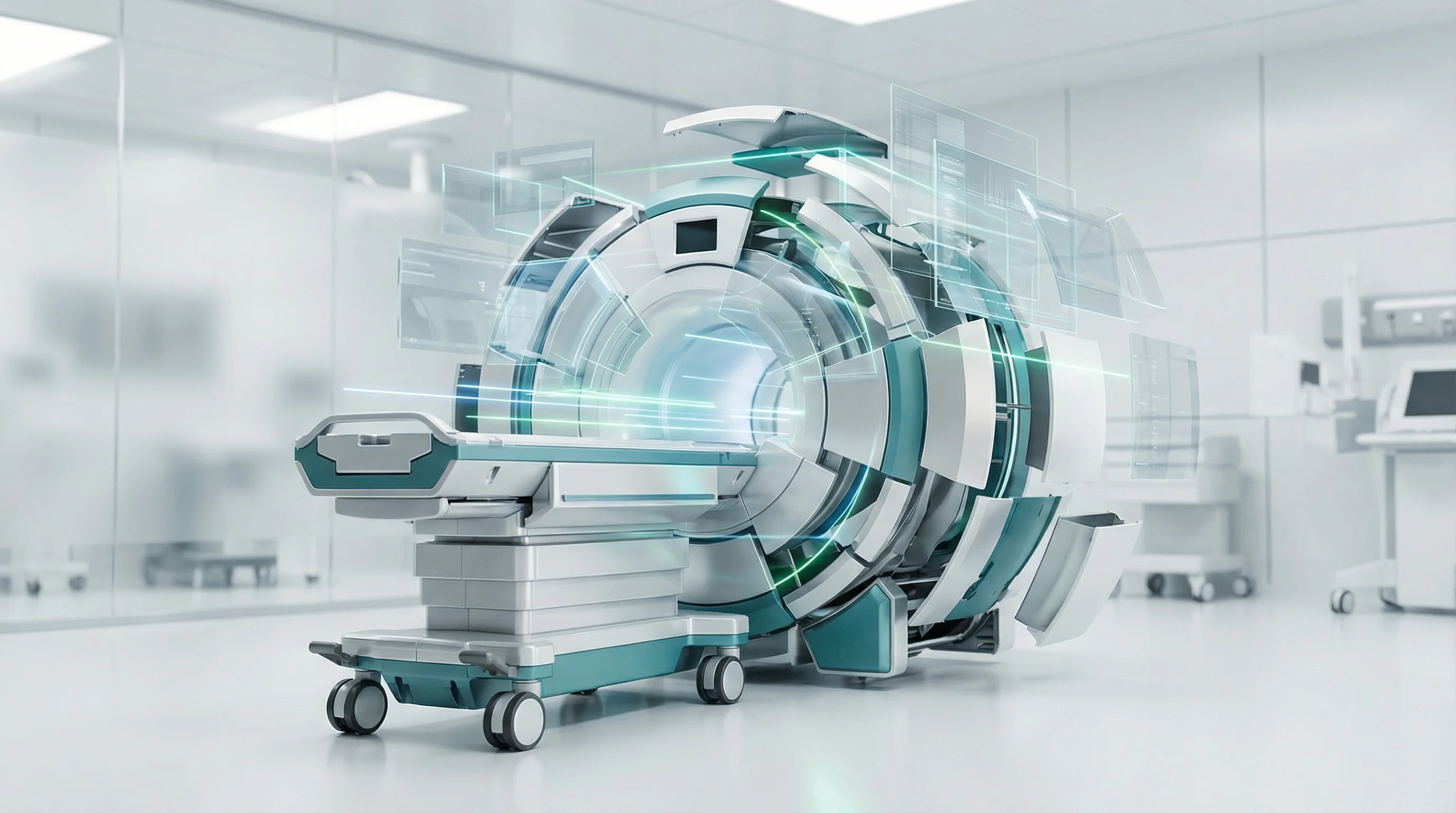
On February 11, Wellumio announced it had closed the first tranche of a pre-Series A round—NZ$7.28 million (roughly US$4.3 million)—to advance Axana, a battery-powered MRI system the company claims weighs just 50 kilograms. Light enough, in theory, to deploy in emergency departments today. Light enough, eventually, to mount in an ambulance.
The round was led by Auckland's Nuance Connected Capital, with backing from Icehouse Ventures, NZ Growth Capital Partners' Aspire Seed Fund, Pacific Channel, Booster, Cure Kids Ventures, and angel networks Flying Kiwi and Enterprise Angels. A handful of international investors came aboard through New Zealand's Active Investor Plus visa scheme, while retail backers participated via the Snowball Effect crowdfunding platform. The company expects additional commitments before formally closing the round, though it declined to specify a target size.
The Physics of Going Small
Axana doesn't look like a typical MRI. It operates at 0.1 tesla—a fraction of the magnetic field strength of hospital scanners, which typically run between 1.5 and 3 tesla. At first glance, that sounds like a compromise. Perhaps it is. But Wellumio's co-founders—physician-scientist Dr. Shieak Tzeng, medical physicist Dr. Sergei Obruchkov, and physicists Dion Thomas and Dr. Paul Teal—argue that raw field strength isn't the point. What matters for stroke diagnosis, they say, is detecting two biomarkers: diffusion (how water moves through damaged tissue) and perfusion (blood flow to the brain).
Their proprietary technique, Pulsed Gradient Free Mapping, aims to capture both without contrast agents, cryogenic cooling, or the heavily shielded rooms that make traditional MRIs so immobile. The company claims Axana can deliver actionable stroke biomarkers in under four minutes. In December 2025, the U.S. Patent and Trademark Office granted Wellumio a patent covering its perfusion measurement method—a signal, however modest, that the underlying science has cleared at least one gatekeeper's scrutiny.
Still, there's a considerable distance between a granted patent and a device that emergency physicians trust at 3 a.m. Wellumio is now navigating that gap.
First Patients, First Questions
In early February 2025—weeks before the funding announcement—Wellumio enrolled its first patient in a feasibility trial at Royal Melbourne Hospital. The study, conducted in partnership with the Australian Stroke Alliance, is designed as a two-part, dual-center effort targeting approximately 50 participants: a mix of suspected stroke cases and healthy controls. A second site, John Hunter Hospital in New South Wales, is slated to begin enrollment soon, though a precise timeline wasn't provided.
The trial's design is pragmatic. Can Axana reliably identify stroke biomarkers in a clinical setting? Can it do so fast enough to matter? And—perhaps the more delicate question—will emergency physicians actually use it when minutes count and workflow disruptions carry real consequences?
Wellumio is preparing for an FDA De Novo submission targeting 2027, a regulatory pathway typically reserved for novel devices that don't fit neatly into existing classifications. The company recently established a California subsidiary, based in Menlo Park, to support planned U.S. clinical work. That's a standard move for non-American startups eyeing the world's largest medical device market, though it also underscores the company's awareness that meaningful scale requires clearing American regulators.
The Hyperfine Comparison
Wellumio isn't alone in trying to shrink the MRI. Hyperfine's Swoop system—a 630-kilogram portable MRI that received FDA clearance—already serves bedside imaging in select facilities. Swoop is wheeled, not pocket-sized, but it represents proof of concept: hospitals will adopt portable MRI if the clinical use case holds up.
Wellumio emphasizes that Axana is roughly one-twelfth the weight of Swoop, battery-powered, and capable of contrast-free perfusion imaging. Those are genuine differentiators, assuming the device performs as advertised. But there's a catch worth noting: Hyperfine's system is commercially available today, with a growing installed base and recently added FDA-cleared capabilities for multi-directional diffusion-weighted imaging. Axana, by contrast, remains investigational.
That gap—between "shipping product" and "promising prototype"—is where medtech ventures either accelerate or stall. Wellumio's investors are betting the company can close it.
Capital and Partnerships
The NZ$7.28 million will fund team expansion, push clinical milestones forward, and refine Axana for manufacturing at scale. Wellumio also plans to broaden clinical evaluation to additional geographies before the round fully closes. The company previously raised NZ$2.75 million in a seed round in August 2023, led by Outset Ventures, and has collected multiple non-dilutive grants from Callaghan Innovation, New Zealand's innovation agency.
Wellumio has also signed memoranda of understanding with Nicolab—developer of StrokeViewer, an AI workflow platform deployed across Queensland Health—and MEYTEC, a telemedicine and mobile stroke unit integrator. The agreements explore potential integration of Axana into pre-hospital and hospital stroke pathways. MOUs, of course, are preliminary. They signal interest, not commitment. But they do suggest Wellumio is thinking beyond the device itself, toward the broader ecosystem required to make portable stroke imaging routine rather than experimental.
The Stroke Burden

Stroke remains the second-leading cause of death worldwide. In 2021 alone, approximately 12 million incident strokes were recorded, resulting in 7.3 million deaths. The burden falls heaviest on low- and middle-income countries, where access to imaging and intervention is sparse. Even in wealthy nations, stroke care is bifurcated: urban centers with comprehensive stroke units versus rural hospitals where thrombolysis—the clot-busting drug treatment—may be the only option, and not always a safe one without imaging confirmation.
Wellumio's stated mission is ambitious to the point of grandiosity: eliminate stroke as a leading cause of death and disability by increasing the rate of treatment within the golden hour twenty-fold over the next decade. That's the kind of goal that sounds better in a pitch deck than in a clinical outcomes paper. But perhaps that's the point. Big problems require big swings.
For now, the company—a spin-out from Victoria University of Wellington—operates from offices in Wellington, Melbourne, and Menlo Park. Whether Axana becomes a footnote or a fixture in emergency departments depends on what happens next in those Australian trial sites, and whether the device can deliver on its promise when the clock is ticking and every neuron counts.


