

Seven months. That's how long it took Bedrock Robotics to go from announcing itself to the world with $80 million in seed capital to closing a $270 million Series B round at a post-money valuation hovering around $1.75 billion. The deal, which closed February 4, suggests that investors see something urgent in the San Francisco startup's pitch: autonomous excavators that can be installed in hours, not months, and a construction industry desperate enough to try them.
CapitalG and the Valor Atreides AI Fund led the round, joined by a sprawling syndicate that includes Xora, 8VC, Eclipse, Emergence Capital, NVentures, Tishman Speyer, MIT, and Georgian, among others. The raise brings Bedrock's total funding north of $350 million—a war chest that would've been unthinkable for construction tech just a few years ago, before the labor crisis became impossible to ignore.
The company, helmed by Boris Sofman and staffed by veterans of Waymo's self-driving program, is racing to prove that retrofit robotics can solve what new equipment can't: getting more dirt moved when there aren't enough people to move it.
Bolting Intelligence Onto Heavy Iron
Bedrock's core product is the Bedrock Operator, a retrofit kit designed to turn existing excavators into supervised—and eventually fully autonomous—machines. The installation is surprisingly straightforward. LiDAR sensors, GPS units, inertial measurement units, eight high-definition cameras, and an onboard computer mount atop an excavator's cabin. No welding, no permanent alterations. A crew can have it running within hours.
The system works day and night, though for now, a human supervisor still watches over operations. Later this year, if Bedrock hits its targets, some of those machines will operate entirely on their own.
Since launching commercially last July, Bedrock has deployed units across California, Arizona, Texas, and Arkansas. The company's largest trial to date came in November with Sundt Construction, where Bedrock-equipped excavators—ranging from 20 to 80 tons—shifted more than 65,000 cubic yards of earth across a 130-acre manufacturing site. The machines worked under supervision, loading trucks in live job sites alongside human-operated equipment. That's a telling detail: construction sites aren't controlled environments. There are workers on foot, diesel fumes, mud, uneven ground. If the tech couldn't handle that chaos, it wouldn't matter how elegant the software was.
Other contractors putting Bedrock through its paces include Champion Site Prep, Austin Bridge & Road, Maverick Constructors, Haydon Companies, and Zachry Construction. They're all testing the same hypothesis—that autonomy can stretch their existing fleets further when skilled operators are scarce or when projects demand round-the-clock earthmoving.
From Solo Acts to Synchronized Systems
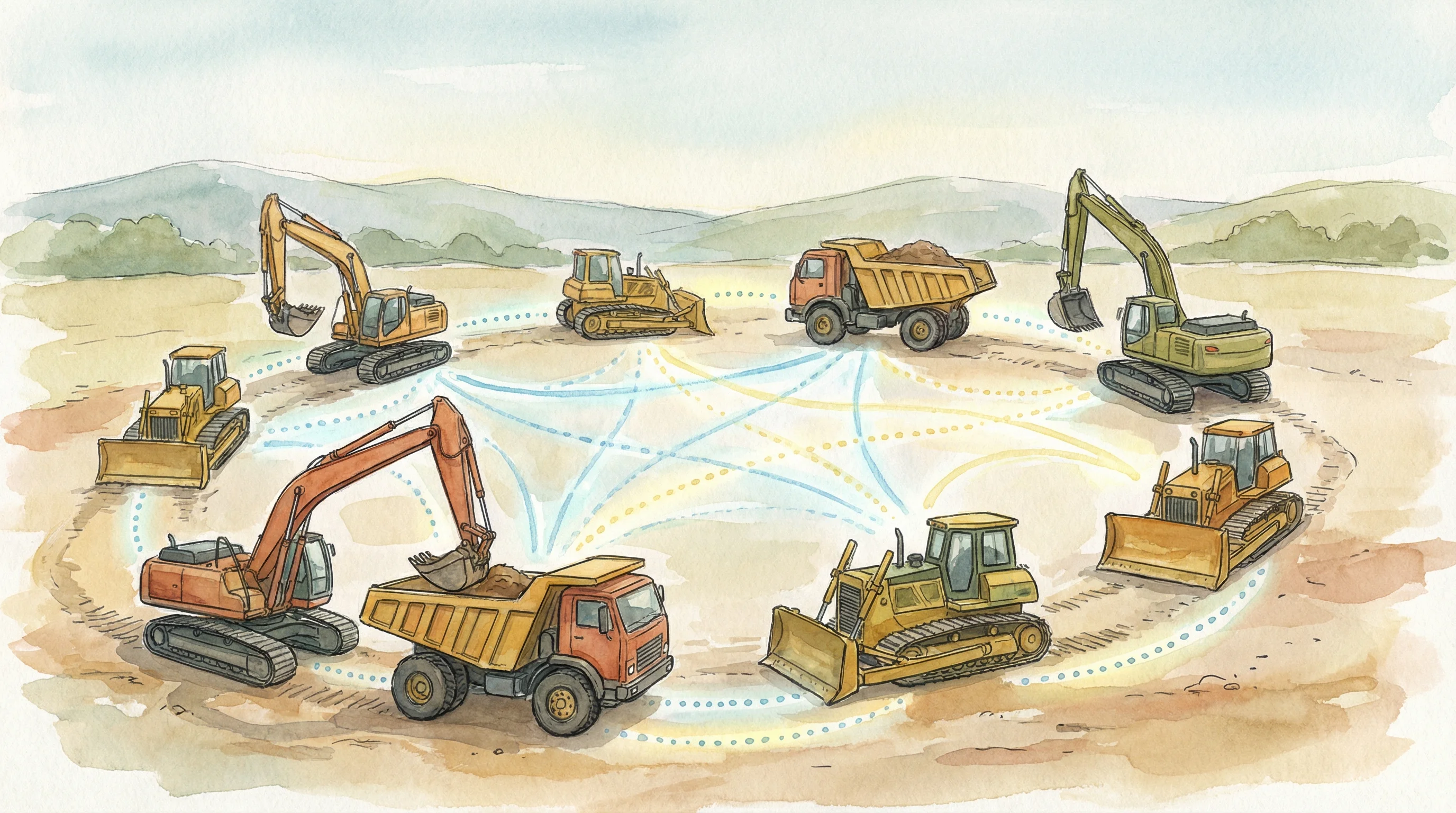
The new capital will fund Bedrock's evolution from single-machine autonomy to what Sofman calls "system-level autonomy"—coordinated fleets that operate as orchestrated units rather than isolated robots. Think less about one smart excavator, more about five machines that know where each other are, adjust loading patterns in real time, and optimize around bottlenecks without a foreman directing traffic.
"The construction industry is being asked to build more than it can deliver," Sofman said when the funding was announced. Perhaps that's an understatement. The gap between what needs building—data centers, housing, infrastructure—and the workforce available to build it has become one of the industry's defining pressures.
Bedrock's recent hires hint at where the company thinks the hard problems lie. Vincent Gonguet, who led AI safety and alignment for Meta's Llama models, joined as Head of Evaluation. John Chu, formerly with Waymo's engineering People team, now runs HR. Those aren't the typical early hires for a hardware-focused robotics company, but they make sense if you believe the software orchestration layer—and the team building it—will determine who wins.
The Shortage No One's Solved
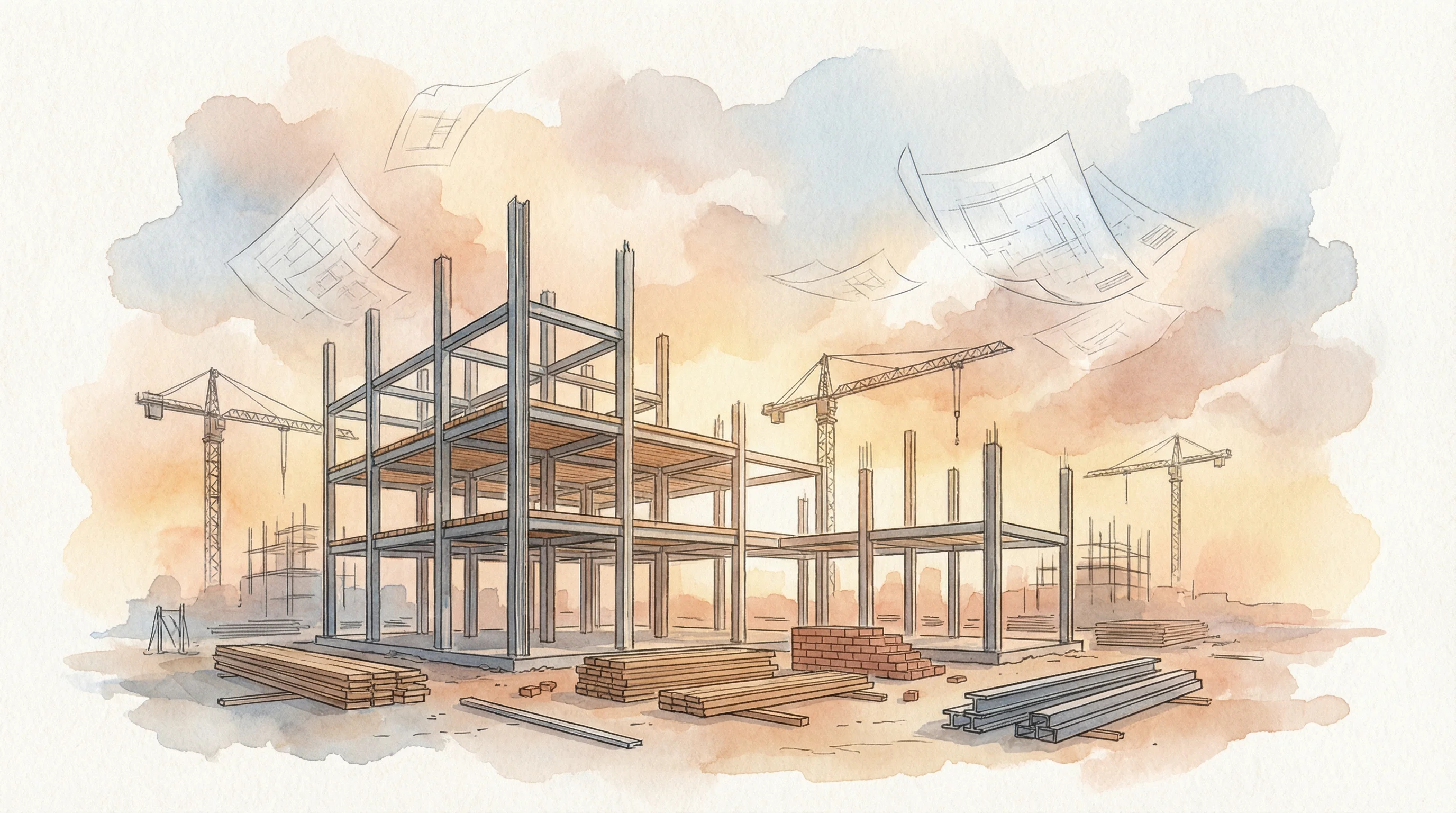
The timing here isn't coincidental. Associated Builders and Contractors estimated the industry needed to attract roughly 439,000 net new workers in 2025 alone, with similar shortfalls projected through 2027. Construction backlog—the time between signing a contract and starting work—sat at 8.2 months in December. For data center projects, the kind feeding AI's infrastructure boom, that figure stretched closer to 11 months.
Derek Zanutto of CapitalG framed the investment around those constraints. Bedrock's pitch, essentially, is compressing timelines when you can't find enough skilled operators to run a second or third shift. Antonio Gracias of Valor Equity Partners pointed to surging infrastructure demand and called Bedrock's execution a path to help the industry "build faster than ever before." Whether that's achievable at scale remains to be seen.
Trey Taparauskas, CEO of Champion Site Prep, said Bedrock is helping his teams "rethink fleet coordination," cutting idle time and improving job site safety. The safety argument is more than PR: excavator accidents account for a meaningful share of construction injuries, and fatigue from long shifts compounds risk.
A Crowded Dig Site
Bedrock isn't working in a vacuum. Built Robotics raised $64 million in 2022 for its Exosystem retrofit platform and has been operating in similar markets. SafeAI has forged partnerships with contractors like Obayashi, targeting earthmoving and mining applications. Equipment manufacturers aren't sitting idle either. Komatsu, for instance, has deployed more than 750 autonomous haul trucks in mining operations—proof that autonomy works at industrial scale, though mining's controlled environments are easier than construction's variability.
Bedrock's wager is that speed of deployment and fleet orchestration will matter more than purpose-built autonomous machines. If a contractor can retrofit existing equipment in hours and coordinate multiple units through software, the argument goes, they won't wait years for OEMs to release autonomous models or spend millions replacing fleets.
That bet gets tested in 2026. If Bedrock delivers fully operator-less excavators on job sites this year, it will have moved from concept to commercial deployment in less than two years. Even by the aggressive timelines venture-backed robotics companies set for themselves, that's fast. Whether it's fast enough to stay ahead of competitors—or to meet the construction industry's expectations—is the question the next twelve months will answer.


