

On paper, the promise sounds almost too simple: stick on a few electrodes, let your phone guide you, and within a quarter-hour a cardiologist somewhere reviews your heart rhythm. No drive to the clinic, no waiting room. Just you, a small device, and a mobile signal.
That's the pitch Genoa-based D-Heart has been refining since 2015, and now—under new ownership and with fresh international ambition—the Italian medical device maker is testing whether hospital-grade cardiac monitoring can truly work from anywhere. The company's portable ECG system, which captures 8- or 12-lead electrocardiograms via Bluetooth and pairs with iOS and Android phones, is pushing into Asia, Africa, and Australia, chasing a dual opportunity: emerging markets starved for specialists, and developed regions eager to reduce costly hospital visits.
Whether that vision holds up under scrutiny is another question entirely.
A Quiet Ownership Shift
In April 2023, D-Heart underwent a significant ownership change. U.S.-linked Strena Medical acquired a majority stake—a transaction that didn't make global headlines but was reported that July by Italian outlet La Repubblica. The deal repositioned what had been a scrappy Italian startup under an American-aligned parent, though manufacturing and regulatory oversight remain anchored in Genoa through Strena Medical S.r.l.
The EU Declaration of Conformity, dated May 2024, confirmed Strena Medical S.r.l. as current manufacturer with a valid certificate for the D-Heart device model ECG000-DHR20. It's the kind of regulatory detail that rarely excites anyone outside compliance departments, but it matters: the device carries CE marking as a Class IIa medical device under the EU's Medical Device Regulation, a designation that demands clinical evidence and ongoing post-market surveillance.
Since the acquisition, D-Heart has turned its attention outward. Company materials and LinkedIn activity reference partnerships and distribution efforts in Peru, Senegal, and Malawi—including work with Rainbow for Africa—though specifics on scale or revenue remain elusive. The company has stated integration with GIMA Hub and presence in the 2026 telemedicine catalog, with LinkedIn posts citing recent expansion activities. But hard numbers? Those are harder to come by.
The Mechanics of Remote Monitoring
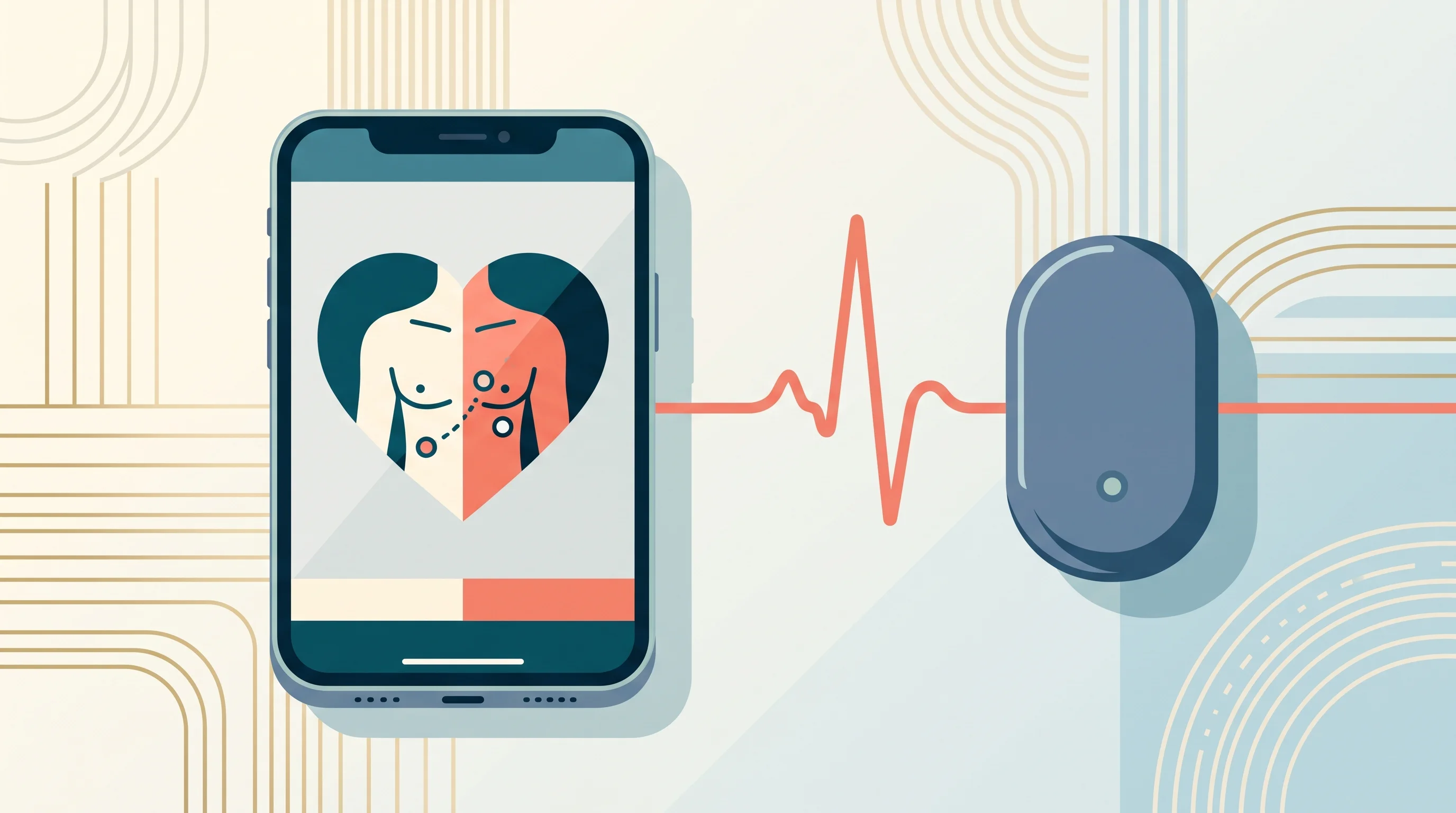
Here's how it works in practice. A patient receives D-Heart's portable unit, which connects to a smartphone via Bluetooth. Electrodes go on, the app provides step-by-step visual guidance—a notorious sticking point in at-home cardiac care—and the system records an 8- or 12-lead trace. From there, patients can share the ECG with their own physician or route it to D-Heart's telecardiology network, where the company says specialists return interpreted reports within 15 minutes.
That 15-minute claim is central to the value proposition, particularly in regions where a cardiologist might be hours away by car, if accessible at all. D-Heart positions the system as capable of diagnosing myocardial ischemia from home—a significant clinical assertion. Yet such market claims appear primarily in company and trade agency profiles rather than in independent peer-reviewed validation. Perhaps that's coming. Or perhaps the company is content to let early adopters and distributor partnerships serve as proof of concept.
A Crowded Field
D-Heart isn't operating in a vacuum. The home ECG space has gotten considerably more competitive. AliveCor launched its Kardia 12L device in Europe in April of a recent year, marketing it as the first portable 12-lead ECG with a single-cable design—a direct shot at ease of use. HeartBeam, which trades on NASDAQ, has been running pilot studies for its on-demand 12-lead patch system. Eko Health, known for AI-enabled stethoscopes combined with ECG analysis, raised $41 million in a Series D round in 2024, illustrating funding momentum in cardiac diagnostics.
Each of these competitors is solving for the same friction: getting accurate cardiac data outside a hospital setting, ideally without requiring a medical professional to stick the electrodes on. D-Heart's founders—physician Niccolò Maurizi and business lawyer Nicolò Briante—have been at this since the company's 2015 launch. Early backing came from a €200,000 Vodafone Foundation grant in 2016, and the pair ran pilots in Kenya, Uganda, Bangladesh, and India starting in 2017, often working with organizations like AMREF. Those projects predate the Strena acquisition and the current commercial push, but they established a playbook: test in resource-constrained settings where traditional cardiology infrastructure is thin or nonexistent.
Scale Remains the Question

D-Heart's LinkedIn page lists the company at 2–10 employees, a size that suggests lean operations and heavy reliance on distributor networks to extend reach. The Italian Trade Agency profile, updated in 2025, emphasizes the 24/7 telecardiology service as a differentiator—though sustaining round-the-clock specialist availability at scale is easier promised than delivered.
The device remains available through European distributors and direct e-commerce. Company marketing materials confirm active sales channels. But international expansion is more than logistics and regulatory filings. It hinges on reimbursement pathways that may not exist yet, on healthcare systems willing to trust remote monitoring, and on patients comfortable using a medical device without a white coat in the room.
For now, D-Heart is making its case that cardiology can happen anywhere a patient has a smartphone and a signal. The real test? Whether that vision moves from compelling pitch to sustainable business model—and whether the company can carve out differentiated space in a field getting more crowded by the quarter.


