One of Oshen's C-Star robots kept transmitting through Hurricane Humberto in September 2025, recording a barometric pressure of 955 millibars as the storm raged overhead. The Plymouth-based startup's one-meter device became the first unmanned surface vehicle to send data from inside a Category 5 hurricane, a milestone that caught the attention of NOAA's Atlantic Oceanographic and Meteorological Laboratory and helped validate the company's pitch to government buyers.
Now the British company is scaling up. Oshen reported its $5 million seed funding on August 21, 2026, led by Lunar Ventures, with AlbionVC, Twin Track Ventures, Concept Ventures and several angel investors joining the round. Companies House filings from mid-2026 show subscription agreements and shareholder resolutions, though the startup declined to share its valuation. Earlier, Oshen secured £2 million from the UK's Advanced Research and Invention Agency, announced in February 2025.
The capital will go toward expanding production of the C-Star robots at Oshen's Turnchapel Wharf facility in Plymouth, where the company now turns out roughly 15 units every six weeks. Headcount has grown to nearly 30 from seven in September 2025, a pace that reflects both the company's ambitions and the manufacturing challenge inherent in building hardware for one of the planet's harshest environments.
"We're making the ocean's eyes and ears, and we need a lot of them," CEO Anahita Khambata Laverack told industry publication TechFundingNews. "That's not a sensing problem anymore; the technology works, even in the worst conditions on Earth. It's a manufacturing problem."
Laverack and CTO Ciaran Dowds, both 2022 graduates of Imperial College London in aeronautical and electrical engineering respectively, founded Oshen the same year after winning the university's Venture Catalyst Challenge Social Impact Prize. The company incorporated on April 8, 2022, after collecting that £10,000 award. What began as a student project has evolved into a business with 100 units on order and customers that include NOAA and the U.S. Navy.
The C-Star runs on wind and solar power, designed for deployments lasting six months or longer. One mission stretched to eight months at sea. Each robot carries meteorological, oceanographic and acoustic sensors, relaying information via Iridium satellite. Oshen is targeting three applications: passive acoustics for ship detection, protection of subsea cables and pipelines, and anti-submarine warfare support.
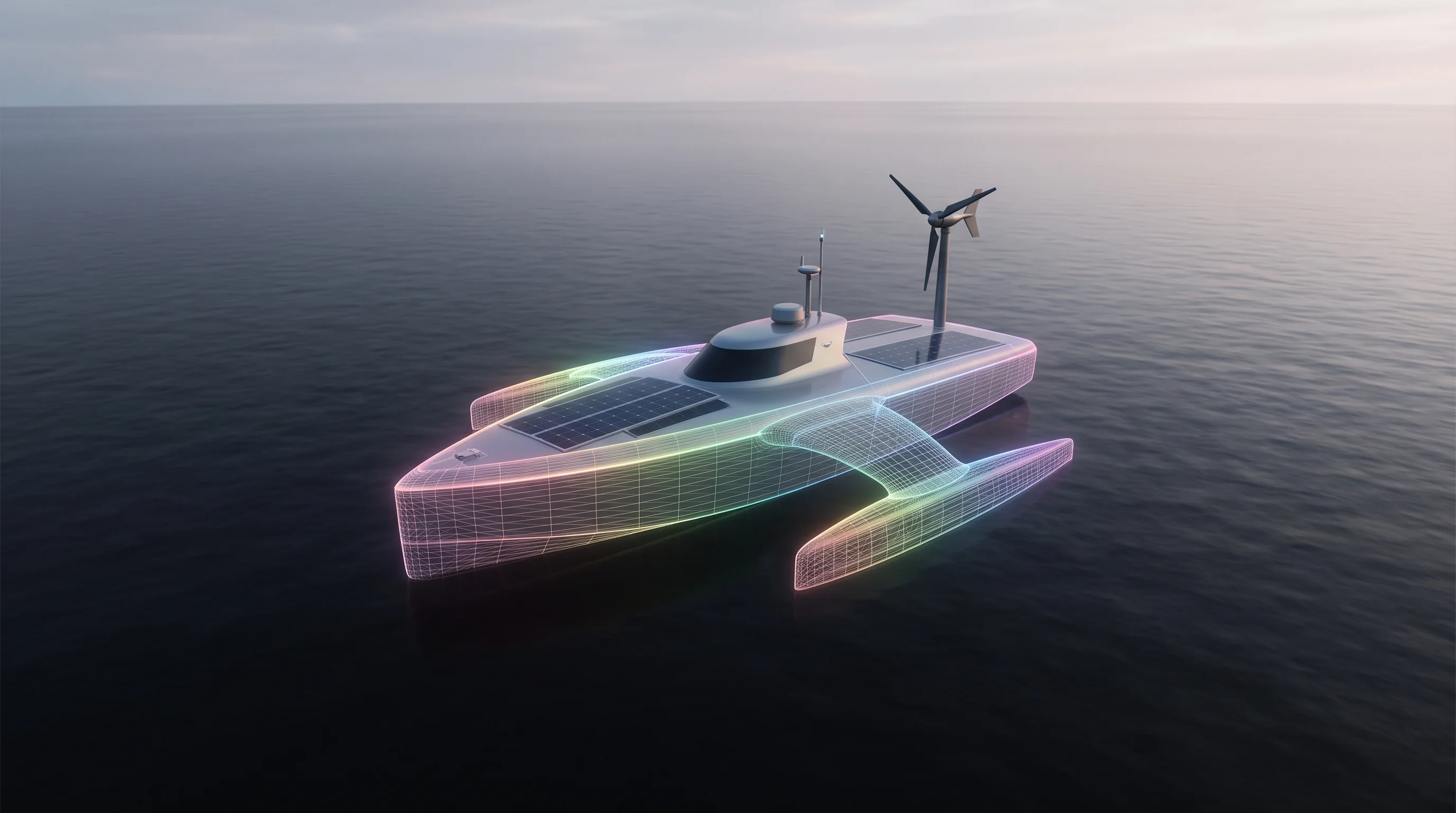
NOAA deployed seven C-Stars across the western Atlantic, Caribbean and Gulf of Mexico during the 2025 hurricane season for intensity forecasting research. The U.S. Navy's Commander, Naval Meteorology and Oceanography Command ran a two-week trial at Cat Island, Mississippi, using a C-Star equipped with a keel-mounted single-beam echosounder to map shallow waters.
"Surveying littoral and shallow-water zones is critical to our operational readiness, but it presents unique environmental challenges," Stacy Johnson, technical director of the Hydrographic Department at the Naval Oceanographic Office, said at the time. "The modular physical and power architectures of Oshen's platforms allow us to seamlessly integrate Navy-selected sensors."
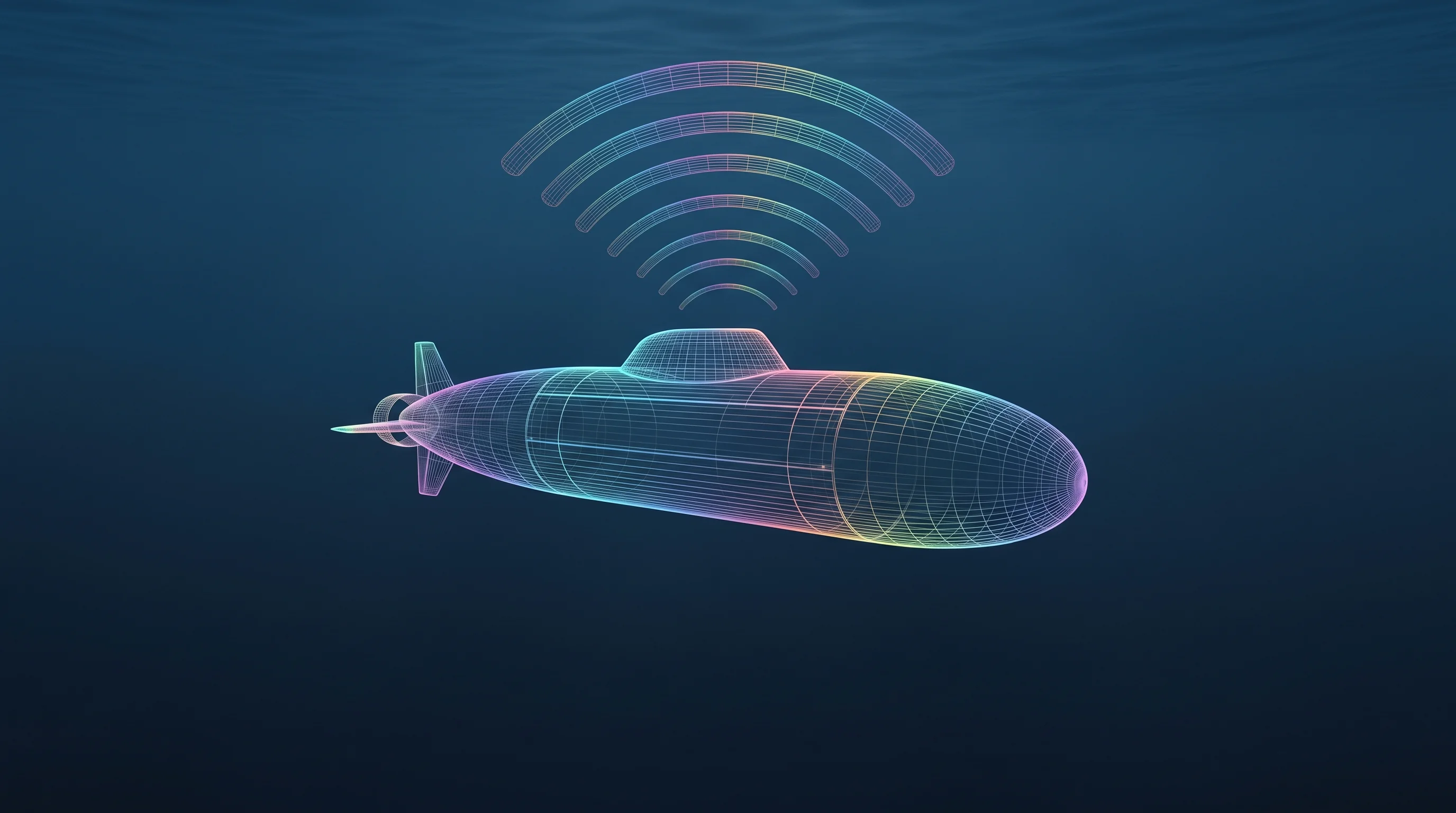
The Royal Navy has funded trials as well. Oshen participated in a 10-month UK Defence Innovation-funded program alongside ZeroUSV and MarineAI to develop communications for underwater platforms, with the C-Stars functioning as passive acoustic nodes, according to defense publication Janes. French meteorological agency Météo-France has deployed the robots in the Bay of Biscay, feeding operational data into national forecasting systems. Oshen also completed its first commercial sale to Swedish research organization VOTO for Baltic deployments.
The startup faces competition from better-funded rivals. Saildrone raised a $100 million Series C in 2021 and had pulled in at least $190 million total by that time. Sofar Ocean has raised approximately $70 million, including a December 2024 Series B extension. Boeing acquired Wave Glider manufacturer Liquid Robotics in 2016. Industry trackers project the unmanned surface vehicle market will grow from $820 million in 2025 to $1.59 billion by 2030, according to MarketsandMarkets research cited by TechFundingNews.
Mick Halsband, general partner at lead investor Lunar Ventures, framed the opportunity in terms of institutional demand. "Governments and public institutions are becoming increasingly dependent on reliable information about the oceans to improve weather forecasting, safeguard critical infrastructure, and enhance maritime security," he said.
Whether Oshen can compete on price and scale against larger competitors remains an open question. The company's strategy appears to hinge on manufacturing efficiency and modularity, allowing customers to configure sensors for specific missions. For now, the hurricane data and expanding order book suggest the technology has found early product-market fit. The harder test will be whether a 30-person startup in Plymouth can manufacture fast enough to meet demand in a market where Boeing and venture-backed unicorns already operate.