

Four months ago, Temporal Technologies was worth $2.5 billion. On Tuesday, the Seattle infrastructure startup announced it had doubled that figure.
The company disclosed a $300 million Series D round led by Andreessen Horowitz, valuing Temporal at $5 billion—a staggering ascent that speaks less to hype than to a fundamental shift in how companies are building AI systems. Or at least, that's the story investors are telling themselves.
At issue is a decidedly unglamorous piece of the technology stack: durable execution. While much of the AI investment frenzy has centered on flashy large language models and consumer-facing chatbots, Temporal has carved out territory in the messy plumbing underneath—the infrastructure that ensures autonomous AI agents don't lose their place when something inevitably goes wrong.
And in distributed computing, things go wrong constantly.
The Orchestration Problem
What Temporal does is best understood through what it prevents. Imagine an AI agent booking a flight, reserving a hotel, and arranging ground transportation—a multi-step process spanning different services and APIs. If the hotel reservation fails midway through, does the system retry? Does it remember that the flight was already booked? Does it keep charging the customer's card?
Temporal's open-source platform handles precisely these scenarios: state management, retries, orchestration across distributed services. Code resumes exactly where it left off after failures, no matter how catastrophic. It's the kind of infrastructure that becomes invisible when it works and catastrophic when it doesn't.
The platform has deep roots. Co-founders Samar Abbas and Maxim Fateev—both veterans of Microsoft and Amazon—built the open-source orchestration engine Cadence while at Uber. They launched Temporal in 2019, with Abbas as CEO and Fateev as CTO, roles they swapped last year. (The company hasn't elaborated publicly on the reasons for the switch, though such changes often signal evolving priorities as startups mature.)
Now, with agentic AI moving from concept to production, Temporal finds itself in the right place at a particularly lucrative moment.
The AI Windfall

The numbers suggest more than incremental growth. Temporal reported year-over-year revenue gains exceeding 380%, with weekly active usage up 350% and installations surging 500%. The company now logs more than 20 million installs monthly—a figure that would have seemed implausible even two years ago.
Perhaps more telling: 1.86 trillion of the 9.1 trillion lifetime action executions processed on Temporal Cloud came from AI-native companies. That ratio—roughly one in five—offers a window into how quickly AI workloads have become central to the business.
OpenAI itself uses Temporal to power ChatGPT Images, a detail the startup has highlighted in pitches to investors and customers alike. The company has integrated directly with OpenAI's Agents SDK, positioning itself as the execution layer for what it calls "long-running, stateful AI systems." Netflix, Snap, Block, ADP, and Yum! Brands round out a client roster that spans industries—streaming entertainment to fast food.
"Temporal is making agentic AI real for companies," the company said in its funding announcement. Whether that's genuine conviction or well-calibrated marketing speak remains to be seen, though the capital influx suggests investors believe the former.
Credentials That Matter
In an industry prone to overpromising, Temporal has leaned heavily on battle-tested reliability. The company pointed to customers remaining operational during a major cloud outage—no small feat—and noted that its platform handled traffic spikes exceeding 150,000 actions per second without advance warning. That kind of resilience isn't just technical bragging rights; it's table stakes when orchestrating mission-critical workflows for Fortune 500 companies.
By the time of its Series C in March 2025, Temporal had accumulated 183,000 weekly active open-source developers, more than 7 million unique clusters, and north of 2,500 paying Temporal Cloud customers. The open-source foundation has proven both a growth engine and a validation mechanism—developers adopt the free version, then migrate to the managed cloud offering as needs scale.
Lightspeed Venture Partners and Sapphire Ventures joined as new investors in this round, with participation from Sequoia Capital, Index Ventures, Tiger Global, GIC, Madrona, and Amplify. Raghu Raghuram, VMware's former CEO and now a general partner at Andreessen Horowitz, joins the board as an observer—the kind of seasoned enterprise operator who signals institutional ambitions.
What Comes Next
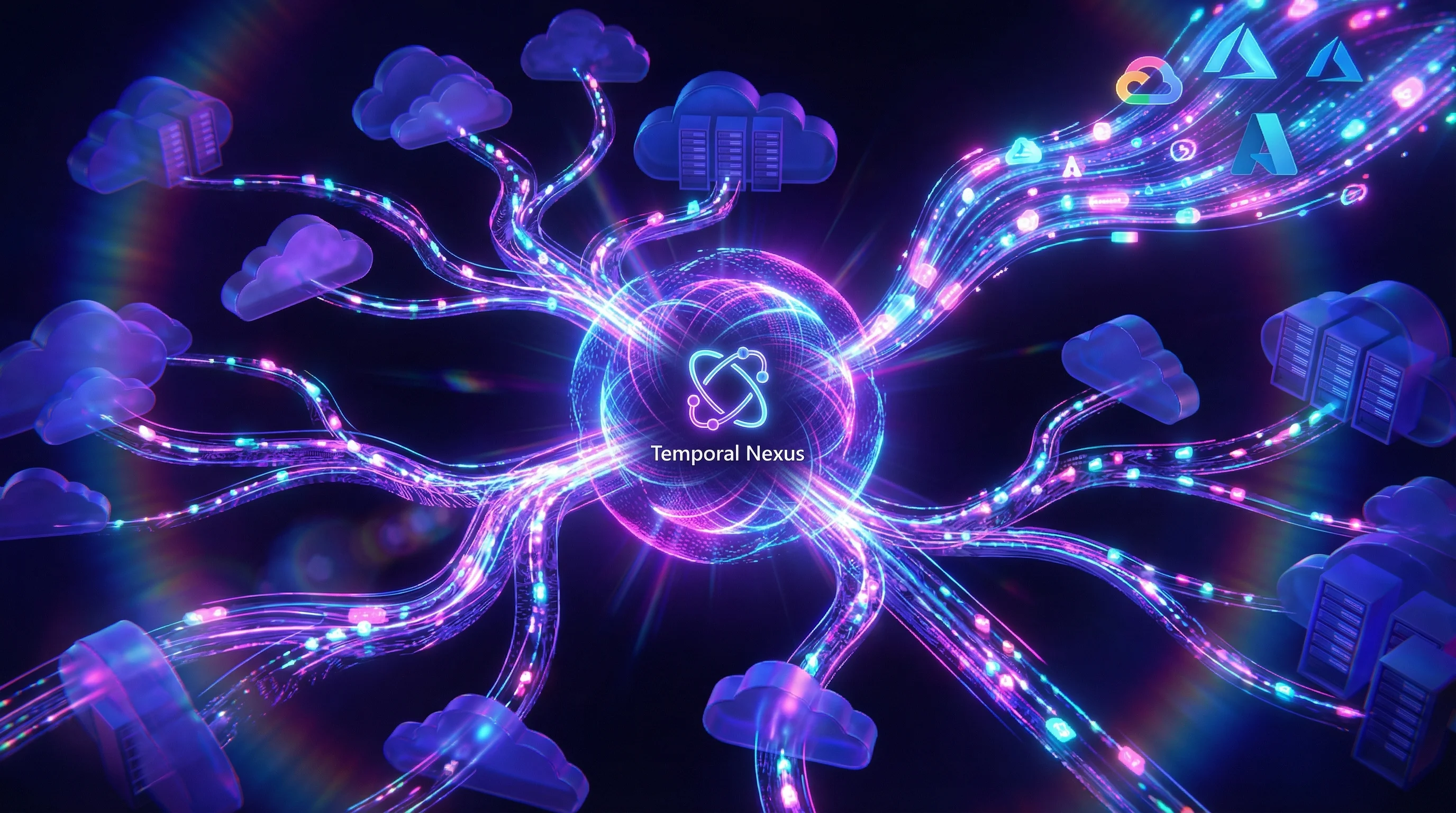
Temporal plans to channel the fresh capital into expanding both its open-source platform and Temporal Cloud, with particular focus on production agentic AI workloads. Development priorities include Temporal Nexus, which connects applications across namespaces and clouds, availability on Microsoft Azure, and improvements to security and fault isolation.
Competition exists, though perhaps not at the same scale. Startups like Restate and Orkes—which commercialized Netflix's Conductor project—are vying for similar territory. But Temporal has assembled a partner ecosystem that includes AWS, MongoDB, and KPMG, with integrations spanning OpenAI, Pydantic, and Vercel. It's the kind of positioning that makes switching costs steep and alternatives less attractive.
The company, now 375 employees strong, has raised approximately $650 million in primary funding since its 2019 founding. At a $5 billion valuation, expectations are equally steep. The AI infrastructure boom has minted several highly valued startups; whether they can sustain that momentum as markets mature and customers demand profitability over potential remains an open question.
For now, at least, Temporal is riding the wave. Whether it's a rising tide or a temporary surge, only time—and execution—will tell.


