

Walk into almost any distribution center in America and you'll find the same mundane infrastructure: security cameras bolted above the dock doors, silently recording the rhythmic dance of forklifts and freight. For years, that footage lived in one place—buried in DVR systems, pulled only when something went missing or someone got hurt.
A small team out of San Francisco thinks those cameras are watching something far more valuable than pilferage.
Transload, which launched in May, has built software that transforms ordinary CCTV feeds into three-dimensional measurement tools. The pitch is deceptively simple: point existing cameras at your dock floor, let the software calibrate for a day, and suddenly every pallet that crosses the frame gets dimensioned automatically. No laser gates. No stopping forklifts mid-workflow. No expensive hardware bolted to the floor.
The company claims this setup recovers around $50,000 per warehouse each month. That's not a projection—it's what they say they're seeing.
When the Sender Lies (Or Guesses)
The revenue recovery hinges on a problem that's apparently endemic in freight: dimensional mismatch. Transload says roughly 15% of shipments turn out to be larger than what the shipper declared. Sometimes it's intentional underreporting to game freight class rates. More often, it's just sloppy estimation.
Either way, the receiving warehouse eats the cost—or passes it downstream—unless someone catches the discrepancy. Transload's software, the company says, catches it in real time by measuring everything that moves.
The technology works with off-the-shelf IP cameras from Axis, Hikvision, Bosch, and Hanwha. After a one-day calibration during pilot rollout, the system integrates with warehouse or transportation management platforms and begins tracking handling units continuously. Marketing materials show dashboards monitoring more than 50 items simultaneously across a single dock scene, though the company hasn't disclosed much about processing architecture—whether that's happening at the edge or in the cloud.
The dimensioning itself relies on what Transload describes as "proprietary AI" analyzing human movement patterns. The software watches workers scan barcodes, then triangulates gaze direction, body pose, and motion to determine which specific item was scanned. From there, it calculates volume.
It's clever, if it works consistently.
The Hardware They're Trying to Replace
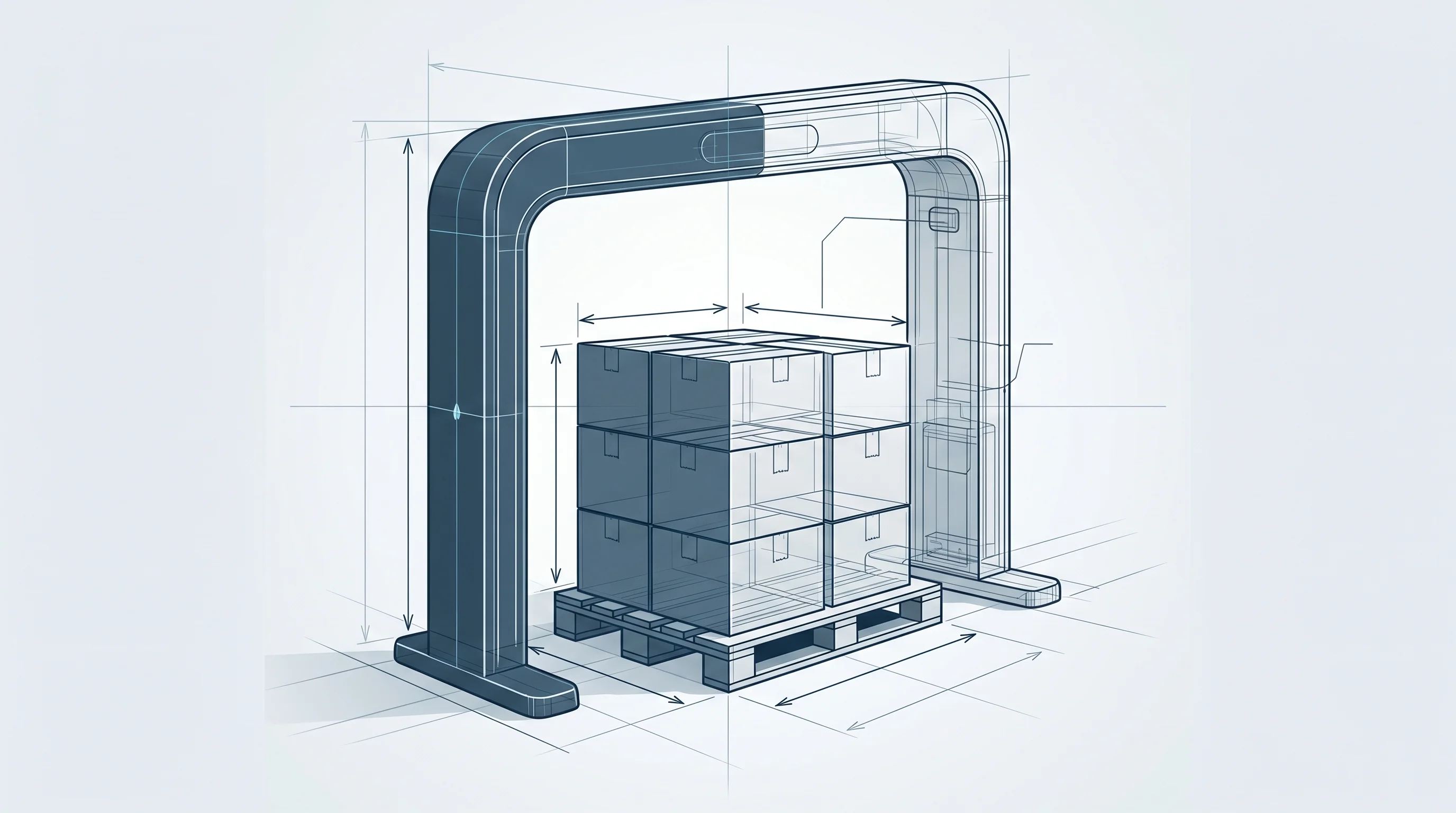
Transload contrasts its software-first approach with traditional dimensioning methods that involve more hardware. Companies like Cubiscan, Mettler-Toledo, FreightSnap, Cargo Spectre, and Dockware have built businesses around purpose-built measurement stations. These systems typically require freight to be routed through specific lanes or platforms, and they often sample only a fraction of outbound shipments rather than measuring every unit.
The software-first approach promises to sidestep that bottleneck entirely. But there's a trade-off the company hasn't addressed publicly: accuracy standards. Traditional dimensioners can achieve NTEP or Measurement Canada certification—legal-for-trade designations that matter when you're billing customers based on cubic feet. Transload hasn't disclosed whether its camera-based measurements meet those thresholds, or whether it's pursuing certification at all.
Pricing, too, remains under wraps.
Three Engineers, One Thesis
The founding team reads like a European technical pedigree distilled into startup form. CEO Julius Scheel spent time at McKinsey doing analytics work before scaling a virtual clinic at avi medical into seven-figure annual recurring revenue. CTO for AI Nils Börner brings five years in computer vision and a co-authored paper in IEEE Transactions on Medical Imaging. The third founder, Jago Wahl-Schwentker, handles engineering and previously served as the first software engineer at Veli, an AI company working with industrial sensor data.
All three studied at Technical University of Munich. The company is registered in Germany as transload GmbH but operates out of San Francisco, at least according to Y Combinator's directory. YC partner David Lieb is working with them.
They went public sometime around late spring, based on timestamp data from the accelerator's launch platform.
A Market Getting Crowded Fast
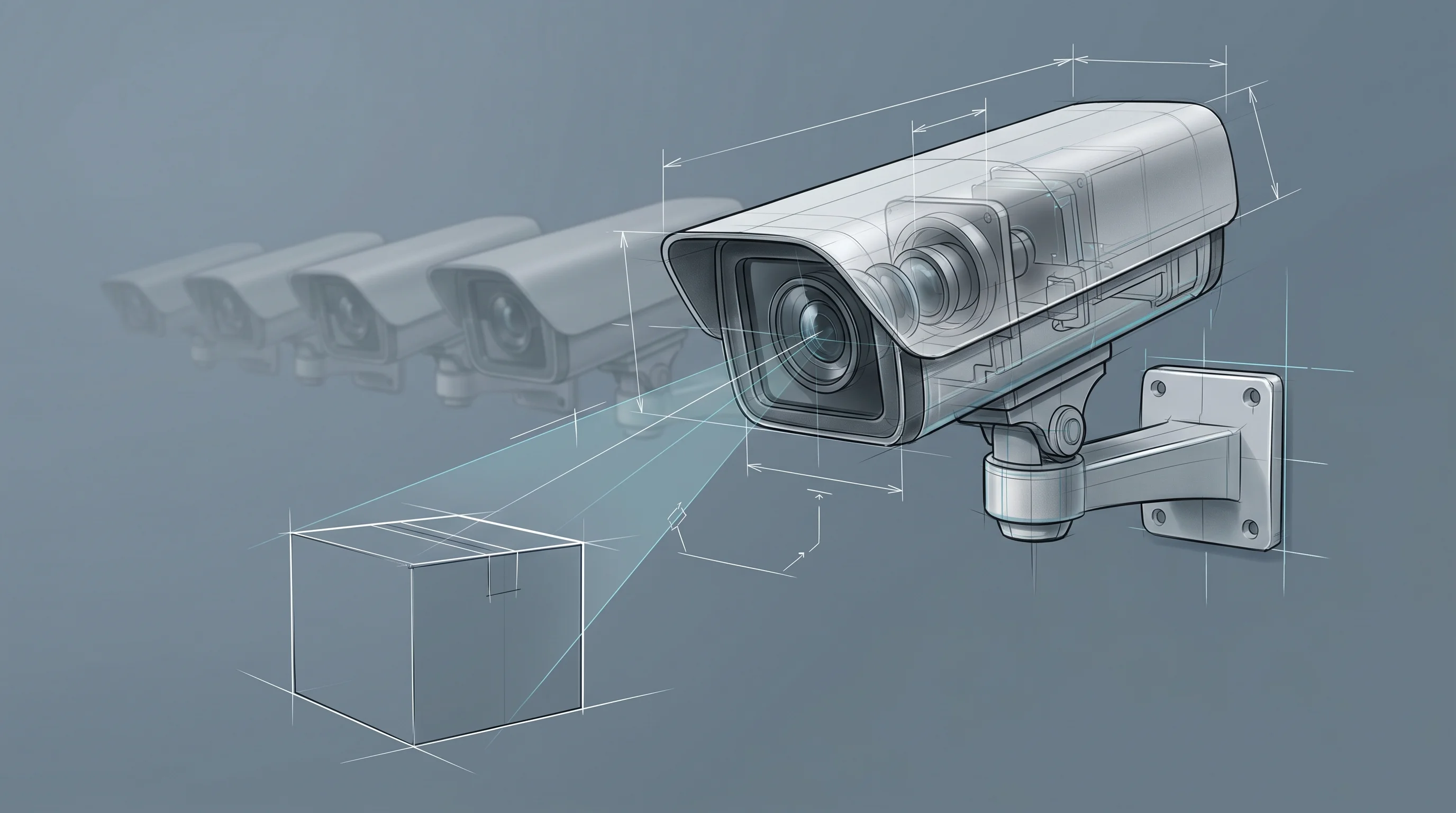
Warehouse computer vision is having a moment—perhaps more than the founders expected when they started building. Transload is entering a field that's grown noticeably dense with competitors pitching variations on the same core idea: extract insights from cameras you already own.
Loadzy, CargoMatrix's Cargo Vision, and Attentive all offer overlapping feature sets—dimensioning, fill rate analysis, tracking, audit imagery pulled from existing CCTV infrastructure. The value propositions blur together. Even the taglines start to sound alike after a while.
Meanwhile, the hardware incumbents aren't standing still. Cargo Spectre's Roll-Thru system, for instance, now offers NTEP-certified measurements but still requires a dedicated forklift lane and sensor frame. It's a hybrid approach: better than manual spot checks, not as frictionless as pure software.
Industry trade coverage late last year noted rising demand for automated dimensioning driven by labor shortages and tightening freight classification rules. That's a tailwind for both camps, but it also means the window won't stay open indefinitely.
The one public reference on Transload's website is Tobias Ramstötter, listed as head of sales and IT at Eberl International Forwarding in Germany. No case study. No metrics. No quoted testimonial—at least not yet.
The Questions That Pilots Answer
FreightCaviar, a logistics-focused media outlet, surfaced some of the obvious concerns in a LinkedIn post shortly after Transload's launch: How accurate are camera-only measurements at scale? Will operators trust billing-grade data from software that's watching forklifts instead of directly scanning freight? What happens when pallets get occluded, lighting shifts between day and night, or a forklift parks in front of the camera?
Those are the kinds of questions that don't get resolved in pitch decks. They get resolved—or they don't—during the first six months of real-world deployment.
Transload says pilot zones can be stood up in a single day, but the company hasn't disclosed specifics on camera resolution requirements, processing latency, or how the system performs across varying warehouse conditions. That might be strategic opacity during early traction, or it might reflect technology that's still finding its footing.
The Bet Logistics Operators Are Making
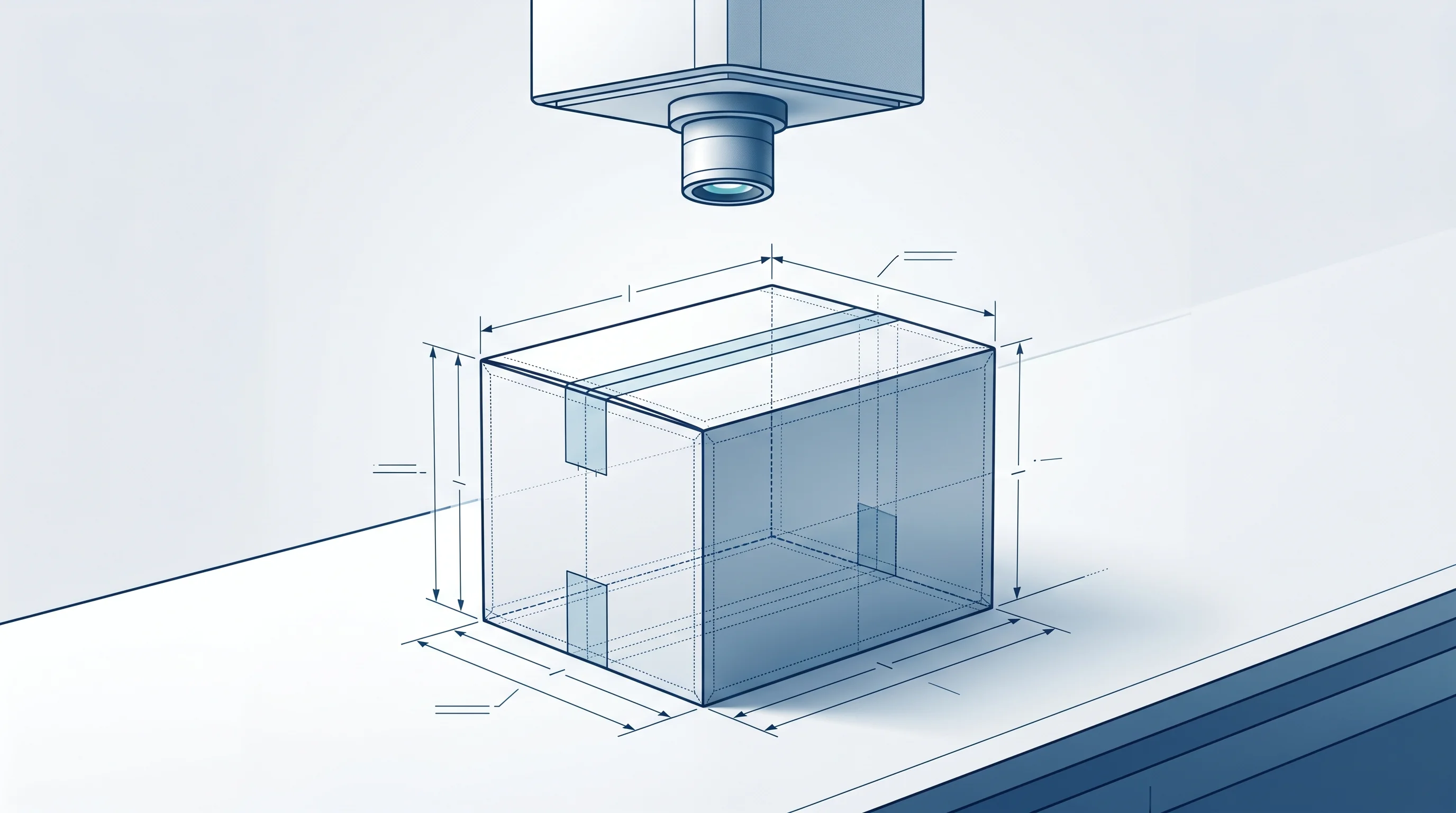
For warehouse managers evaluating this approach, the calculus is relatively straightforward. If 15% of inbound shipments really are misdeclared, and existing cameras can surface that discrepancy without disrupting workflow, the software likely pays for itself within weeks. The alternative—continuing to rely on manual spot checks or funneling all freight through dedicated dimensioning choke points—leaves money sitting on the dock floor.
The startup is live and fielding pilot inquiries through its website. How well the technology scales beyond early deployments will determine whether warehouse security cameras become the next dimensioning standard, or whether this remains a promising but narrow use case.
For now, those cameras are watching. Whether they're watching closely enough to replace hardware stations is a question that will get answered one loading dock at a time.


